
Magnet Pull Force Calculator
Estimate the holding force of neodymium, samarium cobalt, ceramic and AlNiCo magnets on steel, for disc, block, ring and sphere shapes.
Pull force calculator
A 1/2 in × 1/8 in N48 neodymium disc magnet has an estimated pull force of 6.16 lb (2.80 kgf) on thick, flat steel at zero air gap.
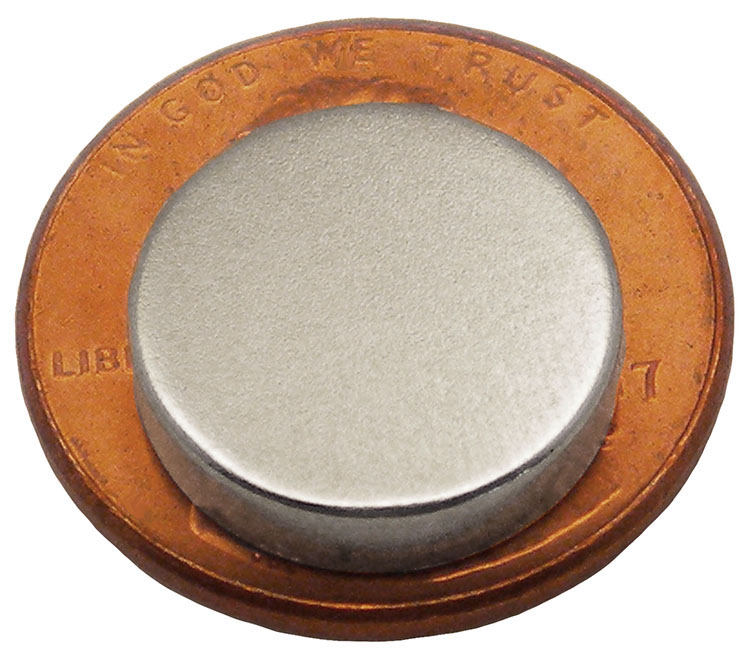
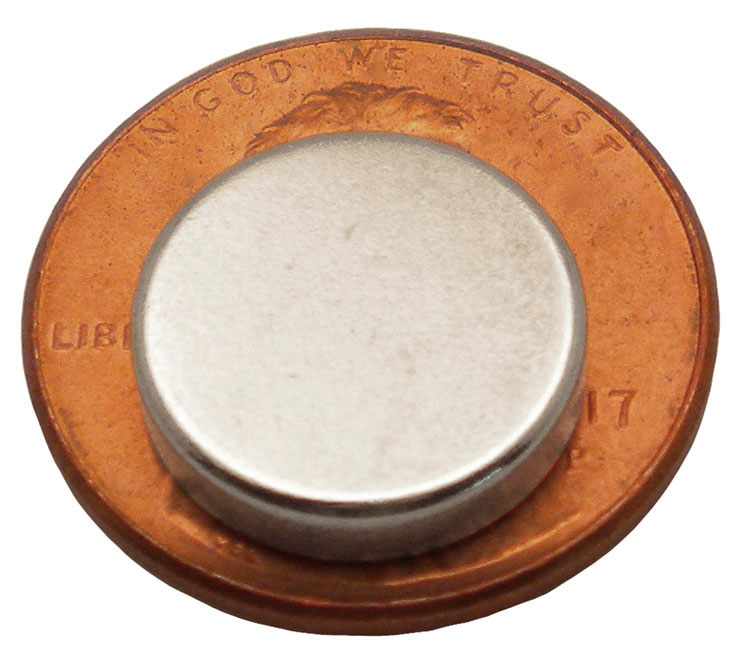
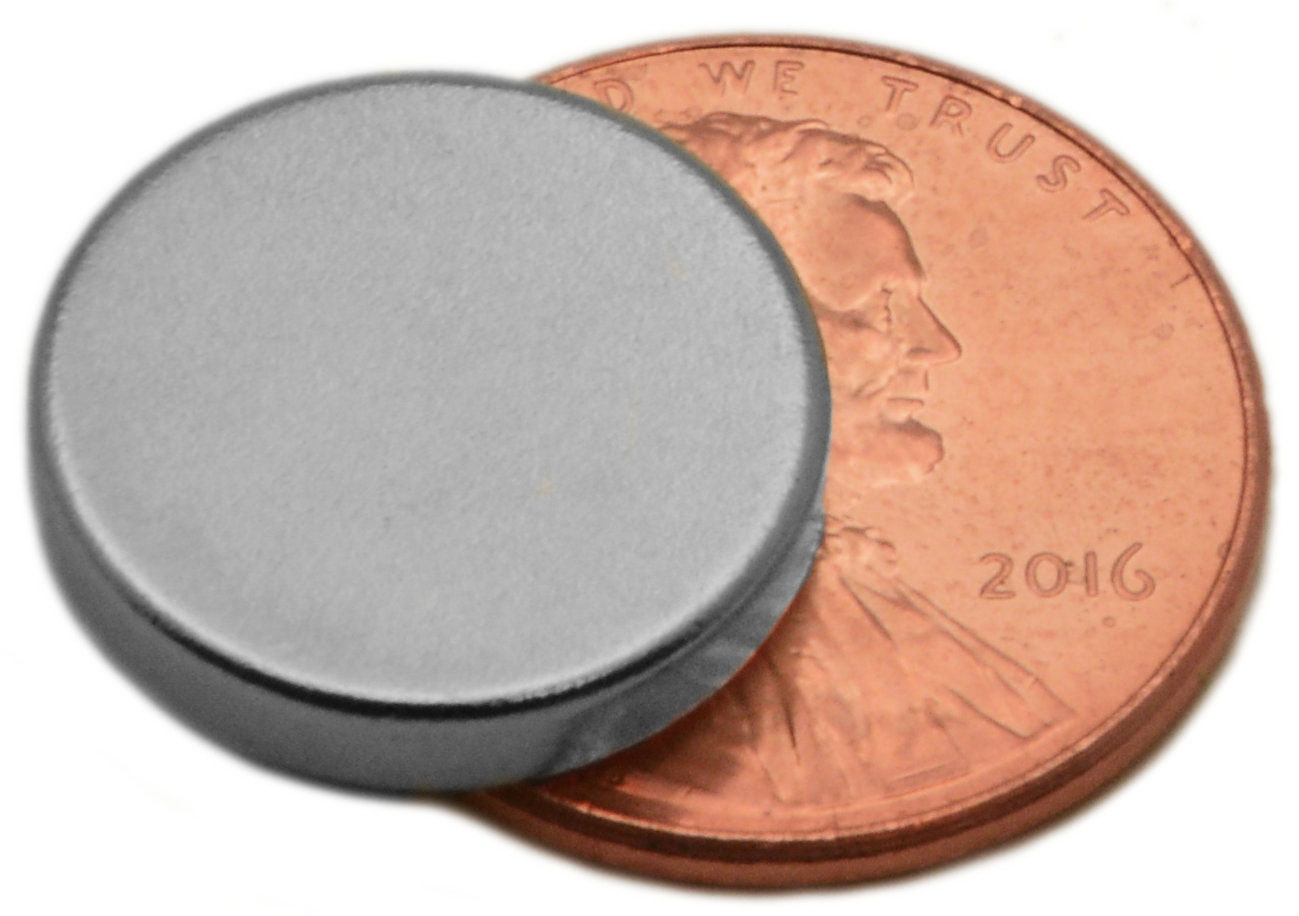
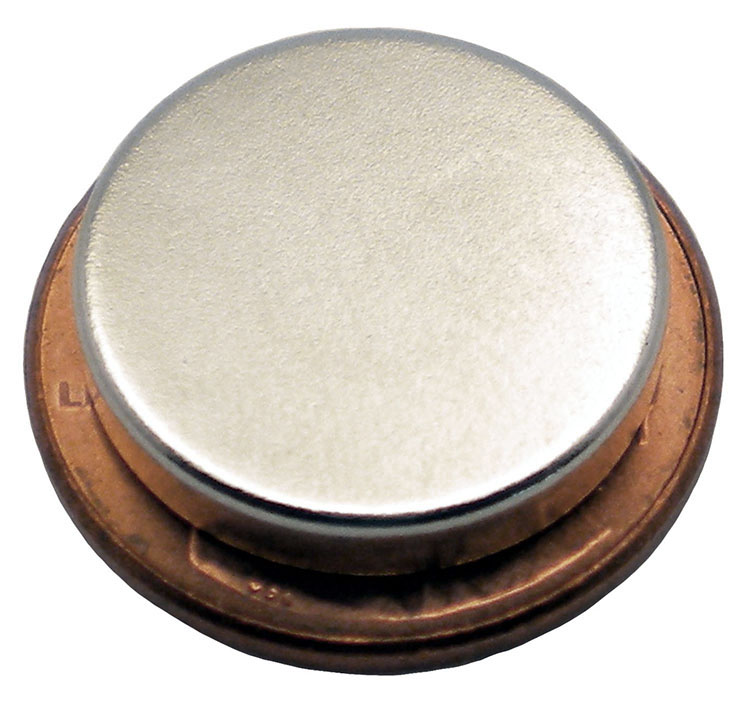
Apex magnets close to this size
Matched by shape, size and grade · rated pull on thick, flat steel at zero air gap
How this calculator works
This calculator estimates the maximum straight-pull force of a single magnet against a thick, flat, clean steel plate. The default is no air gap, which is the condition used for Apex product-page pull force ratings. You can add a gap for paint, plastic or other layers between the magnet and the steel. Choose a material, grade and shape, then enter the dimensions in inches or millimeters.
Neodymium, samarium cobalt and ceramic results come from a permeance-coefficient model with an Apex calibration factor. For typical magnet shapes, the results match Apex catalog ratings with a median difference of about 1%. AlNiCo uses each grade's demagnetization curve, because its output depends heavily on shape. Air-gap results follow a fitted pull-versus-distance curve that is typically within 6% of reference data.
Valid range: dimensions from 0.04 to 6 in (1 to 152 mm) and air gaps up to 2 in (50 mm). The calculator flags lower-confidence results: faces narrower than 0.10 in (2.5 mm), very thin or very long proportions, and all AlNiCo results.
Pull force formula
Disc and cylinder magnets (NdFeB, SmCo, ceramic)
Block and cube magnets
Ring magnets
Dimensions in inches: D = diameter, R = D / 2, L or T = thickness in the magnetized direction, a and b = the face of a block. Br = the grade's remanence in gauss (grade minimum). Pc = permeance coefficient. μ = recoil permeability: 1.05 for NdFeB, 1.03 for SmCo, 1.10 for ceramic. m = material factor: 1.000 for NdFeB, 1.022 for SmCo, 1.037 for ceramic. For rings, B_OD and B_ID are the disc flux densities at the outer and inner diameters. The base model is adapted from Dura Magnetics' published pull force method.
K, the Apex calibration factor, depends on the magnet's proportions (thickness divided by diameter or face width) and on the size of its face. For typical flat discs and blocks it reproduces Apex catalog ratings. For cubes, cylinders and bars at least as long as they are wide, and faces under 1/8 in, it follows independent reference pull force data instead. Between those zones it changes smoothly, with no step. Rings use their own K, based on thickness-to-OD and ID-to-OD ratios.
Sphere magnets
B_N48 is the same flux density calculated for grade N48. A sphere touches steel at a single point, so its real pull is more sensitive to surface finish than other shapes.
Air gap
F₀ = zero-gap pull force; g = gap; W = square root of the face area; T = thickness in the magnetized direction; all in inches. The gap factor does not depend on grade or material.
AlNiCo magnets
AlNiCo has low coercivity, so a short AlNiCo magnet partly demagnetizes itself. The calculator models each grade's demagnetization curve, with k set so the curve's maximum energy product equals the grade's published BHmax. The magnet is treated as magnetized and handled in open air, then placed on steel, where it recoils along its recoil permeability. That operating flux density goes into the same force equation. Long AlNiCo 5 rods reach roughly 65–75% of an N48 magnet of the same size, while thin AlNiCo discs reach only a few percent. AlNiCo results are model estimates.
Pull force of common magnet sizes
Rated pull of popular N48 neodymium magnets from the Apex catalog, on thick, flat steel at zero air gap. Ratings as of October 2026.
| Diameter × thickness | Converted | Pull (lb) | Pull (kg) | Apex SKU |
|---|---|---|---|---|
| 2 × 1 mm | 0.079 × 0.039 in | 0.18 | 0.082 | M2x1MMDI |
| 3 × 1 mm | 0.118 × 0.039 in | 0.36 | 0.16 | M3X1MMDI |
| 3 × 2 mm | 0.118 × 0.079 in | 0.55 | 0.25 | M3x2MMDI |
| 5 × 1 mm | 0.197 × 0.039 in | 0.80 | 0.36 | M5X1MMDI |
| 4 × 2 mm | 0.157 × 0.079 in | 1.25 | 0.57 | M4x2MMDI |
| 5 × 2 mm | 0.197 × 0.079 in | 1.50 | 0.68 | M5X2MMDI |
| 6 × 2 mm | 0.236 × 0.079 in | 2.00 | 0.91 | M6x2mmDI |
| 8 × 2 mm | 0.315 × 0.079 in | 2.43 | 1.10 | M8x2mmDI |
| 6 × 3 mm | 0.236 × 0.118 in | 2.70 | 1.22 | M6X3MMDI |
| 10 × 2 mm | 0.394 × 0.079 in | 3.00 | 1.36 | M10x2MMDI |
| 8 × 3 mm | 0.315 × 0.118 in | 3.60 | 1.63 | M8x3MMDI |
| 1/2 × 1/8 in | 12.7 × 3.18 mm | 6.16 | 2.79 | M12x18DI |
| Length × width × thickness | Converted | Pull (lb) | Pull (kg) | Apex SKU |
|---|---|---|---|---|
| 4 × 2 × 1 mm | 0.157 × 0.079 × 0.039 in | 0.39 | 0.18 | M4x2x1MMBL |
| 1/2 × 1/8 × 1/8 in* | 12.7 × 3.18 × 3.18 mm | 1.28 | 0.58 | M121818BR |
| 6 × 4 × 2 mm | 0.236 × 0.157 × 0.079 in | 1.70 | 0.77 | M6x4x2MMBL |
| 1/4 × 1/8 × 1/8 in | 6.35 × 3.18 × 3.18 mm | 2.08 | 0.94 | M14x18x18BL |
| 10 × 5 × 2 mm | 0.394 × 0.197 × 0.079 in | 2.30 | 1.04 | M10X5X2MMBL |
| 1/2 × 1/8 × 1/8 in | 12.7 × 3.18 × 3.18 mm | 3.40 | 1.54 | M12x18x18BL |
| 1 × 1/4 × 1/4 in* | 25.4 × 6.35 × 6.35 mm | 6.08 | 2.76 | M1x14x14BR |
| 5/8 × 5/8 × 5/8 in | 15.88 × 15.88 × 15.88 mm | 32.5 | 14.7 | M58CU |
* Bar magnets are magnetized through their length.
| OD × ID × thickness | Converted | Pull (lb) | Pull (kg) | Apex SKU |
|---|---|---|---|---|
| 1/2 × 3/8 × 1/8 in | 12.7 × 9.53 × 3.18 mm | 3.60 | 1.63 | M123818R |
| 1 × 3/4 × 1/8 in | 25.4 × 19.05 × 3.18 mm | 5.94 | 2.69 | M13418R |
| 3/4 × 1/2 × 1/8 in | 19.05 × 12.7 × 3.18 mm | 6.47 | 2.93 | M341218R |
| 15 × 10 × 5 mm | 0.591 × 0.394 × 0.197 in | 8.51 | 3.86 | M15105mmR |
| 1 × 3/4 × 1/4 in | 25.4 × 19.05 × 6.35 mm | 14.4 | 6.54 | M13414R |
| 1 × 1/2 × 1/4 in | 25.4 × 12.7 × 6.35 mm | 25.5 | 11.6 | M11214R |
| 1 × 1/4 × 1/4 in | 25.4 × 6.35 × 6.35 mm | 27.3 | 12.4 | M11414R |
| 2 × 1 × 1/4 in | 50.8 × 25.4 × 6.35 mm | 44.8 | 20.3 | M2114R |
| Diameter | Converted | Pull (lb) | Pull (kg) | Apex SKU |
|---|---|---|---|---|
| 1/8 in | 3.18 mm | 0.46 | 0.21 | M18SP |
| 5 mm | 0.197 in | 1.13 | 0.51 | M5mmSP |
| 1/4 in | 6.35 mm | 1.84 | 0.83 | M14SP |
| 5/16 in | 7.94 mm | 2.84 | 1.29 | M516SP |
| 10 mm | 0.394 in | 4.59 | 2.08 | M10mmSP |
| 1/2 in | 12.7 mm | 7.37 | 3.34 | M12SP |
| 3/4 in | 19.05 mm | 16.6 | 7.53 | M34SP |
| 1 in | 25.4 mm | 29.8 | 13.5 | M1SP |
| 2 in | 50.8 mm | 116 | 52.6 | M2SP |
NdFeB vs SmCo vs ceramic vs AlNiCo
| Material | Br (grade minimum) | Max operating temp | Pull vs N48, same size | Best for |
|---|---|---|---|---|
| Neodymium (NdFeB) N35–N55 | 11.7–14.7 kG | 80 °C for standard N grades; higher for M, H, SH and higher grades | 0.73–1.15× | Maximum strength in small sizes |
| Samarium cobalt (SmCo) 18–32 | 8.5–11.0 kG | 250–350 °C | 0.40–0.67× | High temperature, corrosion resistance |
| Ceramic / ferrite C1–C11 | 2.25–4.2 kG | 250 °C | 0.03–0.09× | Low cost, large parts |
| AlNiCo 2, 5, 8 | 7.2–12.5 kG | 450–550 °C | Under 0.05× in thin discs; about 0.73× for a 1/4 × 1 in AlNiCo 5 rod | Highest temperature, sensors, instruments |
Pull ratios are calculated for a 1/2 × 1/8 in disc, except where noted. Temperatures are typical maximum operating temperatures for standard grades.
Attraction vs. repulsion
Two identical magnets push apart with slightly less force than they pull together. When the magnets are touching, repulsion is typically 5–10% weaker than attraction, so the repelling force is about 90–95% of the magnet-to-magnet attracting force (not the steel-plate value from the calculator above). As the magnets move apart, the difference shrinks, and at larger gaps the two forces are nearly equal.
The reason is how the fields interact. When attracting, each magnet's field reinforces the other's magnetization, so the pair acts like one longer magnet. When repelling, the fields oppose each other and slightly reduce the flux at the facing poles. In practice, repelling magnets also tend to slip sideways, so usable repelling force is often lower still.
AlNiCo caution: forcing AlNiCo magnets together in repulsion can permanently weaken them.
This calculator estimates pull force on steel. It does not calculate force between two magnets.
What reduces real-world pull force
The calculated value is a maximum. For hanging loads, design to about one-third of the rated pull.
- Air gapPaint, plating, plastic or dirt between magnet and steel. Even 0.5 mm (0.02 in) can cut pull by a third or more on small magnets. Use the Air gap option in the calculator to estimate it.
- Thin or alloyed steelThin sheet saturates and stainless or cast iron conducts flux poorly, so pull drops well below rated.
- Sideways load (shear)On smooth steel a magnet resists sliding with roughly one-quarter to one-third of its pull force.
- TemperatureStandard N-grade neodymium loses strength as it warms and can lose strength permanently above 80 °C.
Frequently asked questions
How is magnet pull force measured?
Pull force is the force needed to pull a magnet straight off a thick, flat, clean steel plate with no air gap. Apex product ratings and this calculator use that same condition.
How much weight can a magnet actually hold?
Rated pull force is a maximum under ideal conditions. For hanging loads, design to about one-third of the rated pull. Holding a load sideways (shear) on smooth steel is typically one-quarter to one-third of the pull force.
How much does magnet grade change pull force?
Pull force scales roughly with the square of the grade's remanence (Br). An N52 magnet pulls about 7% more than the same size in N48, while N35 pulls about 27% less.
Why is my magnet weaker than the calculated pull force?
Common causes are air gaps from paint, coatings or plastic, thin or low-carbon steel, rough or curved surfaces, high temperature, and pulling at an angle instead of straight off the surface.
Do these results match the pull force on Apex product pages?
For nearly all sizes, yes. Apex product-page pull force ratings use the same calibrated model and the same test condition (thick, flat steel at zero air gap), so the calculator and the product page agree for the same size, shape and grade.
How does an air gap affect pull force?
Pull force drops quickly as the gap grows, because magnetic force falls off steeply with distance. Choose a gap under Air gap to estimate the effect of paint, plastic, tape or other non-magnetic layers between the magnet and the steel.
Is magnet repulsion as strong as attraction?
Slightly weaker. With two identical magnets touching, repulsion is typically 5–10% lower than attraction, or about 90–95% of the magnet-to-magnet attracting force. That is not the same as a magnet's pull force on steel. The difference shrinks as the magnets move apart. Sideways slipping makes real-world repulsion lower still, and AlNiCo magnets can be permanently weakened if forced together in repulsion.
Can I calculate magnet-to-magnet force?
Not yet. This version covers a single magnet on thick steel, with or without an air gap. For magnet-to-magnet or other configurations, contact Apex Magnets for an engineering estimate.