
All About Cylinder Magnets
Introduction to Cylinder Magnets
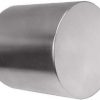
Cylinder magnets are among the most widely used magnet shapes in industrial, commercial, and DIY applications. As the name suggests, a cylinder magnet has a round profile with a length equal or greater than its diameter, similar to a rod or dowel. This simple geometry makes cylinder magnets easy to integrate into drilled holes, housings, shafts, and assemblies that require consistent alignment and compact strength.
Cylinder magnets are available in multiple materials, including neodymium, samarium cobalt,and can be custom ordered in AlNiCo, and ceramic. Each material offers different performance characteristics, but the shape itself is favored for applications requiring a strong holding force in a small footprint or precise axial alignment.
Common Sizes and Pull Forces
Cylinder magnets come in a wide range of sizes, from micro-magnets measuring just a few millimeters in diameter to larger industrial cylinders several inches long. Common sizes often include diameters such as 1/8", 1/4", 3/8", and 1/2", paired with lengths that range from thin discs to extended rods.
Pull force varies significantly based on both size and material. For example:
- A small neodymium cylinder can be less than a pound
- Larger N48 or N52 grade neodymium cylinders can generate hundreds of pounds of holding force.
- Ceramic and alnico cylinders provide lower pull forces but perform well in higher-temperature or cost-sensitive applications.
When selecting a cylinder magnet, it is important to evaluate not just size but also the required holding force for the intended application.
Magnetization of Cylinder Magnets
Most cylinder magnets are axially magnetized, meaning the north and south poles are located on the flat circular ends of the magnet. This magnetization direction creates a straight magnetic field along the cylinder's length, making it ideal for insertion into holes, tubes, or housings where end-to-end attraction is desired.
In some specialized applications, diametrically magnetized cylinders are used, where the poles are positioned on opposite sides of the curved surface. These are often found in sensing, rotation detection, and motor feedback systems.
Choosing the correct magnetization direction is just as important as selecting the right size or strength.
Common Uses for Cylinder Magnets
Cylinder magnets are used across a wide range of industries and applications, including:
- Industrial assemblies: Press-fit into machined holes for retention, alignment, or positioning
- Motors and sensors: Used in encoders, Hall-effect sensing, and motor feedback systems
- Manufacturing fixtures: Integrated into jigs and fixtures for repeatable positioning
- Medical and laboratory equipment: Selected for compact strength and precise placement
- Consumer and DIY projects: Tool holders, latches, organizers, and experimental builds
Their combination of compact size, predictable magnetization, and strong axial pull makes cylinder magnets a reliable choice for both engineered solutions and creative problem-solving. For more information, visit our blog Four Uses for Cylinder Magnets.
Selecting the Right Cylinder Magnet
When choosing a cylinder magnet, consider the application requirements carefully. Size constraints, required pull force, operating temperature, and environmental exposure all influence which material and grade are most appropriate. Modifying magnets by cutting or drilling is not recommended because they are brittle and can fracture or lose performance.
If there is uncertainty, working with a supplier that can recommend options or provide custom solutions helps ensure the magnet matches the application rather than forcing the application to fit the magnet.
We have a huge selection of cylinder magnets. There are many considerations when selecting the right cylinder magnet for your specific application. Our knowledgeable staff is always here with expert advice. If you have any questions, contact our team!
Safety Warning: Children should not be allowed to play with neodymium magnets as they can be dangerous. Small magnets pose a choking hazard and should never be swallowed or inserted into any part of the body.
Magnets can be dangerous. Neodymium magnets, especially, must be handled with care to avoid personal injury and damage to the magnets. Fingers and other body parts can get severely pinched between two attracting magnets. Bones can be broken by larger magnets. Visit our Magnet Safety page to learn more.