
All About Rubber Coated Magnets
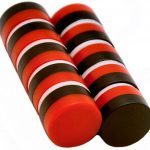
Rubber coated magnets combine a strong internal magnet with a protective outer layer of rubber. The rubber coating protects the magnet from corrosion and prevents damage to the surface it contacts, making these magnets particularly useful when you need grip, durability, and surface protection.
Common uses of rubber coated magnets include automotive, industrial, and consumer environments where magnets may come into contact with painted, polished, or sensitive surfaces.
Common Sizes and Pull Forces
At Apex, we carry ½” x ⅛” rubber coated disc magnets and ½” x ¼” rubber coated disc magnets. Both are graded N48 and have pull forces of 5 and 10 pounds, respectively. These provide superior strength and durability and are appropriate for many applications. They are available in a range of diameters and configurations for custom orders, including round, rectangular, and custom shapes. Many include features such as threaded studs, internal threads, or mounting holes to support mechanical fastening.
For example:
- Smaller magnets may offer 10–30 pounds of pull
- Mid-size assemblies often range from 30 to 90 pounds
- Larger or multi-magnet assemblies can exceed 100 pounds
The rubber coating slightly reduces the direct pull force compared to bare magnets. Still, it improves friction and grip, which often results in better real-world holding performance on vertical or angled surfaces.
How Magnetic Force Is Measured
Magnetic pull force is measured under ideal conditions, typically using direct contact with a thick, flat steel surface. This rating provides a baseline for comparing magnets, but actual performance can vary.
Rubber coated magnets behave differently from uncoated magnets in real-world conditions. The rubber layer creates a small gap between the magnet and the steel surface, which can reduce peak pull force. However, the increased friction from the rubber coating helps prevent slipping, especially in vertical applications.
Magnetization of Rubber Coated Magnets
Rubber coated magnets are usually built as magnetic assemblies rather than single solid magnets. Inside the rubber housing, one or more magnets are arranged to direct the magnetic field toward the contact surface.
Most rubber coated magnets are designed with a multi-pole or focused magnetic field on one face. This increases holding strength and allows the magnet to perform efficiently even with the added rubber layer.
Common Uses for Rubber Coated Magnets
Rubber coated magnets' ability to combine holding power with surface protection makes them a reliable option in environments where standard magnets may cause wear or damage. Common applications include:
- Automotive mounting: Holding lights, antennas, cameras, or tools without scratching painted surfaces
- Signage and displays: Temporary mounting on vehicles or metal structures
- Industrial applications: Securing equipment, cables, or components on machinery
- Marine and outdoor use: Corrosion-resistant mounting in exposed environments
- Tool organization: Holding items in place without damaging work surfaces
Supporting Your Application with Apex Magnets
Apex Magnets offers a range of neodymium magnets designed for durability, surface protection, and reliable holding performance. We are here to help you find the right solution for your specific needs. Whether for industrial use, automotive applications, or specialized mounting needs, we invite you to contact us with questions or to submit a custom order request
Safety Warning: Children should not be allowed to play with neodymium magnets as they can be dangerous. Small magnets pose a choking hazard and should never be swallowed or inserted into any part of the body.
Magnets can be dangerous. Neodymium magnets, especially, must be handled with care to avoid personal injury and damage to the magnets. Fingers and other body parts can get severely pinched between two attracting magnets. Bones can be broken by larger magnets. Visit our Magnet Safety page to learn more.