
What Will Happen to a Magnet in Water
Will a neodymium magnet lose its power when dropped in water? The simple answer is no. In fact, magnets are sometimes used for underwater recovery. Boaters and fisherman may use a magnet retrieval tool to recover some lost items such as keys or magnetic fishing gear that have been dropped in the water. However, one concern is that the magnets will begin to corrode, especially if they are made of materials like neodymium. On the other hand, water has shown diamagnetic properties.
Diamagnetism: Frog Experiment
Diamagnetism is a weak effect in which certain nonmagnetic substances are slightly repelled by an applied magnetic field. Only a very strong field makes the effect visible.
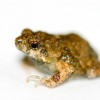
In 1997 a physicist by the name of Andre Geim, together with colleagues in the Netherlands and with theoretical physicist Michael Berry, published the first experiment that magnetically levitated a frog (using an extremely powerful electromagnet, not a handheld magnet). This may sound like a magic trick but the frog did in fact levitate when interacting with a magnet. Here is the science behind it: Frogs are made up of a large percentage of water. The shifts of electrons within atoms in water create their very own magnetic fields and when a strong magnet is applied the diamagnetism of the water in the frog caused it to repel the magnet’s field.
Because water and other diamagnetic substances are found in the human body, one can hypothesize that the human body can also be levitated, although it would take an enormously strong field (one 1998 estimate by a member of the frog-levitation team was about 40 tesla from a magnet drawing roughly 1 gigawatt of power). Other examples of diamagnetic materials include: strawberries, gold, bones and wood.
Magnet Experiments: The Effect of Water on Magnetism
You can also test the relationship between magnets and water yourself in less than a minute with a simple experiment.
Supplies
- Clear plastic cup
- Water (room temperature)
- 2 Neodymium magnets
Steps
- Fill a clear plastic cup up about ½ with water.
- Drop a magnet in and watch for any reactions.
- Test whether or not the water affects its magnetic pull by placing another magnet near the cup. The magnets will attract one another.
The relationship between magnets and water is definitely an intriguing one. For more, see our post on magnet myths and magnets in water. This experiment works best with room temperature water, but you can also try a more extensive experiment to test how the results may change as the water temperature increases or decreases (keep it below 176°F/80°C, because standard neodymium magnets can permanently lose strength above that)!
-
Pyrolytic Graphite Magnetic Levitation Kit

- Complete kit to demonstrate diamagnetic levitation.
- Includes (4) 1/2x1/2x1/4 Neodymium block magnets and (1) piece of 1cm x 1cm x 05.mm pyrolytic graphite.
- Pyrolytic graphite is a unique form of graphite produced by decomposition of a hydrocarbon gas, typically methane, at very high temperature in a vacuum furnace, resulting in an ultra-pure product near theoretical density and extremely anisotropic
- SKU# PGMLK
$39.99 -
Magnet Pickup Tool - 10lb Telescoping

This magnetic pickup tool incorporates a strong neodymium magnet at the tip; real-world tested to hold ferrous metal up to 10 lbs. Telescopic Extension adjusts from 7.5 inches to over 29.5 inches.
$11.99

