
There’s a New Kind of Aurora, and his Name is Steve

One of the most beautiful phenomena on planet Earth has to be the aurora. Occurring near the planet’s north and south poles, the aurora borealis and aurora australis have been dazzling and mystifying human beings since antiquity. The aurora, brilliant bands of colorful light dancing across the sky, are the result of charged particles from the sun meeting Earth’s magnetic field. The magnetic field is strongest near the poles, hence why this color show is typically only viewed at higher latitudes.
While each aurora is unique, they tend to follow certain patterns. Namely, they tend to streak across the sky in a horizontal manner. However, there’s a new aurora on the block—and he plays by his own rules. You read the title correctly. A newly recognized sky phenomenon that looks like an aurora, but was later shown not to be one, has been given the ceremonial title “Steve.”
What Makes Steve Unique?
Named by a group of aurora chasers in Alberta, Canada, Steve first gained notoriety in 2016 when he started to challenge our understanding of aurora behavior. The first notable difference between other aurorae and Steve is that the latter tends to appear as a thin ribbon of purple light stretched roughly east to west. Oh Steve, such an independent spirit. Yet, this difference in appearance isn’t because of Steve’s need to stand out. Steve is produced by a different process than a typical aurora.
More conventional aurorae are made up of electrons—negatively charged particles. When these particles come into contact with Earth’s magnetic field, they’re sent into a tizzy of excitement and light up in the brilliant greens and purples we associate with the northern lights. Not Steve, though.
It was first thought that Steve was made up of protons rather than electrons and his original name was “proton arc.” This would have been enough to explain Steve’s unusual appearance, though the idea has since been set aside. Eric Donovan of the University of Calgary notes that proton auroras aren’t visible to the naked eye, so the glowing arc the photographers captured couldn’t be one.
While Steve’s backstory is still a bit of mystery, scientists like Eric Donovan are getting better at predicting where Steve might show up next. They’ve also noticed that charged particles high in the atmosphere are heated to extreme temperatures and streaming rapidly when he’s around. So while Steve’s playing his cards close to the vest, we’re beginning to notice his tells.
We’ll be sure to keep you updated on all the newest Steve developments. Make sure to check out the rest of our magnetic news on our blog!
-
Ferrofluid Magnetic Liquid ***1 Ounce***
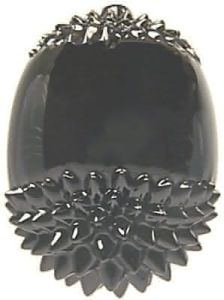
- 1oz bottle of Ferrofluid
- This liquid responds to magnets and magnetic fields
- Mineral oil based product
- SKU# FF1oz
$20.99 As low as $16.79 -
1/2 x 1/8 x 1/8 Inch Neodymium Bar Magnet N48 (30 Pack)

- 30 magnets
- Pull Force: 1.34 pounds per magnet
- SKU# M121818BR
 $12.99 As low as $9.09