
How Meteors Magnetize the Moon
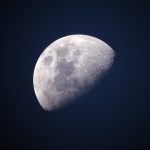
The Moon doesn’t have a global magnetic field like Earth, yet scientists have found magnetized rocks scattered across its surface. So where did that magnetism come from? One of the most compelling answers involves meteors and asteroid impacts. Scientists believe meteors help magnetize the moon.
When large objects collide with the Moon, they can create conditions strong enough to magnetize lunar materials, leaving behind magnetic “fingerprints” that researchers can still detect today.
A Quick Look at Magnetism
Magnetism comes from the motion of electric charges. In many materials, tiny magnetic regions (called domains) are normally disorganized. When a strong magnetic field is present, those domains can line up, turning the material into a magnet.
On Earth, our planet-wide magnetic field (generated by a moving, molten core) helps magnetize rocks as they form. The Moon, however, does not currently have this kind of global field, so scientists look to other sources.
What We Know About the Moon’s Magnetism
Samples brought back during NASA’s Apollo missions revealed something surprising: some lunar rocks are strongly magnetized, even though the Moon today lacks a global magnetic field.
This discovery led scientists to ask two key questions:
- Did the Moon once have a magnetic field?
- Or were these rocks magnetized by something else?
Research now suggests the answer may involve both ancient magnetic fields and meteor impacts.
How Meteors Create Magnetism
When a meteor strikes the Moon, it releases an enormous amount of energy in a very short time. These impacts can:
- Generate intense heat and pressure
- Create shock waves through the surrounding rock
- Produce short-lived magnetic fields
Under these extreme conditions, the magnetic domains inside lunar rocks can suddenly align. When the material cools, that alignment is “locked in,” leaving behind a magnetized region.
This process is sometimes called shock magnetization—and it helps explain why magnetism on the Moon is often found near large impact sites.
Magnetic “Swirls” on the Moon
One of the most visible signs of lunar magnetism is the presence of bright, swirling patterns on the Moon’s surface known as lunar swirls. Scientists believe these localized magnetic fields deflect charged particles from the solar wind, which slows down the darkening process caused by space weathering. As a result, these regions appear lighter than the surrounding surface.
Ongoing Research and New Discoveries
Interest in lunar magnetism continues to grow as new missions and studies shed light on the Moon’s history.
Recent research and missions have focused on mapping magnetic fields across the Moon’s surface, studying how impacts affect planetary material, and understanding the Moon’s early magnetic environment.
For example, NASA’s Artemis program is driving renewed exploration of the Moon, including its geology and magnetic properties. Learn more: https://www.nasa.gov/artemis/
Scientists are also studying lunar samples and remote sensing data to better understand how magnetized regions formed and evolved. NASA overview of lunar magnetism: https://science.nasa.gov/moon/
Learn More About Magnetism
If you’re interested in how magnetism works closer to home, Apex Magnets offers a wide range of educational resources, experiments, and products to help you explore. Check out our blog for articles and experiments.
Whether you’re a student, teacher, or lifelong learner, there’s always more to discover about how magnets shape the world—and beyond.