Magnet Experiments
-
DIY Homopolar Motor
 The homopolar motor is one of the simplest electric motors. They use electromagnetism to support motion and were developed by Michael Faraday in the 1800’s. Homopolar force can be explained using the Lorentz force. This force is caused by electric currents and magnetic fields that are perpendicular to each other, causing rotation. In one of our past blogs, we showed you how to make a similar homopolar motor. The one we are designing today uses two magnets to create forward propelling motion instead of spinning. This motor will act like a small car, moving forward when placed properly. To get started with your DIY magnet car, you’ll need some supplies you can probably find in your kitchen, along with some magnets, of course! Continue reading →
 -
DIY Magnetic Dart Launcher
 We can trace the existence of darts to as early as the 1500’s, when King Henry VIII wanted his archers to be able to practice aim year round. Today, the game can be found in bars and pubs across the world. Now, you may have seen magnetic darts in stores, but none quite like this. Rather than using a dart with its point replaced by a magnet and throwing it at a magnetic pad, YouTuber Magnetic Games has used the power of magnetism to load and shoot the traditional sharp darts. Now this DIY is NOT recommended for children, but you may feel like a kid again with how fun it is. Continue reading →
 -
DIY Magnet Trampoline
 The basics of positive and negative force can be difficult to understand without hands on experience. That’s why playing with magnets is not only fun, but also educational! An extremely enjoyable and slightly addictive way to do this is by creating a magnet trampoline. Continue reading →
 -
St. Patrick's Day Science Experiment
 St. Patrick’s Day is usually associated with lucky clovers, leprechauns, and gold at the end of rainbows. Unfortunately, gold is not magnetic so it’s more difficult to find even when using a rainbow as a map. What metals are magnetic? Here’s a fun St. Patrick’s Day-themed science experiment you can try to determine what materials have magnetic properties and how they move through different density’s when a magnetic field is applied: Continue reading →
 -
DIY Diamagnetism Experiment
 Diamagnetism is a magnetic property first discovered in 1778 by Dutch scientist Sebald Justinus Brugmans. He discovered the property while using bismuth and antimony and realized they were repelled by magnetic fields. It wasn’t until 1845 that English scientist Michael Faraday named the property diamagnetism while studying elements and compounds that exhibited negative magnetism, meaning they were pushing away from the magnet. In layman's terms, diamagnetism is a property that every element possesses, which causes a weak repulsion from a magnetic field. In contrast, some elements also possess ferromagnetism and paramagnetism, which causes them to be strongly attracted or repulsed by the magnetic field. To show diamagnetism, you can use a DIY magnet experiment with a common everyday food, grapes, to show small repulsion when exposed to a strong rare earth magnet. This experiment will only work with neodymium magnets because of the strong magnetic field they produce. Continue reading →
 -
Magnetic Science Experiment
 Neodymium magnets are not only useful for organizing clutter or making crafts, but also for demonstrating the unique properties of magnetism and magnetic fields. If you’re looking for an easy and fun science experiment, check out this magnetic tutorial for a hollow pyramid with a ring magnet: Continue reading →
 -
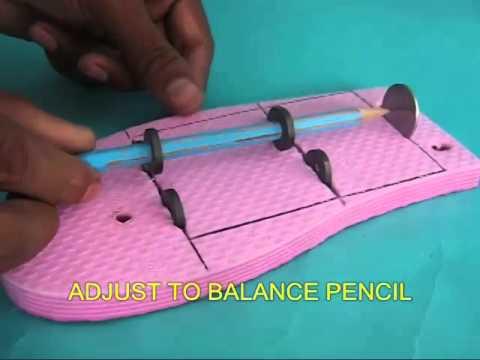
DIY Levitating Pen
Today, people use their keyboards to write more often than they use pens or pencils. If that doesn’t stop you from buying nice new pens, here’s a high-tech way you can display your favorite writing utensil using magnetic levitation: Continue reading → -
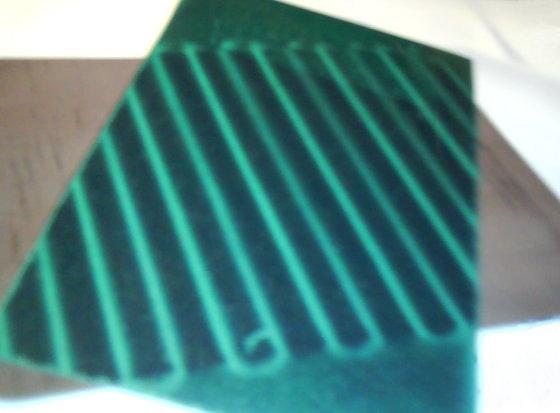
How To Use Magnetic Field Viewer Film
There are many different ways to see magnetic fields even though they are invisible to the naked eye. You can use a compass or iron filings to determine the direction and boundaries of a magnetic field. Or you can use magnetic field viewer film to see the magnetic field lines of magnets. It’s usually used by hobbyists to examine electronics. So, how does it work? Continue reading → -
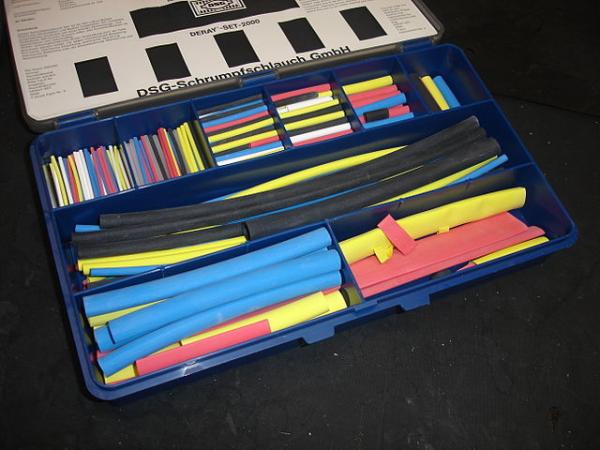
5 Things To Magnetize With Heat Shrink Tubing
When you have neodymium magnets the possibilities for innovative DIY crafts and home improvement projects are endless. You can can organize everything more efficiently or hang temporary decorations for fall with magnets. If you add heat shrink tubing to your supply list, there are even more possibilities especially if you want to avoid a gluey mess. Here are five things you can magnetize with heat shrink tubing to make them easily accessible and harder to lose: Continue reading → -
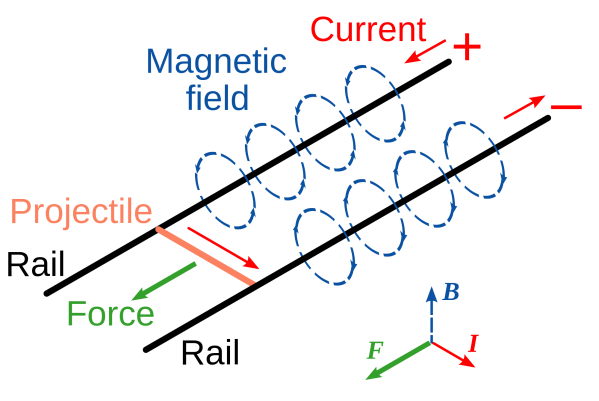
DIY Magnetic Rocket Experiment
Launching a rocket into space is expensive. The current chemical method requires over 800,000 gallons of liquid propellants. On average it costs $450 million per shuttle launch, which is in addition to the cost of the shuttle itself. The Space Shuttle Endeavor cost $1.7 billion. So, as costs continue to rise some scientists and engineers are trying to come up with an alternative launch method. Continue reading →