
Magnet Experiments
-
Magnet Experiments: Make Magnetic Silly Putty
 You may remember playing with the stretchy and colorful goo-like globs called silly putty when you were a kid. Putty was actually invented by accident during World War II by James Wright, an engineer trying to come up with a cost-effective alternative to rubber for the U.S. military. He accidentally poured boric acid into silicone oil, creating the main ingredients of the elastic toy we know today. However, the putty we know today wasn’t marketed as a fun pastime until Peter Hodgson saw its potential as a toy and bought the production rights after it was rendered useless as the military’s rubber alternative. One substance that is even more fun to experiment with than putty is magnetic putty. Magnetic putty has the same squishy texture as silly putty but reacts with magnets in eye-catching ways. You can make your own magnetic putty with this simple and quick tutorial. Because this experiment uses iron oxide powder it is meant for adult use only and should not be done with small children. Continue reading →
 -
Experiment: Remove Iron from Cereal
 You may have heard tales of the additives in processed foods, but have you ever actually seen them? Unlike fairy tales, food additives do exist and can be found in many common processed foods. Continue reading →
 -
Diamagnetic Levitation Experiment with Cube Magnets
 Diamagnetic materials hold properties that repel an applied magnetic field. Because of these properties, it is possible to levitate a magnet when used in conjunction with diamagnetic materials. The principle of diamagnetic levitation has been known since the 1930s but has only recently been used in practical applications like transport systems. A diamagnetic levitation experiment like the one below is both fun and educational. Continue reading →
 -
Magnet Science Experiments for April 1st
 Since today is renowned for its trickery, we’re honoring it with some cool science experiments that are great in classroom and learning settings to show the relationship between magic and science. Continue reading →
 -
Ferrofluid: Overview and Experiment
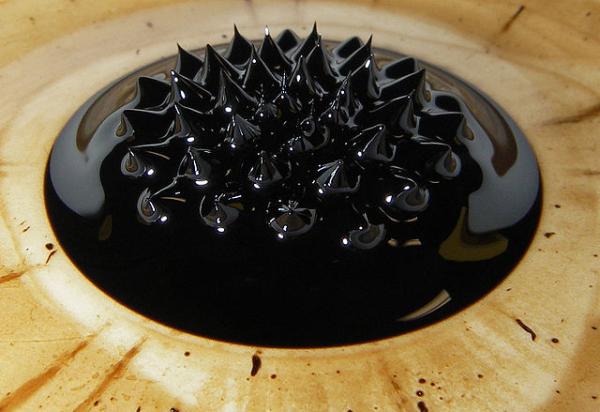 NASA first developed ferrofluid while experimenting with different methods to control liquid in zero-gravity space conditions. Since it was developed, ferrofluid is now used in a number of practical applications like: Improving the sound quality in speakers. Protecting computer disk drives. Sealing substance common for industrial use. Continue reading →