
Geomagnetic Solar Storm of '03 Was Neither a Trick nor a Treat
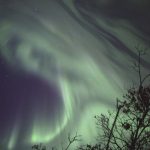
Carved pumpkins and spooky costumes are the visual aids that remind us Halloween is here, but few people probably remember the chilling geomagnetic disruptions caused by a green aurora that lit up the skies in late 2003.
Trick or treat! How the atmosphere terrorized Halloween
According to redOrbit, the phenomenon, known colloquially as a "geomagnetic storm", swept across the heavens on Oct. 29-30, 2003 and brought with it an array of unexpected disturbances. For example, GPS systems, which utilize satellite technologies to assist with ground-based navigation, were degraded as the storm disturbed the signals they rely on. Consumers and military personnel alike were suddenly left in the dark as, slowly but surely, the force of the storm brought their systems offline.
As if these blackouts weren't scary enough, modes of communication were also compromised. Devices that utilize radio waves to transmit signals between aircraft and ground stations became so impaired that planes traveling near the poles had to adjust or cancel their routes. Additionally, as a cursory point of perspective, NASA notes that the storms began, surprisingly, two to three years after solar maximum, when solar activity was declining.
"In other words, the storm was so large that it could be measured with a simple compass," wrote the U.S. Geological Survey in a blog post about the event.
What causes these events?
Fortunately, The Washington Post reported that magnetic events of this caliber do not occur very often. According to the news source, coronal mass ejections (CMEs) and solar flares are distinct events that both release magnetic energy from active regions on the sun. Sunspots are regions of intense magnetic field on the sun's surface, and the twisted magnetic structures around them can reconnect and release energy as flares and CMEs.
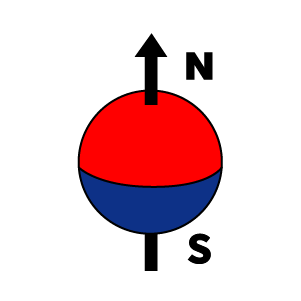
HowStuffWorks states that Earth's electromagnetic fields react similarly to what happens when strong magnets, such as cube magnets or bar magnets, are placed next to weak ones. A CME's magnetic field can compress Earth's magnetosphere and induce electric currents, but it does not realign Earth's own magnetic field the way a stronger magnet turns a weaker one.
The Washington Post reported that after the worst of these flares were behind us, scientists who were tracking the activity found that these were some of the most powerful solar storms ever recorded. Although no physical damage befell the planet, the storms affected more than half of all Earth-orbiting spacecraft, and a Japanese scientific satellite was damaged beyond repair, according to NOAA. Additionally, redOrbit noted that the long-term effects of the event are yet undetermined.
Discover More With Apex Magnets
Even years later NASA refers to this geomagnetic storm as one of the scariest, don't believe us? Watch the video about the Halloween solar storm for yourself! Want to stay up-to-date on the latest magnetic discoveries? Sign up for our newsletter to get these stories and more sent straight to your inbox each month.
-
Ferrofluid Magnetic Liquid ***1 Ounce***
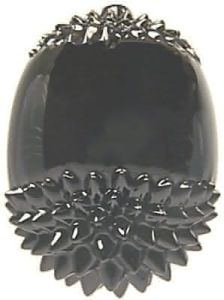
- 1oz bottle of Ferrofluid
- This liquid responds to magnets and magnetic fields
- Mineral oil based product
- SKU# FF1oz
$20.99 As low as $16.79 -
Buzzing Ball Hematite Sphere Magnets "Rattlesnake Eggs"
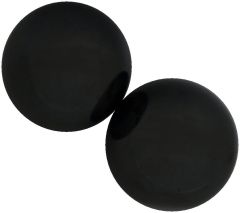
- 2 magnets
- Material: Hematite
- SKU# MhemSP
 Special Price $5.99 Regular Price $8.99