
How Magnets Are Used Inside 3D Printers
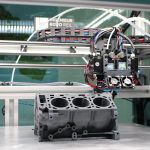
As 3D printing moves from prototyping to production and tooling, printer design has become increasingly focused on precision, repeatability, and ease of maintenance. Magnets play a critical role inside many modern 3D printers, supporting motion control, alignment systems, and removable components that streamline operation and service.
Understanding how magnets are used inside 3D printers helps engineers, manufacturers, and equipment designers evaluate component performance and long-term reliability.
Magnetic Build Plates and Bed Retention Systems
Many modern FDM printers use magnetic systems to secure removable build plates. FDM, or fused deposition modeling, is one of the most common 3D printing methods. It builds parts by heating plastic filament and depositing it layer by layer.
In magnetic build plate systems, permanent magnets are installed beneath the print bed, while a steel or magnetically responsive plate sits on top. This setup allows the build plate to remain firmly seated during printing while still being easy to remove after a print is complete.
Magnetic retention helps maintain consistent alignment between print cycles and simplifies part removal without relying on clips or mechanical fasteners. In printers with heated beds, magnet selection must account for repeated thermal cycling to ensure a stable holding force over time.
Permanent Magnets in Stepper Motors
Stepper motors are used throughout 3D printers to control movement along the X, Y, and Z axes. These motors rotate in precise increments, allowing the printer to position the print head or build platform with high accuracy.
Inside each stepper motor, permanent magnets interact with electromagnetic coils to generate controlled rotational motion. The quality and consistency of these magnets influence torque output, positional accuracy, and smooth operation during printing.
Reliable motor magnets support accurate layer placement and help reduce vibration that can affect surface finish and dimensional accuracy.
Travel Limits and Reference Positioning
To operate correctly, 3D printers must establish defined movement boundaries. Travel limits determine how far a component can move along an axis, while reference points identify known starting positions, often called homing locations.
Many printers use magnets in combination with sensors to establish these reference positions. Instead of relying on mechanical switches, magnetic systems detect position without physical contact.
Hall-Effect Sensors and Magnetic End Stops
Hall-effect sensors are electronic components that detect magnetic fields. In 3D printers, these sensors are often paired with small permanent magnets to signal when a moving component reaches a specific position.
Magnetic end stops use this combination to identify travel limits or reference points. Because detection occurs without physical contact, these systems reduce wear on moving parts and maintain consistent performance over long periods of operation. This approach is especially useful in printers that operate continuously or in environments where mechanical switches may degrade over time.
Magnet Selection Considerations for Printer Systems
Magnets used inside 3D printers must meet specific performance requirements. These often include consistent magnetic strength, resistance to demagnetization, compatibility with elevated temperatures, and tight dimensional tolerances.
Selecting the appropriate magnet material, grade, and coating supports stable printer operation across thousands of print cycles. For manufacturers, working with a magnet supplier that understands additive manufacturing requirements helps ensure components perform as designed.
Supporting Additive Manufacturing with Apex Magnets
Apex Magnets works with equipment manufacturers, engineers, and designers to support magnet applications in 3D printing systems. With a fully stocked U.S.-based warehouse, strong supplier partnerships, and custom magnet options, Apex provides reliable access to magnets that support precision motion, alignment, and sensing applications in additive manufacturing.
For more information, contact our team. If you need custom magnets to support your 3D print production, complete our online form for a free estimate.
Safety Warning: Children should not be allowed to play with neodymium magnets as they can be dangerous. Small magnets pose a choking hazard and should never be swallowed or inserted into any part of the body.
Magnets can be dangerous. Neodymium magnets, especially, must be handled with care to avoid personal injury and damage to the magnets. Fingers and other body parts can get severely pinched between two attracting magnets. Bones can be broken by larger magnets. Visit our Magnet Safety page to learn more.