
Magnets for Fusion Energy

Could smaller magnetic components help researchers pursue one of science’s biggest energy goals? Research into magnets for fusion energy shows how better engineering could support more compact experimental devices.
In July 2022, researchers at the U.S. Department of Energy’s Princeton Plasma Physics Laboratory (PPPL) reported an approach to building smaller, stronger superconducting components. Their work could help improve machines designed to reproduce the reaction that powers the sun and stars. These devices do not collect energy from space. Instead, researchers aim to create fusion here on Earth.What Is Nuclear Fusion?
Fusion occurs when light atomic nuclei combine to release energy. It is the process that powers the Sun. Reproducing that process in a controlled environment requires extremely demanding conditions. The fuel becomes plasma, a state of matter made of electrically charged particles. Scientists must control that plasma while maintaining the conditions needed for fusion. One approach uses a device called a tokamak, which relies on magnetic fields to help confine the plasma.How Magnets for Fusion Energy Could Improve Device Design
The PPPL research announcement describes high-temperature superconducting technology intended to support compact spherical tokamaks. Superconductors carry electrical current without resistance under suitable conditions. Despite the name, “high-temperature” superconductors still require cooling to temperatures far below everyday environments. The researchers’ approach allows high current density within smaller windings. That could leave more room for structural supports that help the equipment withstand powerful magnetic forces. For engineers, this is a balancing act: creating a strong field while leaving enough space for the structures and systems that keep the device operating.How Smaller Magnets Improve Performance
Building a smaller research device involves more than shrinking individual parts. Engineers also need to consider cooling, shielding, structural strength, and access for maintenance. A compact component is useful only if it can perform reliably within the complete system. That makes material selection and the arrangement of surrounding equipment essential parts of the design process.A Step Toward a Long-Term Goal
The goal of fusion research is to develop a practical energy source that could generate electricity without carbon dioxide emissions from the fusion reaction itself. However, a promising component design is one step in a larger engineering effort. This 2022 study should be understood as research development, not an announcement of a completed commercial power system. Magnets for fusion energy show just how far magnetic technology extends beyond familiar workshop and household uses.Explore Magnetic Science With Apex
Curious about other ways magnetic technology supports science and industry? Visit the Apex Magnets FAQ page for answers to common questions, or browse our product catalog. For more discoveries, practical applications, and project ideas, sign up for our newsletter.
Related Products
-
Ferrofluid Magnetic Liquid ***1 Ounce***

- 1oz bottle of Ferrofluid
- This liquid responds to magnets and magnetic fields
- Mineral oil based product
- SKU# FF1oz
$20.99 As low as $16.79 -
Magnetic Pole Searcher/Finder

- 1 North/South Pole Magnet Identifier
- The unit consists of a small alnico bar magnet that is gimbal mounted
- SKU# MPS
$10.99 -
1/2 Inch Neodymium Sphere Magnet N48 (4 Pack)
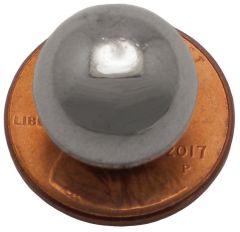
- 4 magnets
- Pull Force: 7.38 pounds per magnet
- SKU# M12SP
 $17.99 As low as $12.59