
Transcranial Magnetic Stimulation: Straight out of Science Fiction

Many of us have that one musical artist or band we just can’t stand. Some of us despise entire genres of music. But what if there was a way to make you actually like those once-reviled songs? New research with (you guessed it) magnetism suggests this might be an actual possibility some day. How? Through a technique called transcranial magnetic stimulation (TMS), which has been studied since the 1980s.
Magnetic mind control is surprisingly not a new development. Earlier this year, scientists were able to control the movements of lab mice by using magnetic fields to heat magnetic nanoparticles injected into their brains. If that’s not creepy enough for you, it looks like another team of scientists has moved onto human subjects. Researchers at McGill University in Montreal are out to make you like country, or rap, or pop, whether you want to or not.
Discover New Music with Transcranial Magnetic Stimulation
By directing magnetic pulses to a certain part of the brain, researchers were able to significantly alter how much pleasure subjects reported from music and how much money they were willing to spend on it. Imagine going your whole life hating “Friends in Low Places,” only to be zapped by a magnetic beam and suddenly you’re doing a line dance.
Scarier yet, the study also concluded that people are more likely to pay for music after excitatory stimulation of the left dorsolateral prefrontal cortex. The study measured how much money participants said they were willing to spend, and inhibitory stimulation reduced it.
How Does Transcranial Magnetic Stimulation Work?
Here’s what the authors of the study had to say:
We found that we could induce significant bidi-rectional changes in both the pleasure from listening to music and motivation to purchase it, providing evidence that both liking and wanting can be causally manipulated by altering fronto-striatal excitability.
In other words, the stimulation appeared to increase how much people enjoyed and wanted to buy music they would otherwise dislike, at least in the short term.
As mentioned above, magnetic pulses target certain areas of the brain, changing how active those neurons are, which can influence the brain's reward circuitry. The chemical most often linked to that circuitry, in this case, is dopamine. Dopamine is strongly tied to reward, motivation and what you find pleasurable. It’s responsible for the feeling you get when you see a loved one, see something funny, or listen to a favorite song.
By directing magnetic pulses at part of the brain involved in reward circuitry, researchers can alter activity in the brain's dopamine system, although the study did not measure dopamine directly. In other words, if you’re listening to a song you don’t like, but your reward circuitry is then made more active, you may start enjoying whatever it is you’re experiencing—including previously undesirable music.
It’s unclear what this research will lead to. However, while transcranial magnetic stimulation is a bit creepy, it remains a significant scientific breakthrough powered by magnetism. Make sure to regularly check back on our blog for more developments.
-
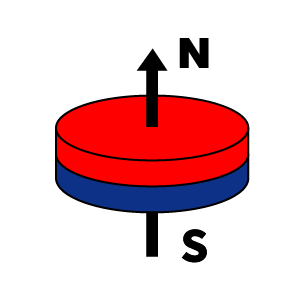
3/4 x 1/8 Inch North Pole Marked Neodymium Disc Magnet N48 (10 Pack)

- 10 magnets
- Pull Force: 11.1 pounds per magnet
- SKU# M34x18NDI
 $14.99 As low as $10.49
-
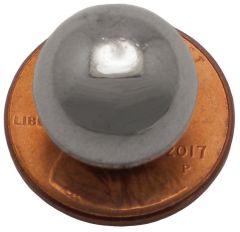
1/2 Inch Neodymium Sphere Magnet N48 (4 Pack)
- 4 magnets
- Pull Force: 7.38 pounds per magnet
- SKU# M12SP
 $17.99 As low as $12.59
-
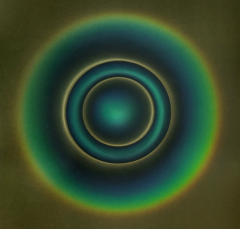
Gauss Spectrum Magnetic Field Viewer Film - 8 x 11.75
- 1 Piece Gauss Spectrum Magnetic Field Viewer Film
- Display relative gauss strength in a spectrum of color
- SKU# GSVF
$54.99 As low as $46.74