
Coin Collecting Business

If you own a business that solicits rare coins, or you plan to start one, there is one thing that you simply must know: how to tell a fake coin from a real coin. Of course, the best answer is the most simple one — buy from reliable sources. However, running a business is rarely that simple. You may get a special deal on eBay or stumble upon what appears to be a rare antique coin, and how will you know if it’s the real deal or not? The answer: Magnets!
Precious metal coins have long been valued for their monetary and historical value, but there are challenges if this is your hobby, especially if you’re a professional coin collector. The primary issue is that counterfeit coins have been in circulation since their creation. Many genuine precious metal coins are made with gold or silver, both of which are non-magnetic materials. That means these coins should show no reaction to magnets! Coins made from other metals, such as nickel or steel, can be attracted, so a magnet test can rule a coin out but cannot prove it is real. That’s where we come in.
Three easy steps to test the authenticity of your coin:
- Purchase a strong rare-earth magnet, such as a 1” x ⅛” disc magnet or a magnetic keychain you can easily carry around.
- Hold the magnet near the coin in question.
- If the coin is attracted to the magnet, it contains a magnetic metal such as iron or nickel, so it is not solid gold or silver and should be treated as suspect. A coin that does not react is not proven genuine, so use further testing.
Apex Magnets
Always keep an Apex Magnet handy if you own a coin collecting business. We can help you decipher what’s real and what’s not, allowing you to run your business efficiently and ethically. If you’re ready to select your handy, on-site magnet, check out our popular size grid. If you have questions or you’re ready to order, call us at 1-304-257-1193.
-
1 x 1/8 Inch Samarium Cobalt Disc Magnet SmCo30 (4 Pack)

- 4 magnets
- Pull Force: 8.06 pounds per magnet
- SKU# M1x18DISmCo
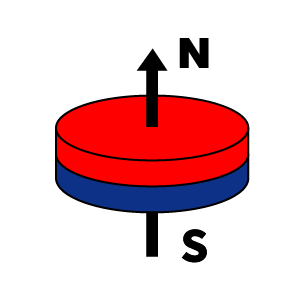 $36.99 As low as $25.89
-
KeyChain Magnet - For Hanging Keys and Testing Metal

- 1 magnet
- Pull Force: Up to 2.65 pounds per magnet
- SKU# MKEYCH
$6.99 As low as $4.89 -
1 x 1/8 Inch Neodymium Disc Magnet N48 (4 Pack)

- 4 magnets
- Pull Force: 14.3 pounds per magnet
- SKU# M1X18DI
$12.99 As low as $9.09