
Do Humans Have Built-In GPS?

Most of us know at least one way to tell direction. Whether it’s tracking the sun’s position in the sky, locating the North Star at night, or maybe even noting what side of the tree moss is growing on. Maybe you still know how to use a compass. With the advent of GPS systems and apps, it seems like people are less and less able to tell where they’re going without the aid of technology.
But what if your phone were dead and you were left without a compass? What if it’s too cloudy to see the sun or stars and there are no trees around? Could you tell which way you were heading? According to some scientists, you might be able to. Some researchers have proposed that human beings may be able to detect magnetic fields given off by the earth and other sources, but this is not established.
Have you ever wondered how birds arrive at their winter destinations thousands of miles away from where they started? Have you ever noticed that dogs tend to align themselves north-to-south when going to the bathroom, at least when the magnetic field is calm? The likely explanation is Earth’s magnetic field, which is generated by the movement of molten iron in the planet’s outer core. Many animals can sense it, but whether humans can is still unproven.
Research done by Joe Kirschvink at the California Institute of Technology suggests that human beings may share a sensitivity to magnetic fields like the one seen in other animals such as birds and dogs, though this has not been proven. Any such sensitivity would be tied to the earth’s magnetic field. These magnetic forces help orient some animals with their surroundings and help them navigate their environments. The earth’s magnetic field also guides charged particles from the sun toward the poles, where they help create the aurora borealis, or northern lights.
The idea that human beings are capable of sensing magnetic forces has long been debated. However, as Kirschvink and his team reported, there is some research worth following up, but the idea is not yet proven. In a 2019 study published in eNeuro, Kirschvink and colleagues rotated Earth-strength magnetic fields around participants while recording their brain activity with EEG. Certain field rotations produced a repeatable drop in alpha-band brain activity in some, but not all, participants.
It is not yet known why human beings have this sensitivity to magnetic forces, whether caused by the earth’s poles or other sources. Perhaps our ancient ancestors used this sense to navigate their way through the treacherous landscapes of the ice age. What do you think?
-
1/2 Inch Neodymium Sphere Magnet N48 (4 Pack)
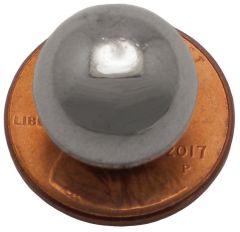
- 4 magnets
- Pull Force: 7.38 pounds per magnet
- SKU# M12SP
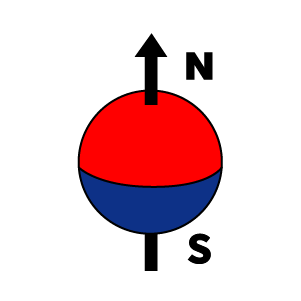 $17.99 As low as $12.59
-
1/2 x 1/8 x 1/8 Inch Neodymium Bar Magnet N48 (30 Pack)

- 30 magnets
- Pull Force: 1.34 pounds per magnet
- SKU# M121818BR
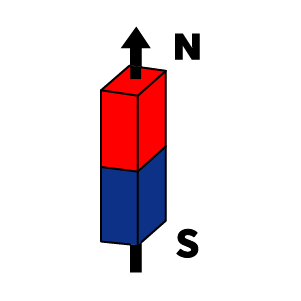 $12.99 As low as $9.09
-
Magnetic Pole Searcher/Finder
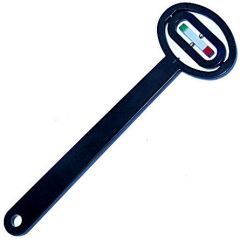
- 1 North/South Pole Magnet Identifier
- The unit consists of a small alnico bar magnet that is gimbal mounted
- SKU# MPS
$10.99