Magnet Science, Research & History
Start here
-
Why Does Kīlauea Volcano Have an Unusual Magnetic Field?
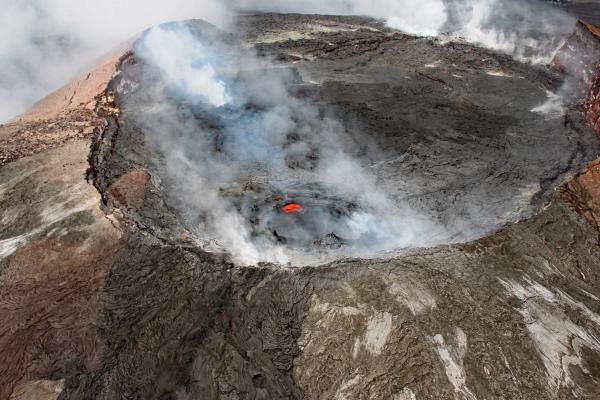 Located on the Island of Hawaii, Kīlauea is one of the world's most active volcanoes and one of six volcanoes that have formed the island. It is a shield volcano, built over time by repeated flows of primarily basaltic lava. Because Kīlauea has erupted frequently, it provides scientists the opportunity to study volcanic activity, lava flows, and the geology beneath...
-
Why September Is a Great Time to Learn About the Northern Lights
 Magnets and the Northern Lights have an incredible connection that can turn a colorful night sky into a hands-on STEM lesson. Also known as the aurora borealis, the Northern Lights let us explore Earth's magnetic field, the Sun, our atmosphere, and the science behind those brilliant colors. September is an especially fitting time to explore the topic. According to the...
-
Made in America: The Push to Bring Rare Earth Magnet Manufacturing to the U.S.
 For decades, the United States has been almost entirely dependent on foreign sources for rare earth magnets. The same materials that go into defense systems, electric vehicles, robotics, aerospace components, and everyday industrial equipment have been produced overwhelmingly abroad — primarily in China. That dependency is now being challenged in a serious, well-funded, and increasingly urgent way. How We Got...
-
Tiny Magnetic Microrobots Could Transform Medicine Delivery
 Researchers are now developing tiny magnetic microrobots capable of traveling through the bloodstream to deliver medicine directly to targeted areas of the body. According to a recent report from Magnetics Magazine, these microscopic robots are guided using external magnetic fields and could someday help doctors treat conditions with greater accuracy and fewer side effects. The microrobots, developed by researchers at...
-
How Meteors Magnetize the Moon
 The Moon doesn’t have a global magnetic field like Earth, yet scientists have found magnetized rocks scattered across its surface. So where did that magnetism come from? One of the most compelling answers involves meteors and asteroid impacts. Scientists believe meteors help magnetize the moon. When large objects collide with the Moon, they can create conditions strong enough to magnetize...
-
What Ucore’s Louisiana Project Means for Magnet Supply
 Canadian minerals company Ucore Rare Metals is gaining momentum toward establishing rare earth processing capacity in the United States, a development that could have long-term implications for manufacturers that rely on rare earth magnets. Ucore has selected an 80,800-square-foot site at England Airpark in Alexandria, Louisiana, for its planned Strategic Metals Complex (SMC). The facility is expected to begin commercial...
-
A Record 48.7 Tesla: The Next Era of Magnet Innovation
This fall, the U.S. National High Magnetic Field Laboratory (MagLab), headquartered at Florida State University, pushed the boundaries of what’s possible with a record-breaking achievement in high-field magnet technology. Using a new experimental electromagnet known as the “Little Big Coil,” scientists generated an astounding 48.7 tesla magnetic field, setting a new world record and surpassing the lab’s own 45.5 tesla... -
The Science of Superconducting Magnets
A superconducting magnet is a type of electromagnet built from coils of superconducting wire. When cooled to cryogenic temperatures, these wires conduct electricity with zero resistance, allowing the magnet to generate extremely strong, stable magnetic fields without losing energy as heat. In fact, superconducting magnets can generate fields over 2,000 times stronger than the magnets on your refrigerator! Superconducting magnets... -
How Studying Earth’s Magnetic Fields Improves Tsunami and Earthquake Alerts
The Magnetic Connection to Disaster Preparedness When tsunamis or earthquakes strike, early warning systems can save lives. While most people think of seismic sensors and tide gauges, scientists also track subtle changes in Earth’s magnetic field to better understand these events. Large earthquakes, undersea volcanic eruptions, and rapid ocean movement can cause magnetic anomalies—tiny shifts in field strength or direction—that... -
How Magnets Helped Detect Lithium on Mercury
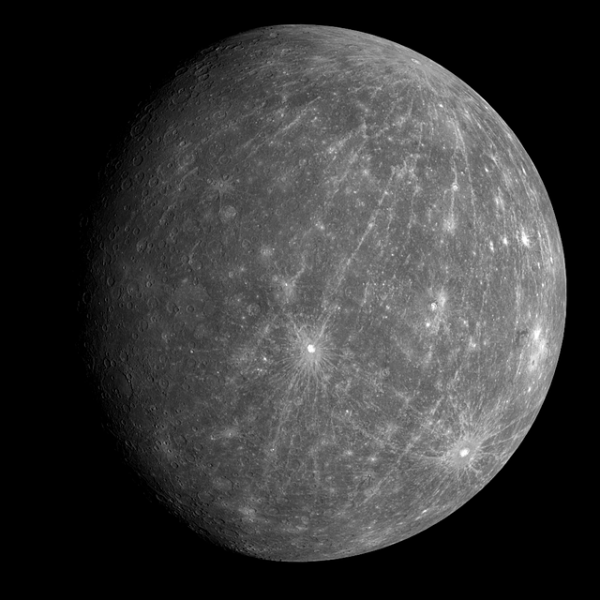
Scientists have just made an exciting discovery on our solar system’s innermost planet. Using electromagnetic waves and magnets, researchers have identified traces of lithium on Mercury, offering new clues about its surface and how it may have formed. As reported by Interesting Engineering, this detection was made using remote sensing tools that analyzed the planet’s surface without any physical contact... -
Magnetization Process in Magnet Manufacturing: Turning “Slugs” into Powerful Magnets
Magnets might seem like they’re always magnetic by nature, but in industrial production, that’s not the case. In fact, magnetization is usually one of the final steps in making a permanent magnet. Magnets (especially strong rare-earth magnets like neodymium) go through mining, alloying, pressing, and heat treatment steps without exhibiting any magnetic pull. These unfinished magnets, often called slugs or... -
Superman vs. Magnets: What Would Actually Happen?
With the new Superman movie flying into theaters this summer, we thought it was the perfect time to ask a completely reasonable, totally scientific question: Could a magnet stop Superman? Okay, probably not. But when you’re working with some of the strongest rare earth magnets on Earth—like the neodymium magnets we carry at Apex—you start to wonder just how powerful... -
What Swarm Satellites Reveal About Magnetic Fields
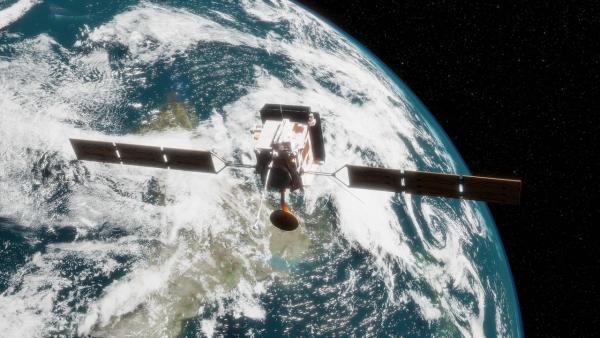
When most people think of magnetism, they picture permanent magnets, electromagnets, or the powerful fields used in motors, sensors, and industrial equipment. But magnetism also shapes our planet, and researchers are mapping those forces in great detail. Thanks to ESA’s Swarm mission—a constellation of three satellites orbiting Earth—we now have exceptional insight into how our planet’s magnetic field behaves. This... -
Exploring the Kursk Magnetic Anomaly: Earth’s Third Magnetic Pole
If you’ve ever been fascinated by the mysteries of the Bermuda Triangle, you’ll love learning about the Kursk Magnetic Anomaly. While it may not have the same pop-culture fame, this massive geological feature is just as intriguing, especially if you’re into magnetism. Located in southwestern Russia near the border of Ukraine, the Kursk Magnetic Anomaly (or KMA) is the strongest... -
Rare Earth Magnet Sourcing
Rare earth magnets are the silent drivers behind countless technologies from EV motors and wind turbines to robotics, sensors, and precision medical equipment. As global demand for high-performance magnets rises, sourcing them has never been more complex. Recent data shows that despite years of investment and policy shifts, China remains the dominant global supplier of both rare earth elements and... -
Michael Faraday: The Scientist Who Sparked the Age of Electromagnetism
When we talk about magnetic fields, electricity, or electromagnets in modern applications, there’s one name we owe a lot of credit to: Michael Faraday. He wasn’t a wealthy academic or a university-trained scholar. In fact, Faraday started his career as a bookbinder’s apprentice. But what he lacked in formal education, he more than made up for in curiosity, tenacity, and... -
Magnet Myths Debunked
We're here to share our mega magnet knowledge and debunk some magnet myths. Let's get started! Myth #1: Magnets Last Forever While magnets like neodymium and samarium cobalt are incredibly long-lasting, all magnets eventually lose strength over time, especially when exposed to heat, strong opposing magnetic fields, or physical shock. The truth: Under normal conditions, a high-quality permanent magnet can... -
Exploring the Versatility of Magnetic Materials
From neodymium to ferrite, magnetic materials are the unsung heroes powering some of today’s most advanced technologies. These materials, each with unique magnetic properties, play a critical role in everything from renewable energy systems to high-performance motors and precision tools. In this blog, we’ll explore neodymium, ferrite, and other magnetic materials, their unique properties and characteristics, and real-world applications for... -
The Race is On: Using Rare Earth Magnets to Decarbonize Trucking
The race to zero-emissions trucking is on, and the stakes couldn’t be higher. As the industry attempts to balance things like diesel efficiency, low-carbon fuels, and electric powertrains, which are central to the powering of electric vehicles, one historically overlooked factor is starting to get more attention. Rare earth magnets! The space between where trucking started—traditional diesel—and where it’s probably... -
US Terbium Initiative to Improve Domestic Rare Earth Supply Chain
In September 2024, the Department of Defense moved to strengthen domestic rare earth magnet production, awarding $4.22 million to Rare Earth Salts in Beatrice, Nebraska. This investment focused on boosting the production of terbium oxide—an essential element for rare earth magnets—sourced from recycled fluorescent light bulbs. Recently, global supply chain disruptions and geopolitical tensions have heightened the urgency for the... -
Animals And Magnetic Fields
One of the biggest supervillains in comic history is Magneto, a powerful mutant who clashes with the X-Men and has the ability to generate and control magnetic fields. It’s an incredible superpower. And while it seems like the sort of science fiction that could only exist on the pages of a Stan Lee graphic novel, it’s not that far from... -
Tallahassee Conference: Where Magnets & Electric Motors Meet
This February, Tallahassee hosted an international conference dedicated to electric motors and magnets, drawing over 400 high-tech company representatives, entrepreneurs, and researchers from around the globe. The event at the Donald L. Tucker Civic Center highlights Tallahassee's growing reputation as a hub for scientific innovation. It’s no surprise that the conference found its home here. Tallahassee is also home to... -
Revolutionizing Data Storage: How Laser Pulses Can Alter Rare Earth Magnetism
Rare earth magnets are remarkable in many ways. Many of their most remarkable properties stem from the unique behavior of their 4f electrons, which maintain a robust magnetic moment regardless of changes in their chemical environment. Historically, these magnetic properties were believed to be immutable, resistant even to the influence of laser excitation. However, groundbreaking research is now challenging this... -
The Secrets of Promethium & Rare Earth Advancements
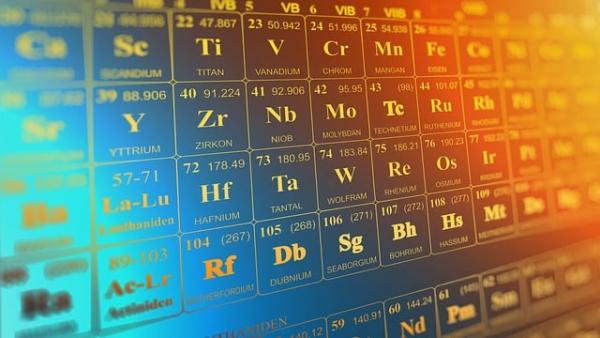
In a scientific advancement, researchers at the Department of Energy’s Oak Ridge National Laboratory (ORNL) have uncovered previously unknown properties of promethium, a rare earth element first identified at the same facility nearly 80 years ago. This discovery opens new frontiers in the exploration of critical elements that power technologies across industries, from medical applications to space exploration. Legacy of...