
The Future of Wind: How Magnets Help Us Transform Air into Electricity

All over the world, wind mills are appearing in skylines. Whether dotting the the tops of mountain ranges or standing tall over the ocean, windmills bring clean energy without the air pollution involved in other forms of power.
Believe it or not, these enormous structures require large quantities of rare earth magnets to generate electricity. It should come as no surprise, considering magnets are essential in producing electricity regardless of the energy source.
Subsidies
It’s tough to know what’s ahead for windmills, but wind energy has enjoyed substantial federal subsidies since 1992. Those federal credits are now being phased out: under the 2025 One Big Beautiful Bill Act, wind projects that did not begin construction by July 4, 2026 must be in service by the end of 2027 to qualify. The prevalence of wind energy has also seen a boost in states where electric utilities are required to use renewable energy.
Thanks in part to these subsidies and state law, the cost of producing electricity via windmills has dropped significantly. Forecasts expect wind energy costs to continue to decrease, though rare earth magnet prices and supply can add uncertainty.
Future of Wind Technology
Experts are working to perfect the current state of windmills to make them even more efficient, and magnets will play a significant role.
We’ve touched on the importance of rare earth magnets in this context: In the simplest terms, the magnets eliminate the need for parts required in older generators, while decreasing the wind speed needed to produce the same amount of energy.
Futuristic windmill designs have surfaced out of Spain that don’t require the iconic long blades. Instead, these windmills are shaped like tall, narrow ice cream cones. As the structure turns, two rings of magnets will repel each other at the base of the windmill, acting like a kind of non-electric motor. As the cone turns, the magnets pull it back. An alternator then turns this kinetic energy into electricity.
Wildly enough, the creators claim this design doesn’t require any gears or bolts. The creators say the design would be easy to manufacture and affordable, but the technology is still in development and has not been proven at utility scale.
The affordability factor is crucial. Some of today’s largest windmills require more than a thousand pounds of rare earth magnets. Because they magnets are rare, they are more expensive at every stage of the manufacturing process. Each windmill houses a small fortune made of magnets.
Windmills and Magnets on a Smaller Scale
While a towering windmill can generate power for hundreds of homes, they’re also available on small scales to power individual houses—instead of entire grids.
In these cases, the wind is used to turn motors that will create electricity using permanent magnets. When these magnets interact with copper wire coiled around them, the moving magnetic field induces a current in the wires, creating electricity that can power everything from washing machines to refrigerators.
Power From Apex Magnets
At Apex Magnets, we supply high-powered neodymium magnets, the same family of permanent magnets used in many wind turbine generators. Contact us today to see how we can help transform your business, or flip through our neodymium selection!
-
1 x 1/2 Inch Neodymium Disc Magnet N48 (2 Pack)

- 2 magnets
- Pull Force: 49.8 pounds per magnet
- SKU# M1x12DI
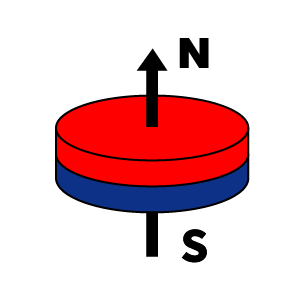 $26.99 As low as $18.89
-
2 x 1 x 1/2 Inch Neodymium Block Magnet N48 (1 Pack)

- 1 magnet
- Pull Force: 87.9 pounds per magnet
- SKU# M2x1x12BL
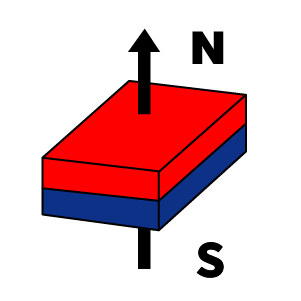 $22.99 As low as $16.09
-
1 x 1 x 1/2 Inch Neodymium Block Magnet N48 (1 Pack)

- 1 magnet
- Pull Force: 61.6 pounds per magnet
- SKU# M1x1x12BL
$17.99 As low as $12.59