
Interesting Facts About Neodymium Magnets

You may be familiar with neodymium magnets - and you might even be making use of them in your everyday life. However, there's a lot you probably don't know about this mysterious material.
Also known as rare earth magnets, their unique properties have enabled them to revolutionize the functionality of everything from car motors to computer hard drives. So what makes these magnets so special, and what are they capable of? Here are just a few interesting pieces of information about these powerful objects:
Neodymium Magnet Facts
- The elements neodymium and praseodymium were both discovered in 1885, when chemist Baron Carl Auer von Welsbach separated them from a material then known as didymium.
- The name neodymium comes from the Greek neos didumous, which means "new twin."
- Neodymium magnets are made of an alloy of neodymium, boron and iron. This allows them to simultaneously store impressive amounts of magnetic energy while being highly resistant to demagnetization.
- Due to the fact that iron oxidizes quickly, neodymium magnets are coated to prevent rust from accumulating.
- NdFeB permanent magnets are the strongest commercially available permanent magnets. In fact, even a thumbnail sized disc magnet can cling to a refrigerator door with surprising force.
- The attraction between two neodymium magnets is so strong that if placed close enough together, they can collide and shatter.
- Neodymium magnets are more heat-sensitive than samarium cobalt: standard grades begin to lose strength above about 80 degrees Celsius (176 degrees Fahrenheit), while specialty high-temperature grades are rated for roughly 200 to 230 degrees Celsius.
Interesting Applications
- Many modern wind turbine generators, particularly direct-drive designs, use neodymium-iron-boron magnets to produce electricity.
- Hybrid and electric vehicles often use high-strength neodymium magnets to power their permanent-magnet traction motors.
- When you switch your cell phone to vibrate mode, the rapid movement and corresponding sound come from a tiny vibration motor or linear actuator, which often contains a miniature neodymium magnet.
- State-of-the-art audio headphones and speakers contain neodymium magnets, which allow compact, lightweight drivers with a strong magnetic field.
- A lot of medical technology relies on neodymium magnets. For example, neodymium permanent magnets are used in some low-field and open MRI scanners, which image the inside of the body without ionizing radiation. Most clinical scanners (typically 1.5-3 T) use superconducting electromagnets instead.
- Neodymium magnets are widely used in the magnetic separators of recycling and waste removal processes. Additionally, their strength makes them effective for removing fine ferrous particles in the industrial processing chain, although ceramic magnets and electromagnets are also common in separators.
- While years ago, nearly all television sets utilized cathode ray technology, newer flat-panel models do not use electron beams at all, though some contain small speakers with neodymium magnets.
Discover More With Apex Magnets
Want to learn more about neodymium magnets? Sign up for our newsletter to get these stories and more sent straight to your inbox each month.
Related Products
-
1/2 Inch Neodymium Sphere Magnet N48 (4 Pack)
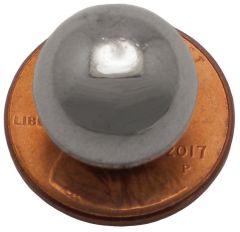
- 4 magnets
- Pull Force: 7.38 pounds per magnet
- SKU# M12SP
 $17.99 As low as $12.59
-
Buzzing Ball Hematite Sphere Magnets "Rattlesnake Eggs"
- 2 magnets
- Material: Hematite
- SKU# MhemSP
Special Price $5.99 Regular Price $8.99