
Magnets in Wireless Charging
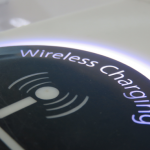
Did you know that wireless chargers can be used beyond portable and wearable devices for consumers? In fact, wireless charging can be advantageous in a variety of industrial applications including electric vehicles, drones, factory automation, handheld terminals, contactless charging of subsea vehicles, and much more!
Wireless charging, where energy transfers from a power source to another device without using wires, has become the way of the future, including industrial settings! According to Allied Market Research, “The global wireless charging market size was valued at $6.51 billion in 2018, and is expected to reach $40.24 billion by 2027, growing at a CAGR of 22.2% from 2020 to 2027.” As the wireless market is growing, it is best to get ahead and adapt to the way of the future.
How it Works
We know that wireless charging consists of charging devices hands-free by only plugging in the charger, but have you ever wondered how it works? The two most common types of wireless charging are resonance and inductive charging. Both types of wireless chargers involve transferring power from a charger to a device through a magnetic field using coils. The interaction between the transmitter coil, located in the charger, and the receiver coil, located in the device, generates a magnetic field.
The main difference between the two types of chargers is that resonance charging works without the charger and device being directly in contact, it just has to be within range; whereas, with inductive charging, it requires the device to be placed very close to the charger, typically in direct contact. Inductive charging tends to have a higher transfer efficiency, but resonance charging can cover a larger distance using additional coils, and its efficiency depends mainly on coil design and tuning. To learn more about how magnetic wireless chargers work, click here.
Now diving into what’s inside of the wireless chargers, they typically use coils with neodymium magnets for alignment and ferrite magnetic sheets. LiveScience gave this simplified description of charging pads (in most chargers the inductor is a flat wire coil backed by a ferrite sheet, and a bar magnet is not required): “Essentially, wireless charging uses a loop of coiled wires around a bar magnet — which is known as an inductor. When an electric current passes through the coiled wire, it creates an electromagnetic field around the magnet, which can then be used to transfer a voltage, or charge, to something nearby.”
Overall, wireless charging is convenient, but it is generally less efficient than wired charging because some energy is lost as heat in the coils. All you have to do is set your device on top or near the charger for it to work.
Industry Uses
Now that we have a basic understanding of how wireless charging works, let’s dive into ways that wireless charging can be beneficial to your business. Whether you are in the electronics industry, automobile industry, or beyond, you can implement wireless charging. Here are some examples:
- In the technology industry, you can use wireless charging to charge phones, watches, tablets, laptops, and more!
- In the automotive industry, charging pads can be used to charge electric vehicles.
- In dentistry, wireless chargers can be used to charge toothbrushes and other tools.
- In factories, a charging pad can be installed on the factory floor to charge mobile robots. Click here to learn more.
- In retail, wireless charging stations can be integrated into the store to give customers a place to charge their devices while shopping.
- In general, wireless charging could be integrated into the workplace by having wireless charging stations at employee desks.
As you can see from these examples, wireless charging is revolutionizing many businesses. Want to get in on the action? Apex Magnets can help!
Contact Apex Magnets Today!
Could your business benefit from implementing wireless charging? If you answered “yes,” you came to the right place. At Apex Magnets, we offer neodymium bar permanent magnets as well as ferrite magnets, both of which can be used to create wireless charging pads. To purchase custom magnets with particular dimensions, fill out our custom request form. Once you submit your form, we’ll review your RFQ within 1-2 business days. There’s no obligation to purchase and we’ll give you a quote for FREE. While filling out the form, if you have any questions, check out our custom order form guide or contact us at 1.304.257.1193.
-
1 x 1/4 x 1/4 Inch Neodymium Bar Magnet N48 (6 Pack)

- 6 magnets
- Pull Force: 6.12 pounds per magnet
- SKU# M1x14x14BR
 $14.99 As low as $10.49
-
1/2 x 1/8 x 1/8 Inch Neodymium Bar Magnet N48 (30 Pack)

- 30 magnets
- Pull Force: 1.34 pounds per magnet
- SKU# M121818BR
$12.99 As low as $9.09 -
6 x 13/16 x 3/8 Inch Ceramic Block Magnet C11 (4 Pack)

- 4 magnets
- Pull Force: 9.21 pounds per magnet
- SKU# MCER6X1316X38BL
 Special Price $8.99 Regular Price $13.99