
The Magnetic Sensor of a Tiny Worm
Many animals navigate using the Earth’s magnetic field as though they have their own personal compasses. Birds, for example, can use the Earth’s magnetic field to navigate during migration. Even monarch butterflies are able to use magnetic field lines although it’s more of a secondary navigation method for them. While scientists have already observed the symptoms of an internal compass in some animals, they have never pinpointed the exact part providing these navigation abilities until now.
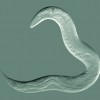
Magnetosensation describes an organism’s ability to inherently detect the magnetic field lines of Earth. This ability has been observed in numerous organisms from sharks to worms. Researchers and engineers at the University of Texas at Austin (UT) were finally able to detect the microscopic sensor that gives one species of worm to burrow through the dirt without getting lost. They found a microscopic antenna-like structure inside a tiny roundworm called Caenorhabditis elegans (C. elegans).
How Does the Magnetic Sensor Work?
A microscopic sensor located at the tip of a sensory neuron in the roundworm’s head gives it the ability to sense the planet’s magnetic field. Scientists were able to find the sensor after altering the magnetic field around the worms. As a result of the laboratory alterations (not an actual shift of Earth’s poles), the worms became disoriented and unable to determine which way was up and which was down. Hungry worms usually burrowed downward, which may help them find food, but when the magnetic field was artificially reversed they burrowed upward instead.
The scientists decided to test their theory on worms from different corners of the world such as England, Australia and Hawaii. They found that each strain moved at the angle to the magnetic field that would have corresponded to downward in its original home.
The discovery suggests that other species living in the dirt could have similar sensors in their brains to help them navigate. The worm’s sensor may also help scientists locate the source of magnetosensitivity in animals living above ground. You can observe the magnetosensation of animals if you have a dog. A 2013 study by Czech researchers found that dogs tend to line their bodies up along the north-south axis while they urinate or defecate. Have you noticed your dog do this?
-
1/2 Inch Neodymium Sphere Magnet N48 (4 Pack)
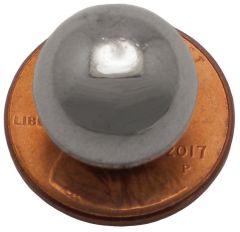
- 1/2" diameter · 12.7 mm
- 7.38 lb pull per magnetpull each
- 4 magnets4 pcs
- SKU M12SP
per pack · $4.50 per magnet$17.99 As low as $12.59 -
1/2 x 1/8 x 1/8 Inch Neodymium Bar Magnet N48 (30 Pack)

- 1/2" × 1/8" × 1/8" · 12.7 × 3.18 × 3.18 mm · Diametric
- 1.34 lb pull per magnetpull each
- 30 magnets30 pcs
- SKU M121818BR
per pack · $0.43 per magnet$12.99 As low as $9.09 -
Ferrofluid Magnetic Liquid ***1 Ounce***
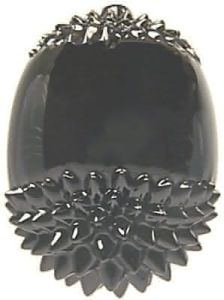
- 1oz bottle of Ferrofluid
- This liquid responds to magnets and magnetic fields
- Mineral oil based product
- SKU# FF1oz
$20.99 As low as $16.79