
A Quick Guide to Different Types of Magnetism

We use the word “magnetism” quite a bit. In general, magnetism is thought of as the simple attraction of two metals. However, magnetism is much more nuanced than this. Magnetism is classified in several different ways. It all comes down to the atoms that make up each element or compound. Furthermore, it depends on the spin and orbital motion of those atoms’ electrons and how they react (if at all) to magnetic fields.
Physicist Michael Faraday determined that materials respond to magnetic fields in two basic ways: diamagnetic materials are weakly repelled, while paramagnetic materials are weakly attracted. Ferromagnets such as iron are a much stronger, separate case.
Diamagnetism
There are a lot of quantum mechanics involved with diamagnetism, but in a basic sense, diamagnetic objects typically repel when exposed to magnetic fields. Diamagnetic elements include hydrogen, beryllium, most poor metals (aluminum and tin are exceptions), most nonmetals and semimetals, halogens, and noble gases.
Paramagnetism
The opposite of diamagnetism, paramagnetic substances attract magnetic forces when exposed to them. Paramagnets are only magnetic when in the presence of an established magnetic field and do not give off their own magnetic fields, making them different from ferromagnets. The alkali metals, alkaline earth metals, most transition metals, most lanthanide metals at room temperature (including neodymium) oxygen, aluminum, and tin are all paramagnetic.
Ferromagnetism
Ferromagnets are materials with very strong magnetic attraction that can keep their magnetization without an external field. Hard ferromagnets (like neodymium or ceramic magnets) become permanent magnets, while soft ferromagnets (like pure iron) lose most of their magnetism once the field is removed. The term comes from “ferrum”, the Latin word for iron (a ferromagnetic element). Ferromagnets include iron, nickel, and cobalt.
Antiferromagnetism
The name might be a mouthful, but the theory is relatively simple. Antiferromagnets are just that — the opposite of ferromagnets. Their neighboring atomic magnetic moments line up in opposite directions and cancel out, so they have almost no net magnetism of their own and are only weakly attracted to magnetic fields. This ordering exists only below a critical temperature (the Néel temperature). Above it, an antiferromagnet behaves like a paramagnet, and for many materials that temperature is well below room temperature. The only element that is antiferromagnetic at room temperature is chromium.
Ferrimagnetism
Note the vowel difference. Ferrimagnets, like ferromagnets are magnetic even without an active field. Ferrimagnets contain atomic magnetic moments that point in opposing directions, as in antiferromagnets. However, the opposing moments are unequal, so they do not fully cancel and a net magnetization remains, leading to ferrimagnets’ own classification.
Superparamagnetism
Like paramagnets, superparamagnets are attracted to magnetic fields when exposed to them. As the prefix “super” suggests, these materials, typically tiny ferromagnetic or ferrimagnetic nanoparticles, respond much more strongly to a field than ordinary paramagnets but keep no magnetization once the field is removed.
As you can see, magnets are more complex than we often give them credit for. Many of Apex’s magnets are made with neodymium. On its own the element is paramagnetic, but alloyed with iron and boron it forms Nd2Fe14B, which is strongly ferromagnetic. Understanding how elements attract and repel magnetic fields is important to our business. Do you have experience with any specific type of magnetism? Let us know about it!
-
12" x 12" Magnetic Field Viewer Film

- 1 Piece Magnetic Field Viewer Film
- The poles appear dark green
- SKU# VF12
$49.99 As low as $42.49 -
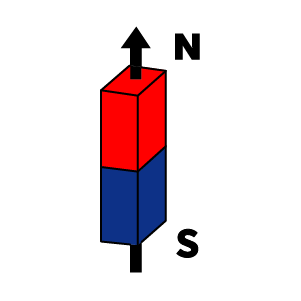
1/2 x 1/8 x 1/8 Inch Neodymium Bar Magnet N48 (30 Pack)

- 30 magnets
- Pull Force: 1.34 pounds per magnet
- SKU# M121818BR
 $12.99 As low as $9.09
-
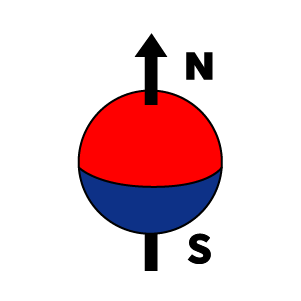
1/2 Inch Neodymium Sphere Magnet N48 (4 Pack)

- 4 magnets
- Pull Force: 7.38 pounds per magnet
- SKU# M12SP
 $17.99 As low as $12.59