
Gaussmeters: The Difference Between Axial and Transverse Probes

When you have to measure a magnetic field, you’ll need a gaussmeter. But in addition to knowing how to properly use it, you’ll also have to make an important decision: Will you use an axial or transverse probe to get your reading?
Knowing the difference between these two probes and how they work will have a major impact on your accuracy and safety, as the wrong choice can result in an inaccurate reading, and relying on a bad reading could lead to unsafe handling decisions.
Here’s the difference between the two probes:
Axial Probes
Axial probes are typically narrow, cylindrical rods, with a sensor lying flat against the tip, a feature that’s possible thanks to the sensor being oriented to measure the field running parallel to the probe axis. Because of this design, axial probes are usually used by pushing its end directly against the surface being measured.
While they can be used for general-purpose measurements, it’s more common to use them when measuring magnetic fields around solenoids—cylindrical coils of wire that become magnetic when an electric current runs through them.
Axial probes are also ideal for surface field detection (the magnetic flux density at the surface of a magnet) and general magnetic field induction.
Axial probes are available in a variety of lengths, diameters, and materials.
Transverse Probes
By design, transverse probes look slightly different from axial probes, with rectangular bodies and sensors oriented to measure fields perpendicular to the probe axis. Because of this design, the transverse probe is often laid upon a magnetic surface or held aloft to record an accurate reading.
Like axial probes, they can be used for general-purpose measurements, but they’re essential for reading the magnetic force in open spaces, including small air gaps between magnets or between a magnet and ferromagnetic objects.
Transverse probes are also ideal for open field measurements and surface measurements. Like axial probes, they’re also available in a variety of lengths, diameters, and materials.
The Importance of Picking the Right Probe for the Job
Because a magnetic field is invisible and three-dimensional, getting an accurate reading is difficult. Moving even a fraction of an inch can have an enormous impact on the gaussmeter’s recording, especially when working with bar magnets and other complex designs.
As if that wasn’t hard enough, knowing the differences in how these probes behave could literally make or break a project’s success.
For example: Let’s say you’re trying to measure the magnetic field in the space around a powerful magnet. Using an axial probe may not give you an accurate reading, depending on how the field is oriented relative to the sensor. An inaccurate reading could lead you to underestimate the field, which risks damage or injury if ferromagnetic materials are carried through that space too close to the magnet.
Likewise, a transverse probe isn’t always a sound replacement for an axial probe. If you want an accurate reading on a solenoid, using a transverse probe could give a misleading reading, which risks damage or injury if ferromagnetic material is placed too close to an energized solenoid.
Before taking any measurements, double-check you’ve selected the right probe to ensure an accurate reading.
How Apex Magnets Can Help
As important as probes are, they’re worthless without a reliable gaussmeter, and that’s something Apex Magnets can provide. Need even more help with magnets? Our dedicated customer service team is available to help you with all of your needs, including those that are business-related.
-
HT Digital Gaussmeter With Peak Hold - Can Display Gauss or Tesla

- 1 Unit HT Digital Gaussmeter
- Measurements: 160mm x 88mm x 36mm
- SKU# GMHT201
$649.99 -
Magnet Pole Identifier - Electronic

- 1 Piece Magnet Pole Identifier
- Identifies multiple pole magnets
- SKU# MPI
$44.99 -
Magnetic Pole Searcher/Finder
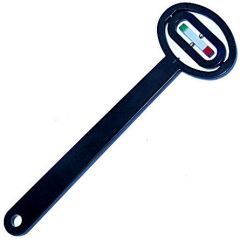
- 1 North/South Pole Magnet Identifier
- The unit consists of a small alnico bar magnet that is gimbal mounted
- SKU# MPS
$10.99