Choosing the Right Magnet
Start here
-
Magnet Pull Force Calculator: Estimate Holding Strength and Find Matching Magnets
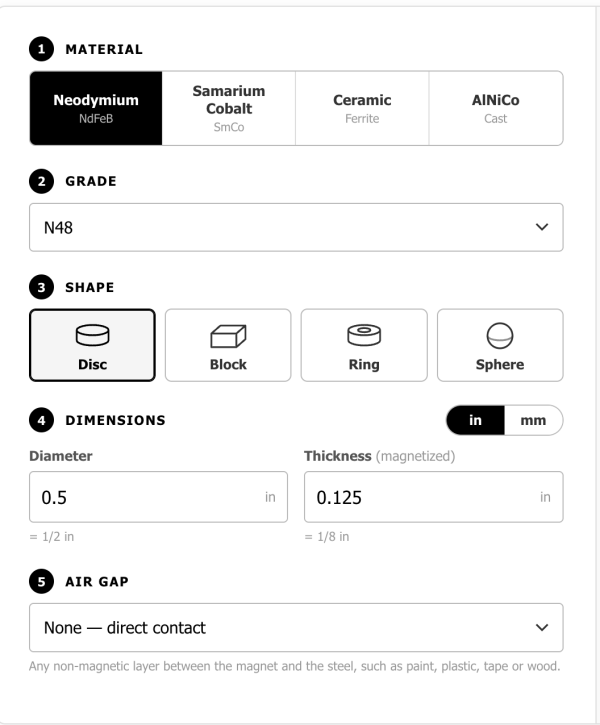 Choosing the right magnet for an application just got easier! The new magnet pull force calculator from Apex Magnets gives everyone from engineers to DIYers a convenient way to estimate magnetic holding strength, compare specifications, and explore available products. Whether you're designing a new product, evaluating materials, or sourcing magnets for a custom order, this free online tool helps you...
-
When Do You Need a Custom Magnet?
 Custom magnets for industrial applications can solve design challenges that standard components simply cannot. But going custom should not automatically be the first step. A stocked magnet in a standard size, shape, and grade can simplify sourcing, shorten lead times, and make future reordering easier. For many projects, designing around an available magnet makes good engineering and business sense. So...
-
Magnet Storage Tips: A Guide By Magnet Type
 Proper magnet storage means keeping magnets dry, cool, away from metal shelving, and separated from other magnets to prevent chipping, corrosion, or loss of magnetic strength. The right storage method depends on the type of magnet; ceramic, neodymium, and samarium cobalt magnets each have different vulnerabilities. This guide breaks down best practices for each, including tips on storing neodymium magnets...
-
How Magnet Coatings Affect Performance and Longevity
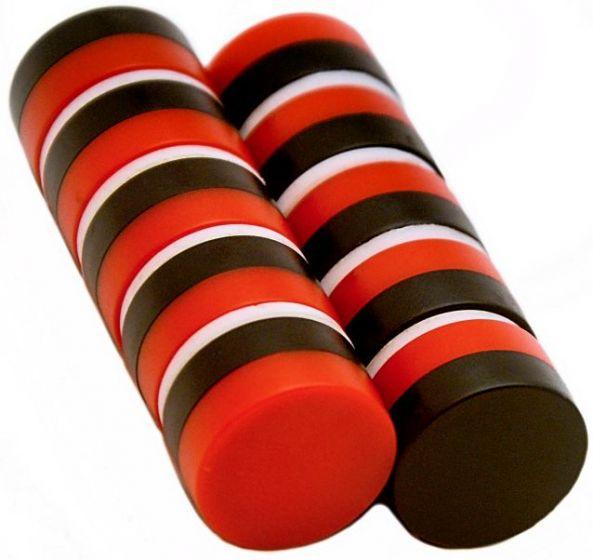 Permanent magnets are built for strength, but the right coating helps them stay that way. While a coating doesn't make a magnet stronger, it plays an important role in protecting the magnet from corrosion, moisture, chemicals, and everyday wear. Choosing the right coating can extend the life of your magnet and improve its performance in your specific application. Below, we'll...
-
Samarium Cobalt Pricing Is Shifting: How to Plan Ahead
 If you've sourced Samarium Cobalt (SmCo) magnets recently, you may have noticed longer lead times or received a price quote that is, frankly, much higher than before. Two separate raw material markets that feed directly into Samarium Cobalt production are undergoing significant change simultaneously, and it's worth understanding why so you can plan your own purchasing and production schedules accordingly...
-
Why Isn’t My Magnet Working? Common Magnet Problems and How to Fix Them
 You found the magnet. You placed it exactly where you wanted it. You stepped back....and it slid down the wall. Or maybe it didn’t stick at all. If you’ve ever thought, “Why isn’t my magnet working?” you’re definitely not alone. It’s one of the most common questions we hear at Apex Magnets, and thankfully, the answer is usually simple. Magnets...
-
How to Choose the Right Magnet Strength for Your Application
Magnets come in a wide range of sizes, materials, grades, and strengths. Many factors determine magnet strength, including shape, size, coating, pull force, and the environmental conditions in which the magnet is used. So, how to choose the right magnet strength for your application? Understanding Magnet Grades and N Ratings The magnet grade, also known as the N rating, represents... -
Why Cheap Magnets Aren’t Worth the Savings
It’s natural for procurement teams and engineers to look for ways to reduce component costs, especially on parts that appear simple at first glance. Magnets often fall into that category. Often choosing a cheap magnet seems like a great way to reduce costs. But in practice, what looks like a small savings upfront can lead to performance issues, rework, and... -
All About Rubber Coated Magnets
Rubber coated magnets combine a strong internal magnet with a protective outer layer of rubber. The rubber coating protects the magnet from corrosion and prevents damage to the surface it contacts, making these magnets particularly useful when you need grip, durability, and surface protection. Common uses of rubber coated magnets include automotive, industrial, and consumer environments where magnets may come... -
Apex Magnets Technical Guide | High Humidity and Transitional Climates
Apex Technical Guide: Optimizing Magnets in High-Humidity and Transitional Climates -
What to Consider When Ordering Magnets for Prototyping
The prototyping phase is the most critical stage of any engineering project. Whether you are developing a new medical device or a high-speed robotics assembly, the magnets you choose can determine the success of your proof-of-concept. When ordering magnets for prototyping, a "one size fits all" approach often leads to costly delays. To ensure your R&D remains on schedule and... -
Magnet Selection for High-Humidity and Spring Climate Conditions
Spring brings rising humidity, temperature swings, and condensation on cold metal surfaces — all of which can affect rare earth magnet performance. Choosing the right magnet material and coating for your environment is the simplest way to prevent corrosion, flux loss, and premature failure before they show up on the production floor. Here’s what you need to know to spec... -
All About Cylinder Magnets
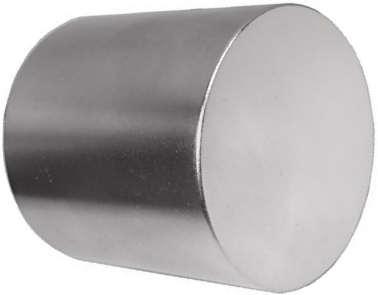
Introduction to Cylinder Magnets Cylinder magnets are among the most widely used magnet shapes in industrial, commercial, and DIY applications. As the name suggests, a cylinder magnet has a round profile with a length equal or greater than its diameter, similar to a rod or dowel. This simple geometry makes cylinder magnets easy to integrate into drilled holes, housings, shafts... -
What Adhesives Work Best with Neodymium Magnets
Neodymium magnets are incredibly strong for their size, but bonding them correctly requires the right adhesive. Choosing the wrong glue can lead to weak bonds, damaged coatings, or magnets that pop loose at the worst possible time. Understanding which adhesives work best with neodymium magnets will help your project last longer and perform better. So, what adhesives work best with... -
Planning Your Magnet Supply in a Tariff-Driven Market
Over the past year, businesses across manufacturing, engineering, and sourcing have learned an important lesson: tariffs can disrupt supply chains quickly and drive up costs with little warning. As we look ahead, tariffs and market uncertainty are no longer short-term challenges. They are ongoing factors that require proactive planning. For companies that rely on magnets, especially rare earth magnets, the... -
Samarium Cobalt vs. High-Temp Neodymium Magnets
When engineers need a magnet that can withstand heat, corrosion, vibration, and demanding operational environments, two materials typically top the shortlist: samarium-cobalt (SmCo) and high-temperature neodymium (NdFeB). Both are rare-earth magnets, but their performance characteristics differ in essential ways. Samarium cobalt offers exceptional temperature stability (up to 350°C+), inherent corrosion resistance, and long-term magnetic reliability. It’s the preferred choice for... -
Find the Perfect Magnet Every Time With Our Popular Size Grid
When you shop for magnets online, it’s easy to feel overwhelmed by all the shapes, sizes, and strength levels. That’s why we created our popular size grid, a simple, visual way to compare magnets and find exactly what you need faster. Whether you’re organizing your home, crafting, or designing for work, our popular size grid helps you choose confidently and... -
Building Resilience in an Uncertain Permanent Magnet Market
The global magnet industry is entering a new era. As manufacturing demand rises and geopolitical uncertainty continues to reshape trade flows, companies that depend on permanent magnets face a pressing challenge: ensuring a consistent, cost-effective supply of critical materials. At Apex Magnets, we help businesses navigate the evolving supply chain for neodymium, samarium-cobalt, and other advanced magnetic materials. Here’s what... -
Choosing the Right Neodymium Magnet Shape and Style
Neodymium magnets are among the strongest permanent magnets available, powering a wide range of applications, from electric motors to small devices. But you’ll notice they come in so many shapes and styles — discs, blocks, rings, countersunk, spheres, and more. Why so many? Because the shape and style of a magnet affect its functionality. Selecting the wrong type or improperly... -
Gauss, Pull, and Power: How to Measure the Strength of a Magnet
Magnets are essential tools across industries, from medical device manufacturing to retail display solutions. But when it comes to sourcing or evaluating magnets for your business, one of the most common questions is: How do you measure the strength of a magnet? Understanding this helps ensure you select the right magnet for performance, safety, and efficiency in your operations. Tools... -
How Heat Affects Magnets
Magnets play a crucial role in industrial systems, from motors and generators to sensors, couplings, and material handling equipment. But when these components are exposed to high temperatures, their performance can degrade—sometimes permanently. Understanding how heat affects magnets enables manufacturers, engineers, and purchasing managers to select the appropriate magnetic material for the task, particularly in demanding environments. The Science of... -
What Are Diametric Magnets and When Should You Use Them
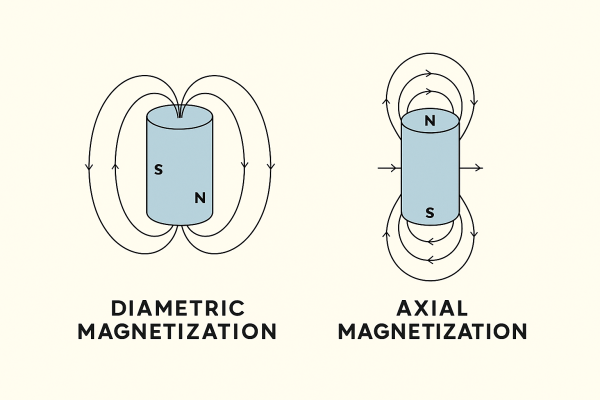
While most magnets are magnetized through their length or thickness, diametric magnets are magnetized across their diameter or width, as in diametric blocks. This creates a distinct magnetic field pattern that opens up new possibilities for industrial applications. If you need more help visualizing the difference, view our helpful video about axial vs. diametric magnets here. If you’re working on... -
Why Are Neodymium Magnets So Strong?
If you've ever handled a neodymium magnet, you know they don’t mess around. Even a small disc can snap onto a metal surface with surprising force, and they're not shy about pinching fingers along the way. But why are neodymium magnets so strong? What gives them a powerful magnetic pull compared to magnets like ceramic or Alnico? This blog will... -
Understanding Magnetize/Demagnetize Tools: How Does A Magnetizer/Demagnetizer Work?
If you’ve ever found yourself in a complicated DIY home project, you know how frustrating working with tiny screws and componentry can be. The smaller the supplies, the higher the level of required dexterity—and the easier it is to lose things in the process. That’s when a magnetizer/demagnetizer tool can become so valuable. These innovative devices are capable of turning...