
How Magnets Are Helping People with Disabilities
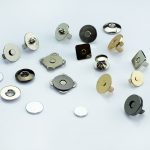
According to the CDC, in the United States, more than 1 in 4 adults (28.7 percent) live with a disability and 3.6 percent of U.S. adults have a self-care disability with difficulty dressing or bathing. Many companies are selling adaptive clothing that help people with disabilities get dressed more easily. In adaptive clothing, magnets replace buttons, zippers, and laces.
From adaptive clothing, shoes, and accessories, magnets have transformed the way people with disabilities dress and express themselves— without limitation. To see how adaptive clothing has empowered people with disabilities, click here.
Adaptive Clothing
Neodymium sewing magnets or magnetic clasps are commonly used in adaptive clothing. For instance, buttons on shirts, jeans, collars, and cuffs can be replaced with sewing magnets to make dressing a faster and easier process. The zipper on jeans can also be replaced with sewing magnets for fastening your pants. People with pacemakers or other implanted medical devices should keep strong magnets at least 6 inches (15 cm) away and follow their device maker's guidance.
In a 2019 projection, Vogue Business said adaptive clothing could be worth nearly $400 billion by 2026. More recent market research puts the market far lower, with estimates varying widely by research firm, but more fashion companies are making inclusive clothing. For instance, Tommy Hilfiger has a product line of adaptive clothing. The company describes its Adaptive Collection as designed for ease of dressing in classic Tommy style. Tommy Hilfiger sells button-down collared shirts with magnets clasping the shirt shut.
As you can see, many companies are providing more inclusive clothing for people with disabilities and this industry is expected to grow, though forecasts vary.
Adaptive Shoes
Putting on shoes can be a difficult task for people with disabilities. Many companies are replacing the shoelaces with magnets to make adaptive shoes. For instance, Zappos has a product line called “Zappos Adaptive'' that consists of adaptive clothing, easy-on/off shoes, disabetic shoes, and much more. The line has included easy-on/off versions of well-known shoe brands, but styles change, so check the Zappos Adaptive page for current options.
Another company that is transforming the footwear industry for people with disabilities is Zubits. Zubits provides a magnetic lacing solution made out of neodymium magnets housed in plastic closures. They make putting shoes and taking them off easy — you clasp together the magnetic device to put them on and to take them off, you step your heel back and the shoe snaps open hands-free.
Adaptive Accessories
Similar to adaptive shoes and clothing, adaptive accessories have transformed the way people with disabilities dress and express themselves. Adaptive accessories can consist of neodymium disc magnets, magnetic clasps, and magnetic clips to make taking on and off easier. For instance, neodymium disc magnets can replace zippers to make opening and closing purses easier for people with disabilities. To learn how to install a magnetic clasp on your wallet or purse, click here.
In addition, magnetic jewelry has provided an easier way to put on/take off jewelry. With magnetic clasps, jewelry is held in place securely but can also be easily removed by pulling apart the magnetic closures. This is extremely convenient for individuals with arthritis or limited dexterity. To learn more about magnetic jewelry and how to make it, click here.
Apex Magnets
At Apex Magnets we sell a wide variety of magnets that can be used in adaptive clothing, shoes, and accessories. From sewing magnets, neodymium disc magnets, magnetic clips, and magnetic jewelry clasps, we’ve got it all! Visit our website to see our available magnets today!
If you have any questions about which magnets are best for your application, don’t hesitate to reach out. Our team of experts is readily available to answer your questions at 1.304.257.1193 or send us a message.
-
1/2 x 1/16 Inch Neodymium Sewing Magnet (20 Pack)
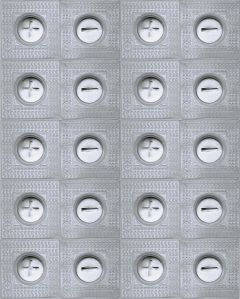
- 20 magnets
- 10 "+" magnets and 10 "-" magnets per pack
- SKU# MSEW12x116
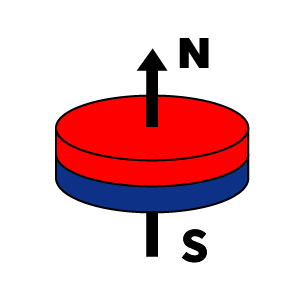 $10.99 As low as $7.69
-
Silver Neodymium Ribbed Jewelry Clasp Magnet (10 Pack)
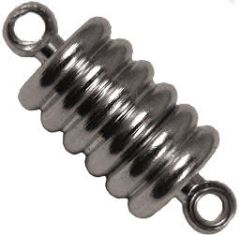
- 10 magnets = 5 complete clasps
- Break-Away Force: 0.4 pounds per magnet
- Magnetization: Neodymium Magnet is magnetized through thickness
- SKU# MCLSPRIBSI
$12.99 As low as $9.09 -
Brushed Chrome Neodymium Pin Magnet (4 Pack)
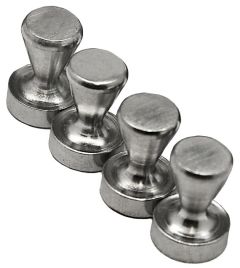
- 4 magnets
- Magnetization: Through Thickness
- SKU# PINSCR21X1510
$11.99 As low as $8.39