
Meet the Magnetic Elevators of the Future

They say “if it ain't broke, don’t fix it.” And from roughly 1853 untill now, the way elevators rise and descend has changed minimally. In 2003 thyssenkrupp, an industrial business group, developed a twin elevator that changed the amount of traditional cabins used, but not the way they travel. Stacked on top of each other, the elevators acted as two separate cabins that would enhance travel times and energy efficiency. Now, using the power of magnetism, the company is back and making an elevator that will change everything you’ve ever known and seen in elevators.
Headquartered in Germany, thyssenkrupp is developing an elevator system called MULTI. The plans for the design will transform the way we think about elevators from only moving up and down to moving left and right as well.
It’s designed to help riders eliminate long wait times and the need to walk across buildings because of elevator locations. According to a 2010 IBM Smarter Buildings survey, New York City office workers spent a combined 16.6 years waiting for elevators over a 12-month period, compared with 5.9 years stuck in them. As cities across the world get larger and larger, this problem will become more prevalent.
The MULTI will travel throughout buildings using technology related to the Transrapid train. The train uses electromagnetic suspension to travel and actually appears levitated. To achieve this, the strength of the magnetic field produced by electromagnets is altered so that it can move from left to right. In the case of MULTI, up and down as well.
To maximize speed of the elevator the cabin will travel on a continuous loop, like a subway or rollercoaster. As of now though, the project is still in testing, and you probably won’t see these in everyday buildings just yet. To test them thyssenkrupp built a test tower in Rottweil, Germany, where it unveiled the first fully functional MULTI in June 2017.
Magnets help us in many ways, but who thought they would one day help make our elevators move horizontally? Let us know in the comments section any other ways you think electromagnetic suspension could be used in our world today.
-
Pyrolytic Graphite Magnetic Levitation Kit

- Complete kit to demonstrate diamagnetic levitation.
- Includes (4) 1/2x1/2x1/4 Neodymium block magnets and (1) piece of 1cm x 1cm x 05.mm pyrolytic graphite.
- Pyrolytic graphite is a unique form of graphite produced by decomposition of a hydrocarbon gas, typically methane, at very high temperature in a vacuum furnace, resulting in an ultra-pure product near theoretical density and extremely anisotropic
- SKU# PGMLK
$39.99 -
Magnetic Levitation Pen Science Experiment Kit
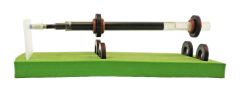
Make your own stable levitating pen with this economical, easy to build levitating pen kit! Make use of the principles of magnetic repulsion to seemingly defy the law of gravity. Great for classroom demonstrations!
Learn More...$10.99 -
Pyrolytic Graphite Block - Small
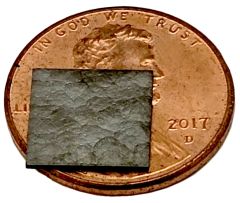
- Pyrolytic graphite is a unique form of graphite produced by decomposition of a hydrocarbon gas, typically methane, at very high temperature in a vacuum furnace, resulting in an ultra-pure product near theoretical density and extremely anisotropic
- 1cm x 1cm x 0.5 mm
- SKU# Pyrolytic Graphite Block - Small
$35.99