
What’s the Scoop on the Hyperloop?
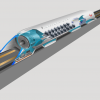
In its 2017 proposal for a Miami-to-Orlando route, Hyperloop One estimated the trip could take about 26 minutes. The Hyperloop, the brain-child of Elon Musk and SpaceX, would connect cities using a series of reduced-pressure tubes that use air bearings or magnetic levitation to suspend pod-like vehicles, meaning greatly reduced resistance and minimal noise pollution. A linear electric motor gradually propels the pods forward to a cruising speed of around 700 miles per hour. These tubes would be able to travel under or above-ground, avoiding grade crossings. Musk and SpaceX’s idea has been open-sourced and others are encouraged to take the concept and expand upon it.
Hyperloop One was, in 2017, at the head of the pack of three companies vying for Elon Musk’s proposal. (Update: Hyperloop One shut down at the end of 2023.) In 2017, Hyperloop One unveiled its completed test track, named DevLoop, in Nevada. The company ceased operations in late 2023. While referred to as a “loop”, the track is of a straight shot with 1,640 feet of track. Hyperloop One described the DevLoop as the world's first full-system test track, a full-scale site for testing its levitation, propulsion, vacuum and control technologies. Past test tracks, like the one used in the SpaceX HyperLoop student team pod race, were smaller and unable to carry passengers.
Hyperloop One’s Vision for America, a proposal of 11 tracks throughout the United States, would include routes that would rocket passengers from Las Vegas to Reno in 42 minutes (a 7 hour drive by car), Chicago to Columbus in 29 minutes, and the biggest leap, from Cheyenne, WY to Houston, TX in 1 hour and 45 minutes (a 17 hour car ride). Soon the days of being sandwiched into cramped airplane seats next to some guy who doesn’t understand the concept of personal space will be behind us.
The technology seems futuristic, but it’s meant to be accessible to everyone. “It’s not for the elite, it’s for every citizen, and we think we can transform people’s lives, economies, commerce, and logistics,” says Hyperloop One CEO Rob Lloyd.
While this completed project is still in the future, it is within our grasp. With the magnetic technology at our disposal and the collaborative efforts of so many minds, the Hyperloop has expanded from just an idea to a fleshed out, physical concept.
Where would you like to see routes? Would this technology encourage you to travel more often? Share your thoughts with us in the comments! For more magnet-related revelations and DIY projects, head to our News & How-Tos section.
-
Pyrolytic Graphite Magnetic Levitation Kit

- Complete kit to demonstrate diamagnetic levitation.
- Includes (4) 1/2x1/2x1/4 Neodymium block magnets and (1) piece of 1cm x 1cm x 05.mm pyrolytic graphite.
- Pyrolytic graphite is a unique form of graphite produced by decomposition of a hydrocarbon gas, typically methane, at very high temperature in a vacuum furnace, resulting in an ultra-pure product near theoretical density and extremely anisotropic
- SKU# PGMLK
$39.99 -
Magnetic Levitation Pen Science Experiment Kit
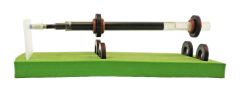
Make your own stable levitating pen with this economical, easy to build levitating pen kit! Make use of the principles of magnetic repulsion to seemingly defy the law of gravity. Great for classroom demonstrations!
Learn More...$10.99 -
Pyrolytic Graphite Block - Small
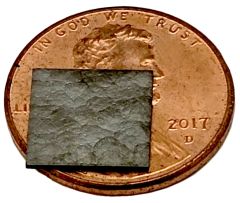
- Pyrolytic graphite is a unique form of graphite produced by decomposition of a hydrocarbon gas, typically methane, at very high temperature in a vacuum furnace, resulting in an ultra-pure product near theoretical density and extremely anisotropic
- 1cm x 1cm x 0.5 mm
- SKU# Pyrolytic Graphite Block - Small
$35.99