
Super-magnets: What They Are and How to Build Them

Did you know there are magnets over 2,000 times stronger than the ones currently on your refrigerator? It's certainly a crazy concept, but the invention of SuperConductor (LTS) magnet technology in combination with advancements in high-temperature superconducting materials has dramatically increased the power of magnets today. After intense engineering efforts over the last decade, the National High Magnetic Field Laboratory successfully demonstrated a new 32 T all-superconducting magnet in December 2017, a magnet that will help scientists break new ground in studies of nuclear magnetic resonance, electron magnetic resonance, molecular solids and quantum oscillation studies of complex metals.
Using the Right SuperConductor
A superconducting magnet of over 25 T usually has an outer magnet – known as an outsert – that is made of LTS materials and contains an insert made of HTS materials. The outsert section has three coils of niobium-tin (Nb3Sn) and two coils of niobium-titanium (NbTi) that uses Bruker-Oxford Superconducting Technology.
LTS-only magnets are generally limited to fields around 21 to 23 T, which is why the dual-component design is so necessary.
Managing Energy
Both the insert and outsert of the super-magnet must be kept in a liquid helium at 4.2K. Any additional energy would be enough to raise the temperature above the point where the coils become resistive, and the magnet undergoes a quench.
Use Apex Magnets Today
At Apex Magnets, our stock magnets are perfect for most applications, providing a variety of options without gross tolerance variation. Sort through our entire product line, or jump straight to some of our most popular B2B products, such as magnetic hooks and countersinks. Contact us with questions, and we’ll help you find the best product for your needs.
-
1/2 x 1/8 x 1/8 Inch Neodymium Bar Magnet N48 (30 Pack)

- 1/2" × 1/8" × 1/8" · 12.7 × 3.18 × 3.18 mm · Diametric
- 1.34 lb pull per magnetpull each
- 30 magnets30 pcs
- SKU M121818BR
per pack · $0.43 per magnet$12.99 As low as $9.09 -
Magnetic Pole Searcher/Finder
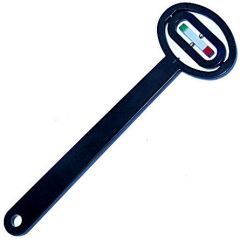
- 1 North/South Pole Magnet Identifier
- The unit consists of a small alnico bar magnet that is gimbal mounted
- SKU# MPS
$10.99 -
Buzzing Ball Hematite Sphere Magnets "Rattlesnake Eggs"
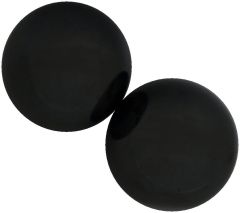
- 1" diameter · 25.4 mm
- 2 magnets2 pcs
- SKU MhemSP
per pack · $3.00 per magnetSpecial Price $5.99 Regular Price $8.99