
6 Things That You May Not Know About Magnets and Magnetism

Magnetism is one of the most mysterious and powerful forces in the world. There are several things that we still have yet to learn about magnets and magnetic energy. However, there are also some very interesting magnet facts that you may not know yet. We have gathered six of the most interesting and little-known magnet facts below:
Dipoles: Magnets have two poles, a north and a south. If you were to take a bar magnet and cut it in half, each piece would have its own north and south pole. In other words, you’d end up with two magnets. No matter how many times you split the magnet, you’ll still end up with a north and a south pole. Although, because magnets can be brittle and are hard to cut, we’d recommend keeping them as they are produced.
Technology: Tons of technology has a magnet built into it. Head phones, computers, cars, fridges, smartphones, MRI machines and more. Also, almost anything that has a motor uses a magnet.
Meteorites: Magnets can be used as a preliminary way to test the authenticity of a meteorite. Because many meteorites contain metallic iron-nickel from space, they can attract strong neodymium magnets. To learn how to test meteorites with magnets, check out this blog.
Lodestone: Although magnets are influenced by the Earth’s natural magnetic field, the magnets of today are not naturally occurring. They are produced in a complex and multiple step process. However, there is a naturally occurring magnet, and it is called lodestone. The earliest known reference to lodestone's magnetism dates to around 600 B.C. and is traditionally credited to the Greek philosopher Thales of Miletus, but lodestone is not commonly used because of its limited strength.
Animal Magnetism: Some animals can sense magnetic fields and can be deterred by strong magnetic fields. For instance, some shark species have sensory organs called ampullae of Lorenzini that can detect magnetic fields. In the presence of the magnetic field emitted by strong neodymium magnets, they can be deterred from approaching. Some scientists have tested the possibility of using this to create shark-friendly beach barriers. Results have been mixed, but research on prototype barriers has continued. The sensing of magnetic fields isn’t exclusive to sharks either, research suggests that some birds, butterflies and other migratory creatures use magnetism as a sort of GPS that guides them in flight.
TMS: TMS, or transcranial magnetic stimulation, is now an established treatment for depression, and researchers are still studying whether it could also help with memory. The process uses magnets to stimulate targeted regions of the brain with electromagnetic pulses. TMS therapy is a relatively newer treatment method that was cleared by the Food and Drug Administration in 2008. More studies are being conducted to determine how effective it is as a therapy.
We’ve only listed six magnet facts here, but there are a myriad of other ones that we haven’t revealed. Do you know an interesting magnet fact or have a magnet question? If so, feel free to connect and share it with us in the comments below or on our Facebook page!
-
1/2 x 1/8 x 1/8 Inch Neodymium Bar Magnet N48 (30 Pack)

- 1/2" × 1/8" × 1/8" · 12.7 × 3.18 × 3.18 mm · Diametric
- 1.34 lb pull per magnetpull each
- 30 magnets30 pcs
- SKU M121818BR
per pack · $0.43 per magnet$12.99 As low as $9.09 -
Gauss Spectrum Magnetic Field Viewer Film - 8 x 11.75
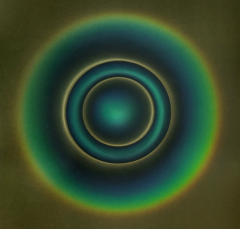
- 1 Piece Gauss Spectrum Magnetic Field Viewer Film
- Display relative gauss strength in a spectrum of color
- SKU# GSVF
$54.99 As low as $46.74