
China Breaks Record with Maglev Train

From electric vehicles to trains, magnets are relied upon by several methods of transportation. Previously, we talked about China’s continued development of maglev trains, and their latest test just shattered records. Despite the success, the team behind it has bigger ideas in store.
How Does it Work?
These trains use magnetic levitation to move along the track, a process that cuts down on noise pollution and friction. Electromagnetic forces between the train and the guideway lift the train and propel it forward.
A Promising Test
In June 2023, China's CR450 high-speed train (a conventional wheeled train, not a maglev) reached 281 miles per hour (453 km/h) in testing. Separately, a superconducting maglev vehicle developed by CASIC was reported in October 2023 to have reached 623 km/h (387 mph). The CASIC maglev team's ultimate goal is 1,000 km/h (621 mph) in a low-vacuum tube, well beyond any of these tests. To put that into perspective, a commercial plane cruises somewhere between 545 to 574 miles per hour. If the team is able to reach its goal, the future of travel in China and, potentially, the world could be changed.
The country already operates several maglev lines in service, including the Shanghai airport line, and plans to expand railways throughout the nation. These changes can help China’s large population cut back on travel times and commute with ease all while lessening emissions.
Some media reports suggested it could be in commercial use within three to 10 years, but the developers have not committed to a commercial timeline.
Stay Up to Date with Apex
Here at Apex, we work diligently to bring you the latest magnet news. One great way to catch the biggest stories as they happen is by signing up for our monthly newsletter. Just enter your email and enjoy news, exclusive discounts, DIY ideas, and so much more. You can also visit our online store at any time to get the magnets you need for your next big project. Same-day shipping is included on all orders placed by 3 PM ET.
-
Pyrolytic Graphite Magnetic Levitation Kit

- Complete kit to demonstrate diamagnetic levitation.
- Includes (4) 1/2x1/2x1/4 Neodymium block magnets and (1) piece of 1cm x 1cm x 05.mm pyrolytic graphite.
- Pyrolytic graphite is a unique form of graphite produced by decomposition of a hydrocarbon gas, typically methane, at very high temperature in a vacuum furnace, resulting in an ultra-pure product near theoretical density and extremely anisotropic
- SKU# PGMLK
$39.99 -
Magnetic Levitation Pen Science Experiment Kit
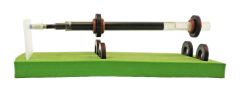
Make your own stable levitating pen with this economical, easy to build levitating pen kit! Make use of the principles of magnetic repulsion to seemingly defy the law of gravity. Great for classroom demonstrations!
$10.99 -
Pyrolytic Graphite Block - Small
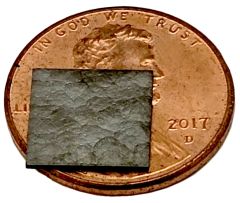
- Pyrolytic graphite is a unique form of graphite produced by decomposition of a hydrocarbon gas, typically methane, at very high temperature in a vacuum furnace, resulting in an ultra-pure product near theoretical density and extremely anisotropic
- 1cm x 1cm x 0.5 mm
- SKU# Pyrolytic Graphite Block - Small
$35.99