
Giant Magnet to Remove Meteor Fragments From Ocean
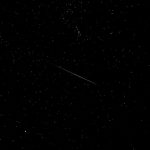
In January of 2014, an interstellar meteorite named CNEOS 2014-01-08 plummeted into the earth’s atmosphere before landing in the Pacific Ocean. Now, some eight years later, a group of scientists from Harvard are preparing to remove the rock by using a large magnet in an effort known as the Galileo Project.
Measuring the Meteor’s Impact
According to a report from Live Science, the energy released from the meteor was equal to 121 tons of TNT. For comparison, researchers say that is roughly 1% of the energy from the nuclear bomb dropped on Hiroshima during World War 2. In terms of size, the meteor is said to be about 1.5 feet (0.5 m) wide.
In 2019, the team released data saying they were 99.999% confident that the rock came from an unbound, interstellar orbit. Their theory was confirmed in April 2022 when the U.S. Space Command verified that it was an interstellar object thanks to sensors typically used for security through the missile defense program.
The Removal Process
The group fronting the project says it will use a magnetic sled with the intention of retrieving fragments of the meteor. Amir Siraj, an astrophysicist from Harvard and the author of a paper about the space rock, says the magnet should work because most meteorites contain enough iron to stick to this type of magnet.
He continues by saying the sled will be dropped in the Bismarck Sea in the southwest Pacific Ocean and then moved along the sea bed for 10 days. The process is expected to cost around $1.6 million and will be funded by private donors.
As for the team’s desire to study the rock, Avi Loeb of Harvard’s Department of Astronomy believes the findings could show alien technology. In order to test his theory, the meteor has to be retrieved and examined. As of August 2022, it was unknown when this process would take place, and reports said only about half a million dollars had been raised. Update: the Galileo Project expedition went ahead in June 2023, towing a magnetic sled north of Manus Island, Papua New Guinea. The team reported recovering about 700 tiny spherules, but their interstellar origin is disputed by other researchers.
Apex Magnets
Apex can help you find the proper magnets for any project that you may be looking to cross off your checklist before the end of summer. Sign up for our newsletter and get the latest information sent to your inbox each month. You can also explore the numerous categories for yourself on our website.
-
200 lb Double-Sided Neodymium Fishing Magnet (1 Pack)

- 1 Double-Sided Retrieval Magnet
- Pull Force: 200 pounds per magnet
- SKU# RETMAG200
$74.99 As low as $61.49 -
600 lb Double-Sided Neodymium Fishing Magnet (1 Pack)

- 1 Double-Sided Retrieval Magnet
- Pull Force: 600 pounds per magnet
- SKU# RETMAG600
$155.99 As low as $127.91 -
1000 lb Double-Sided Neodymium Fishing Magnet (1 Pack)

- 1 Double-Sided Retrieval Magnet
- Pull Force: 1000 pounds per magnet
- SKU# RETMAG1000
Special Price $186.99 Regular Price $287.99