
How The Magnetosphere Affects Migrating Birds

If you have ever looked up during the spring and fall months, odds are you have probably noticed that familiar v-shaped flock of feathered friends soaring through the sky to their summer or winter destinations. And while it is quite common to see flocks of birds painting the sky, you may begin seeing fewer and fewer due to recent research on birds and the earth’s magnetic field.
Observed over a length of many years, reports of birds flying off course, had scientists searching for answers. Flocks have been recorded in areas they would not normally fly, raising concern for certain species. While a myriad of factors may be contributing to this phenomenon, a correlation between a bird’s flight patterns and the earth’s magnetic field is becoming evident.
Let’s Get an H2 In Here
In a recent study, author and UCLA associate professor of ecology and evolutionary biology, Morgan Tingley suggests, "There's increasing evidence that birds can actually see geomagnetic fields.” Delving further into the science behind this superpower, research suggests light-sensitive eye proteins, such as cryptochrome, may let birds sense magnetism. Interestingly, birds combine several navigation cues depending on their circumstances. In familiar areas, birds often rely on geography, but when navigating unfamiliar terrain they may switch to geomagnetism.
While geomagnetism has proven to be a highly successful method of navigation, disturbances in the earth’s magnetic field may significantly impact its accuracy. Disturbances in the earth’s magnetic field, which can be linked to solar activity such as solar flares and the geomagnetic storms they can trigger, can lead birds astray, landing them far off course from their intended destination. A UCLA study published in Scientific Reports linked geomagnetic disturbance to increased vagrancy in migratory landbirds, although the researchers found that high solar activity on its own was associated with less vagrancy. To put it in perspective, such distortions assimilate to humans following a map where the road signs are turned in the opposite direction. This phenomenon is known in the scientific community as vagrancy. In addition to solar activity, the weather also plays a role in vagrancy patterns across the US.
What Does The Future Of Migration Hold?
Solar disturbances are thought to affect a bird’s navigation, but uncertainties remain surrounding the severity and future consequences of such. A direct result of targeted research efforts, scientists have also proposed that the earth’s magnetic field may affect other migratory animals, such as sea turtles and possibly whales and fish. Continued research will be critical to identifying the extent of the earth’s magnetic field on migratory species, and what, if anything, can be done to lessen the impact of these harmful disturbances.
Magnetic Forces In Migration And Beyond!
Whether you are researching the migratory efforts of birds or accessorizing your grill for spring, magnetic forces play a vital role in our lives. Check out how magnets can make a difference in your day when you visit our blog. We offer fun, functional DIYs, experiments, and facts that the whole family will love. And remember to stock up on supplies at our website where you will enjoy same-business-day shipping on orders received by 3 PM ET, Monday through Friday. Contact us with any questions!
-
Pyrolytic Graphite Magnetic Levitation Kit

- Complete kit to demonstrate diamagnetic levitation.
- Includes (4) 1/2x1/2x1/4 Neodymium block magnets and (1) piece of 1cm x 1cm x 05.mm pyrolytic graphite.
- Pyrolytic graphite is a unique form of graphite produced by decomposition of a hydrocarbon gas, typically methane, at very high temperature in a vacuum furnace, resulting in an ultra-pure product near theoretical density and extremely anisotropic
- SKU# PGMLK
$39.99 -
Ferrofluid Magnetic Liquid ***1 Ounce***
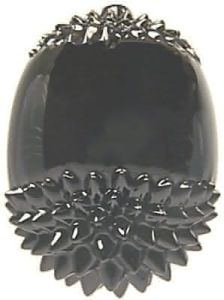
- 1oz bottle of Ferrofluid
- This liquid responds to magnets and magnetic fields
- Mineral oil based product
- SKU# FF1oz
$20.99 As low as $16.79 -
Buzzing Ball Hematite Sphere Magnets "Rattlesnake Eggs"
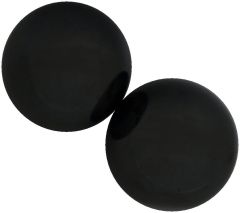
- 2 magnets
- Material: Hematite
- SKU# MhemSP
 Special Price $5.99 Regular Price $8.99