
Innovative Medical Magnets
From holding our special memories on the fridge to navigation, magnets help us in many ways. For some though, magnets have an even more significant and life-changing impact.
For most 11-year-olds, playing sports and running around the playground is the norm, but for Chicago’s Cal Sorensen, this was not always the case. Born with a severely curved spine, he was forced to wear a back brace to help straighten his back. After doctors realized that this wasn’t working, they turned to another solution: magnets.
Two telescopic rods were surgically implanted into Cal’s back. The rods are designed to expand slowly over time to help gradually straighten the spine. In order to lengthen the rods, medical professionals used specially designed magnets approved for medical use (unlike our magnets, which should only be used when following our safety guidelines and NOT for medical purposes). An external magnetic device is placed outside of the body near the internal rods. When adjusting, the external magnet turns the internal magnet in the rods, which lengthens them in small, controlled increments. Cal’s rods were adjusted periodically, in small pre-programmed increments.
The rods will hopefully help his spine become completely straight, and allow him to grow to his full potential. This technology has since become a more common solution for younger children with spinal problems. Although this solution has worked for some, the rods are not the first treatment tried. Bracing is generally recommended first for growing children with moderate curves because it is non-surgical, and surgery such as growing rods is usually considered when bracing has not stopped the curve from progressing.
The magnets, however, appear to work well for some patients who need frequent length adjustments. After the initial operation of inserting the rods, magnets provide a better alternative to repeated operations where the rods are extended manually. While the rods are not as convenient as using a standard back brace, they have allowed children with spinal problems to live their lives normally, including Cal.
What other magnetic innovations are being used to improve people’s lives?
-
1/2 x 1/8 x 1/8 Inch Neodymium Bar Magnet N48 (30 Pack)

- 30 magnets
- Pull Force: 1.34 pounds per magnet
- SKU# M121818BR
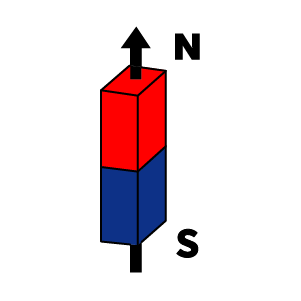 $12.99 As low as $9.09
-
Gauss Spectrum Magnetic Field Viewer Film - 8 x 11.75

- 1 Piece Gauss Spectrum Magnetic Field Viewer Film
- Display relative gauss strength in a spectrum of color
- SKU# GSVF
$54.99 As low as $46.74 -
1/2 Inch Neodymium Sphere Magnet N48 (4 Pack)

- 4 magnets
- Pull Force: 7.38 pounds per magnet
- SKU# M12SP
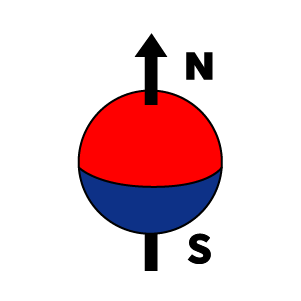 $17.99 As low as $12.59