
Magnetic Coupling: How to Choose the Right Magnet

What are we talking about when we say “magnetic coupling?” Well, a magnetic coupling comprises two essential components: the driver and the follower. The driver connects to the prime mover, typically a motor, while the follower responds to the driver's motion through magnetic interaction.
Advantages of Magnetic Coupling Setup
This setup facilitates a contactless transmission of mechanical energy, offering several advantages:
- Component isolation: Because there is no mechanical contact, magnetic coupling can reduce the transmission of mechanical vibrations, and the design allows for a mechanical barrier between the driver and follower, enabling operation under varying pressure differentials and distinct environments.
- Tolerance of misalignment: Depending on the design, the coupling can tolerate a limited amount of axial, radial, and angular misalignment between the prime mover and the load.
- Speed regulation: It permits variation in speed between the prime mover and the load.
Selecting the Most Appropriate Magnet for Magnetic Coupling
Achieving optimal air-gap magnetic field intensity necessitates selecting the most appropriate magnetic materials for the coupling. The materials used for transferring torque via permanent magnets should possess specific properties:
- High residual magnetic flux density: This ensures a strong magnetic force and torque.
- High coercivity (Hc): It prevents demagnetization, particularly under high temperatures, necessitating a high magnetic energy product (BHmax).
- Excellent temperature stability: The material should maintain magnetic force stability under varying temperatures.
Permanent Magnets
Permanent magnets, characterized by high coercive force and remanence, can be categorized into two types:
- Metal alloy magnets (e.g., neodymium iron boron, samarium cobalt, and alnico)
- Ferrite/ceramic magnets
The following magnets have different temperature tolerances and corrosion protection requirements:
- Neodymium: Up to about 80°C for standard grades, up to about 150-200°C for high-temperature grades, requires corrosion protection.
- Samarium cobalt: Up to about 250-350°C depending on grade, corrosion protection optional.
- Ceramic: Up to 250°C, corrosion protection not required.
Hysterloy (hysteresis couplings) is rated by some suppliers (for example, Dexter Magnetic Technologies) for use up to 350°C without corrosion protection; confirm against the datasheet for your alloy.
Neodymium for Magnetic Coupling
While various permanent magnets can be used for magnetic coupling, neodymium is the most commonly utilized due to its high BHmax and coercive force. For high-temperature applications exceeding 200°C, samarium cobalt magnets are recommended.
Apex Magnets
As a reputable magnet distributor with decades of experience, Apex Magnets specializes in the sale of permanent magnets. We offer high-quality rare earth permanent magnetic products including neodymium, samarium cobalt, and ceramic magnets. Browse our product catalog today!
-
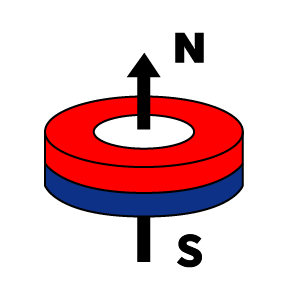
1 x 3/4 x 1/8 Inch Neodymium Ring Magnet N48 (4 Pack)
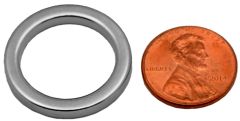
- 4 magnets
- Pull Force: 6.99 pounds per magnet
- SKU# M13418R
 $9.99 As low as $6.99
-
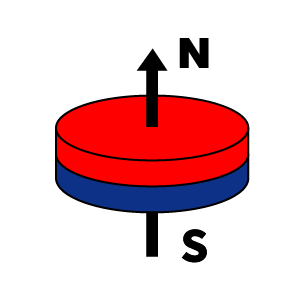
1/4 x 1/8 Inch Samarium Cobalt Disc Magnet SmCo30 (10 Pack)
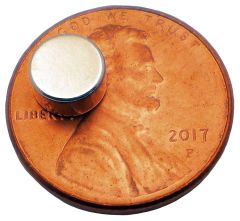
- 10 magnets
- Pull Force: 1.45 pounds per magnet
- SKU# M14x18DISmCo
 $11.99 As low as $8.39
-
38 x 24 x 4 mm Ceramic Ring Magnet C11 (10 Pack)
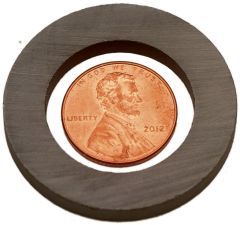
- 10 magnets
- Pull Force: 1.57 pounds per magnet
- SKU# MCER38244MM
Special Price $5.99 Regular Price $9.99