
Magnetic Personalities: Michael Faraday
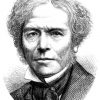
To say chemist and physicist Michael Faraday had an impact on our understanding of electromagnetism would be an understatement. In fact, he basically established the field of electromagnetic research. You don’t get a scientific law and a unit of measurement named after you for nothing! In our latest installment of the Magnetic Personalities series, we’re taking a look at this great scientist’s amazing life.
Early Life
Faraday was born in 1791 to a poor family in Surrey, England. His father was a blacksmith who struggled to provide for him and his three siblings. Faraday later recalled being given just one loaf of bread to last him a week, yet his mother ensured that his inquisitive mind was well-nourished. She fostered in him a love for discovery and nature.
Faraday’s formal education mainly came from the church he and his family attended. His first job was an apprenticeship to a book binder. While this profession was a far cry from the chemistry labs and lecture halls in which Faraday would eventually end up, they did afford him the opportunity to read an unlimited amount of books. To compromise for his meager education at home, the young Faraday read every book he could get his hands on. His favorite was the Encyclopedia Britannica.
Through his readings, Faraday learned how conduct crude scientific experiments with whatever supplies he found around work or home. This fascination with experimentation and science would pay off. In his early twenties, Faraday was offered an invitation to attend chemistry lectures at the Royal Institution of Great Britain. After attending these lectures, Faraday immediately sent a (bound) copy of his notebook to chemist Sir Humphry Davy. This eventually landed him a job as a lab assistant under Davy.
Under the watchful eye of Humphrey, Faraday was able to explore the latest findings in chemistry and contribute to his master’s research in significant ways. It is often said that Michael Faraday was Sir Humphry Davy’s greatest discovery.
Faraday the Chemist
As his apprenticeship continued, Faraday continued to gain notoriety as one of the best chemists in the world. He was the first scientist to produce compounds of carbon and chlorine as well as contribute to the study of metallurgy. In the 1820s, he worked on improvements to the glass used in the Royal Institutions telescopes. In 1845, Faraday discovered the principle of diamagnetism.
Diamagnetism describes objects that repel when introduced to a magnetic field or magnetic objects. Diamagnetic materials include hydrogen, nonmetals, and the noble gasses. While Dutch scientist Sebald Justinus discovered principles of diamagnetism nearly seven decades earlier, it was Faraday who named and described it.
After this discovery, Faraday turned his attention to exclusively studying magnetism and electricity. Throughout his career, Faraday’s discoveries and research would revolutionize the fields of physics and chemistry. Here are just a few of his other magnetic achievements:
- Built one of the first electromagnetic motors (1821)
- Discovery of electromagnetic induction
- Discovery of mutual induction
Faraday’s Law & The Farad
How do you honor a man who made such great strides in magnetism? One great way is to have a principle of physics named after you. After publishing his findings on electromagnetic induction, fellow physicist James Clerk Maxwell built them into his field equations, which include Faraday’s Law. In short, the law states that a changing magnetic field induces an electromotive force (voltage) in a nearby circuit.
As if lending your name to a law wasn’t enough, Faraday is also immortalized through a unit of measurement. The farad measures a unit of electrical capacitance—how much electric charge something can hold.
Throughout his career, Michael Faraday changed the way we understand chemistry, physics, and magnetism. Between Faraday’s Law and fards, his research is still used to this today. To learn about other great figures in magnetism, check out the rest of our Magnetic Personalities series.
-
Buzzing Ball Hematite Sphere Magnets "Rattlesnake Eggs"
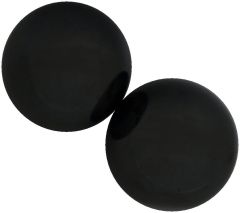
- 1" diameter · 25.4 mm
- 2 magnets2 pcs
- SKU MhemSP
per pack · $3.00 per magnetSpecial Price $5.99 Regular Price $8.99 -
Magnetic Pole Searcher/Finder
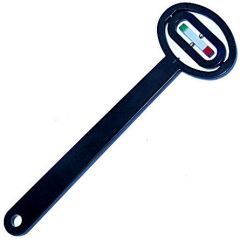
- 1 North/South Pole Magnet Identifier
- The unit consists of a small alnico bar magnet that is gimbal mounted
- SKU# MPS
$10.99 -
3/4 x 1/8 Inch North Pole Marked Neodymium Disc Magnet N48 (10 Pack)

- 3/4" × 1/8" · 19.05 × 3.18 mm
- 11.1 lb pull per magnetpull each
- 10 magnets10 pcs
- SKU M34x18NDI
per pack · $1.50 per magnet$14.99 As low as $10.49