
Magnetic Refrigeration is Pretty Cool!

We’ve been telling you magnets are cool for years now, but could magnets soon be replacing our refrigerator technology? With new findings from the researchers at the U.S. Department of Energy’s Ames Laboratory, magnetic refrigeration could be on the horizon.
If this method is successful, it could replace the more than century-old concept of gas compression refrigeration and be up to 30% more energy efficient, saving consumers energy and money. Using small quantities of magnetocaloric materials, the Ames Laboratory researchers have created an advanced device that can cool objects.
Magnetocaloric? Sounds Fattening
Magnetic refrigeration, which the Ames Laboratory device would use, is based on the magnetocaloric effect. This technique can reach not only commercial refrigeration temperatures, but extremely low temperatures that would leave a penguin shivering. One magnetic refrigerating device was able to cool a sample down to one-half-billionth of a degree above absolute zero (-460 Fahrenheit)! Nuclear demagnetization has gone even colder: researchers at Aalto University cooled the nuclear spins of rhodium metal to 100 picokelvin, one of the lowest temperatures ever reported.
When a piece of metal sits uninhibited, its electrons spin and move however they please. When a magnet is applied, these electrons get in formation and adjust their spin to match their comrades. As they align, they release energy, and the metal’s atoms are allowed to vibrate a little more vigorously. This vibration is better known as heat.
Magnetic Refrigeration!
But we’re not talking about heat here, we’re talking about cooling, right? Well, the magnetocaloric effect works both way. If a piece of metal that was under the influence of a magnetic field has that field removed, the metal cools. If a heat-transfer fluid (such as helium gas) is flowed over the metal while it is in the magnetic field, when the field is taken away, even more heat is removed, cooling the object even further.
The device designed by the team at the U.S. Department of Energy took about 5 months to create but the concept has been 20 years coming. The team is now exploring other material options to determine if the device can be scaled up for commercial purposes.
We are thrilled to learn that our assertions of magnets coolness has been validated by scientific evidence! Magnetocaloric coolers are now being tested in supermarkets in Europe, and we hope to see them at our local home goods stores someday. Until then, keep up-to-date on all other magnet-related news on our blog here.
-
Pyrolytic Graphite Magnetic Levitation Kit

- Complete kit to demonstrate diamagnetic levitation.
- Includes (4) 1/2x1/2x1/4 Neodymium block magnets and (1) piece of 1cm x 1cm x 05.mm pyrolytic graphite.
- Pyrolytic graphite is a unique form of graphite produced by decomposition of a hydrocarbon gas, typically methane, at very high temperature in a vacuum furnace, resulting in an ultra-pure product near theoretical density and extremely anisotropic
- SKU# PGMLK
$39.99 -
Gauss Spectrum Magnetic Field Viewer Film - 8 x 11.75
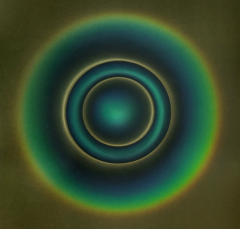
- 1 Piece Gauss Spectrum Magnetic Field Viewer Film
- Display relative gauss strength in a spectrum of color
- SKU# GSVF
$54.99 As low as $46.74