
Magnets in Everyday Items: Part 2 - Home Entertainment

Whether we realize it or not, we are surrounded by magnets. In Part 1 of this series, we looked at the uses of magnets in cleaning appliances such as vacuums, washing machines, and dryers. Now, we are shifting our focus to electronics and home entertainment. Keep reading to see the interesting ways these everyday items rely on the power of magnets to run efficiently.
Magnets in Computers
Computers are incredible devices that allow us to work, play, and study with ease. You may have assumed there were magnets in computers somewhere, but many are surprised to learn their main function is to help with storage. Inside each computer is a hard disk that contains all of your computer’s important files and information. Data is stored as magnetized regions on thin metallic platters, and tiny electromagnets in the read/write heads write and read that information.
Elsewhere, permanent magnets can be found inside of the fans that keep your device from overheating. The magnets and electrical components work together to put the fans in motion and keep things running smoothly. This concept also applies if your computer has a disc drive that allows you to insert CDs into your machine. If your computer has speakers, magnets are also hard at work within their shell. More on that below!
Magnets in Televisions
Magnets are also prevalent inside older televisions and computer monitors. Older televisions and monitors contain cathode ray tubes, also known as CRTs, which send electrons to the screen to generate the images you see. Flat-panel screens do not use this technology. The CRT process is possible by, you guessed it, some hard-working electromagnets. Electromagnets in the deflection yoke around the tube steer the electron beam across the screen multiple times per second to keep the video playing.
Magnets in Speakers
As mentioned above, speakers would not function without the magic of magnets. Speakers make sound through vibrations, which are possible due to electric signals. When the electric currents change, they produce a magnetic field. The coil's field interacts with the fixed field of the speaker's permanent magnet, pushing the attached cone back and forth to create vibrations. This field is what produces the sound you hear. Larger speakers generally use larger magnets, which help produce a more substantial sound.
Learn More About Magnets with Apex
Now that you have learned about the fascinating ways magnets work within electronics, why not learn even more about these powerful tools? Read about the many uses of magnets, take a look at DIY projects, and see how magnets help businesses thrive by reading some of our other blogs. You can also get the latest magnet news, exclusive discounts, and more sent directly to your inbox each month by signing up for our monthly newsletter.
-
Ferrofluid Magnetic Liquid ***1 Ounce***
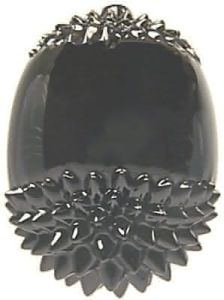
- 1oz bottle of Ferrofluid
- This liquid responds to magnets and magnetic fields
- Mineral oil based product
- SKU# FF1oz
$20.99 As low as $16.79 -
Gauss Spectrum Magnetic Field Viewer Film - 8 x 11.75

- 1 Piece Gauss Spectrum Magnetic Field Viewer Film
- Display relative gauss strength in a spectrum of color
- SKU# GSVF
$54.99 As low as $46.74