
magnet experiment
-
Magnet Experiment: The Levitating PaperClip
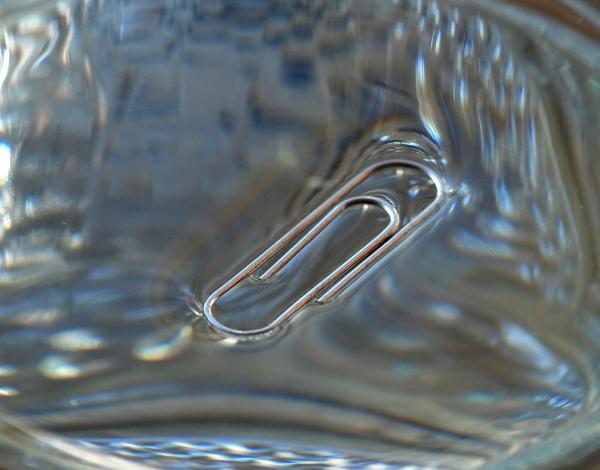 Magnets can do some amazing things -- like levitate and propel a train at speeds up to 375 mph in test runs or generate the strong magnetic field an MRI scanner uses to image the human body. However, sometimes its just fun to conduct experiments with them. One interesting experiment to do is to make a paperclip levitate, or seem to float in midair. The experiment is about as simple as it gets, and you can do it with everyday items that you probably have laying around your house. Here’s how you can do it. Continue reading →
-
Repelling Magnets Experiment
 Every permanent magnet has a north pole and a south pole. Even if you cut a magnet in half, the two remaining pieces will have a north and south pole. And if you know anything about magnetism, you know that opposites attract. The north pole and south pole of two magnets will pull towards each other, whereas two similar poles will repel each other. Magnetic attraction and repulsion are perhaps the simplest and most well-known properties of magnets. In this experiment, we’re creating a device that shows how magnetic repulsion works and makes learning about it fun. Continue reading →
-
Recreate Michael Faraday’s Magnetic Experiment
 In the 1800s, a scientist named Michael Faraday made significant contributions to the study of electricity, magnetism and chemistry. One of his most influential contributions was the discovery of electromagnetic induction. Electromagnetic induction is the process of inducing a voltage, and therefore an electric current, in a conductor. It occurs when a conductor is placed in the presence of a changing magnetic field. You can recreate Faraday’s electromagnetic induction experiment with the instructions below. Continue reading →
-
Make A Dancing Heart With Electromagnetism
 Homopolar motors are the simplest forms of motors. They can be built with three materials, but their designs can be a little more creative. For instance, you can make spiral or heart shapes dance with the motor's energy. Since it is almost Valentine’s Day, you can try this fun science experiment that explores how electricity and magnetism come together to form electromagnetism. Continue reading →
-
Magnet Experiment: How Magnets Could Clean Up Oil Spills
 Until we no longer rely on oil, it will still be pumped and shipped around the world. The ugly truth about that is that using oil can lead to messy spills that are damaging to the environment and wildlife living in the area. Plus, cleaning up oil spills while trying to preserve and help the ecosystem is a difficult task. One physicist named Arden Warner has been studying some possible, environmentally friendly ways and he may have come up with the solution-magnets. We previously talked about how his method would use high powered magnets, but now you can see for yourself how the method would work with this simple science experiment. Continue reading →
-
Spooky Science Experiments for Halloween
 From Frankenstein to ghost hunting, science has long been referenced in Halloween stories. Although the science behind the spooky stories is sometimes flawed, we can’t help but admire the creative efforts of storytellers. Therefore, in the spirit of Halloween, we have put together some of the spookiest science experiment ideas that are perfect for teaching science while still having scary fun. Continue reading →
-
Build a Levitating Model Train Track with Magnets
Maglev trains are powered by magnetic levitation technology. If you have ever heard about or ridden on one of these high speed trains, then you may already know that they hover above the track. This is because most designs use electromagnets, and some, such as Japan's SCMaglev, use superconducting magnets that operate on the Meissner effect. When cooled to a super low temperature, superconducting materials like Yttrium-barium-copper-oxide enter a state of zero electrical resistance, expel magnetic fields and can levitate. You can build your own mini Maglev train and track, with a few simple materials and construction. We have outlined some steps and supplies below, however, this method differs from the Maglev train technology. Read on, and see if you can guess how this design is different. Continue reading → -
Is It Magnetic? An Experiment
Magnetism is an essential science lesson, and you can make teaching about it loads of fun with some creative tools. For a beginner, learning about the complex world of magnetism can seem a bit daunting. However, if you start with the basics and this creative experiment, it should be easier to move onto some more advanced concepts. One of the most basic magnet lessons is figuring out what is and what is not magnetic. In other words, what do magnets attract (besides other magnets)? A fun way to do this is with a magnetic test experiment. Continue reading → -
Magnet Experiments: Build a Speaker with Magnets
Can you imagine life without music? Well, without magnets it would be pretty difficult to listen to it. Did you know that magnets are inside speakers and headphones? Magnets allow us to hear the music that we love so much. You can even create your own DIY set of speakers with some magnets and learn a little bit about audio, electricity and science in the process. There are tons of variations on homemade speakers, even a Mason jar version. But, we have created a simple version for those of you that would like to try it out! Continue reading → -
Copper Tube and Neodymium Magnet Experiment Explained
In a previous blog, we completed a neodymium magnet experiment to see what happens when you drop a bar magnet into a copper tube. Spoiler alert — if you want to try the experiment for yourself first, stop reading and head to this blog. When you complete the age-old “drop a magnet down a tube” trick, you’ll notice something strange...


