magnet experiment
-
How to Create a DIY Magnetometer Inside a Tic Tac Box
 Ever wonder how you could make your very own Magnetometer? This DIY project allows you to do so right from the comfort of your home. Magnetometers measure the strength of magnetic fields – acting as an essential tool to assess the strength of permanent magnets and electromagnets in order to understand the field shape of nontrivial magnet configurations. Use these steps to create a pocket-size portable Magnetometer inside a Tic Tac Box! Continue reading →
-
St. Patrick's Day Science Experiment
 St. Patrick’s Day is usually associated with lucky clovers, leprechauns, and gold at the end of rainbows. Unfortunately, gold is not magnetic so it’s more difficult to find even when using a rainbow as a map. What metals are magnetic? Here’s a fun St. Patrick’s Day-themed science experiment you can try to determine what materials have magnetic properties and how they move through different density’s when a magnetic field is applied: Continue reading →
-
4 Mesmerizing Magnet Videos
 In general, it can be said that videos on the Internet have a certain “magnetic” quality to them, whether you’re watching them to learn new things, to check out the latest Beyoncé music video, or even just to procrastinate. But, they can become even more mesmerizing with the presence of actual magnets. We’ve rounded up 4 of the most mesmerizing magnet videos we could find online...and one bonus one that is only technically on topic, but that you’ll enjoy all the same. Check them out: Continue reading →
-
DIY Diamagnetism Experiment
 Diamagnetism is a magnetic property first discovered in 1778 by Dutch scientist Sebald Justinus Brugmans. He discovered the property while using bismuth and antimony and realized they were repelled by magnetic fields. It wasn’t until 1845 that English scientist Michael Faraday named the property diamagnetism while studying elements and compounds that exhibited negative magnetism, meaning they were pushing away from the magnet. In layman's terms, diamagnetism is a property that every element possesses, which causes a weak repulsion from a magnetic field. In contrast, some elements also possess ferromagnetism and paramagnetism, which causes them to be attracted to the magnetic field, weakly for paramagnetism and strongly for ferromagnetism. To show diamagnetism, you can use a DIY magnet experiment with a common everyday food, grapes, to show small repulsion when exposed to a strong rare earth magnet. This experiment works best with a strong rare earth magnet, such as neodymium, because of the strong magnetic field it produces. Continue reading →
-
Magnetic Science Experiment
 Neodymium magnets are not only useful for organizing clutter or making crafts, but also for demonstrating the unique properties of magnetism and magnetic fields. If you’re looking for an easy and fun science experiment, check out this magnetic tutorial for a hollow pyramid with a ring magnet: Continue reading →
-
DIY Levitating Pen
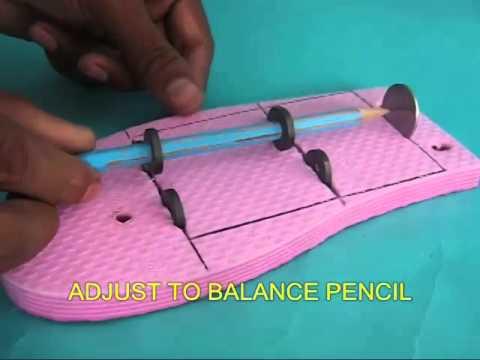
 Today, people use their keyboards to write more often than they use pens or pencils. If that doesn’t stop you from buying nice new pens, here’s a high-tech way you can display your favorite writing utensil using magnetic levitation: Continue reading →
-
DIY Magnetic Rocket Experiment
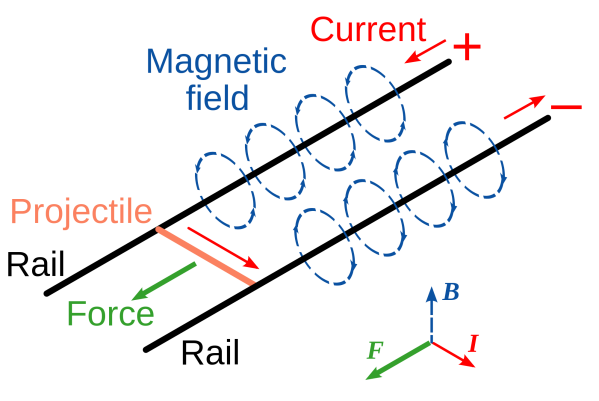
Launching a rocket into space is expensive. The current chemical method requires more than 500,000 gallons of liquid propellants. Shuttle launches once cost roughly about $775 million per shuttle (NASA's FY2010 average) launch, which is in addition to the cost of the shuttle itself. The Space Shuttle Endeavour cost $1.7 billion. So, as costs continue to rise some scientists and engineers are trying to come up with an alternative launch method. Continue reading → -
How To Make A Magnetometer
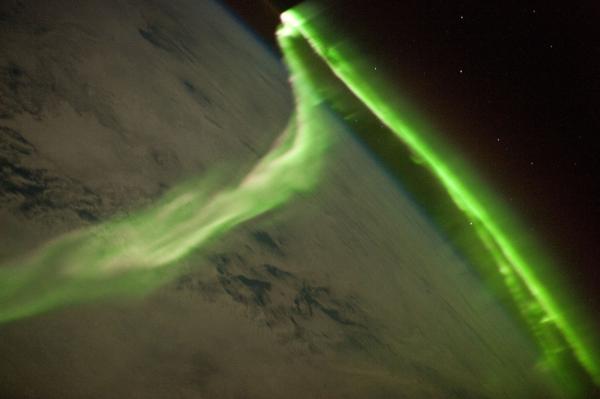
Magnetometers are used to measure the direction of a magnetic field or the magnetization of a magnetic material. They can also be used to measure geomagnetic storms. So, if you missed the aurora during a past geomagnetic storm, you can watch for the next one with your own DIY magnetometer (check NOAA's aurora dashboard for current forecasts). Continue reading → -
Electromagnetic Induction and Tesla Coils: How It Works
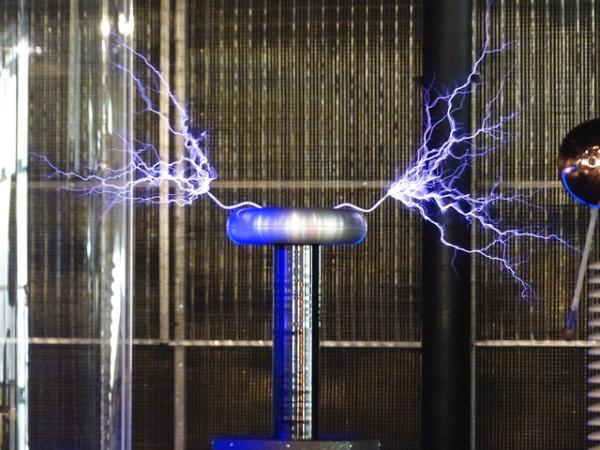
Nikola Tesla is known as one of the greatest minds in science. His experiments helped to further the fields of electricity and magnetism, making many of the gadgets and luxuries we enjoy today possible. One of Tesla’s most well-known inventions is the Tesla coil, a resonant air-core transformer that Tesla used to produce very high voltages and to experiment with wireless transmission of power and signals. The coil was created in 1891. Continue reading → -
Can Magnetic Fields Be Blocked?
Magnetic shielding may seem like the stuff of science fiction novels and movies, but it’s real. Unlike electric fields, which a conductive enclosure can block, magnetic fields are harder to stop. This is because there is no monopole magnet--or at least not one that we know. The magnetic field lines run from a magnet’s north and south pole, which makes blocking them difficult. Continue reading →