
Visualizing Magnetism With MIMI: Magnetospheric Imaging Instruments

Many of us are aware that plasma is one of the fundamental states of matter. What is not always apparent to us earthlings is that plasma is invisible to the naked eye in certain areas of the universe. But with the help of a tool called MIMI (Magnetospheric Imaging Instrument) NASA can view an entirely new world of material.
Plasma on Saturn
The presence of a various number of electrical charges makes plasma conductive -- meaning that it responds to electromagnetic fields. Kind of like gas, plasma does not have a definite shape or a specific volume unless enclosed in a container. Though similar to gas, in a magnetic field, plasma can create structures, such as filaments, beams, and double layers.
Plasma is absolutely everywhere in space. In the case of Saturn, its motion is controlled by the planet’s magnetic field due to the matter’s charge. Particles with both positive and negative charges spiral in different directions as they are dragged along by the field’s rotation with the planet in the magnetosphere.
Cassini and the Saturn System
NASA’s Cassini spacecraft’s mission to Saturn is “one of the most ambitious efforts in planetary space exploration ever mounted.” In June 2008, Cassini completed its initial four-year mission to explore the Saturn System -- studying the planet, its moons, and its rings. The first extension of that mission was called the “Cassini Equinox Mission” and was completed in September 2010. This spacecraft made many new discoveries in its second extension, which ended in September 2017. The extension was called the “Cassini Solstice Mission.”
This revolutionary craft is equipped with a range of instruments to help measure the field and the plasma directly around it. As Cassini orbits Saturn, it is able to sample plasma at different locations around the planet. While that is a fantastic feat in and of itself, being that far from earth makes it challenging for astronomers to sample the plasma. That is where MIMI comes in.
Magnetospheric Imaging
MIMI has several functions -- one of them is making images of the “invisible” plasma trapped inside the magnetosphere. In order to accomplish this challenging task, it relies on something known as “energetic neutral atoms.” These particles arise when a fast-moving plasma encounters a slow cloud of uncharged gas. This enables the bits on plasma to steal an extra electron and become neutral. These freshly neutral particles and then freed from Saturn’s magnetic field and subsequently shot into space in straight lines.
MIMI captures these particles and measures their trajectory and velocity, allowing the instrument to find the atoms’ origins and construct images of where the plasma must be located in space. MIMI’s significance in relation to Cassini is that it allows scientists to observe how the plasma interacts with gas to detect dangerous regions for Cassini to avoid as it explores the ringed planet.
In 2017, Cassini carried out its Grand Finale. After a last Titan flyby, it made a series of dives between Saturn and its rings, then plunged into Saturn’s atmosphere on September 15, 2017, ending the mission. (The landing on Titan in January 2005 was made by the Huygens probe, which Cassini had carried to Saturn.)
-
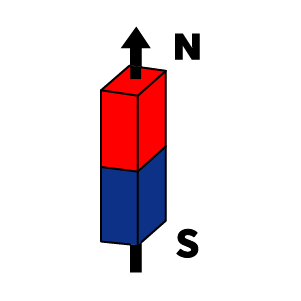
1/2 x 1/8 x 1/8 Inch Neodymium Bar Magnet N48 (30 Pack)

- 30 magnets
- Pull Force: 1.34 pounds per magnet
- SKU# M121818BR
 $12.99 As low as $9.09
-
12" x 12" Magnetic Field Viewer Film

- 1 Piece Magnetic Field Viewer Film
- The poles appear dark green
- SKU# VF12
$49.99 As low as $42.49 -
Gauss Spectrum Magnetic Field Viewer Film - 8 x 11.75

- 1 Piece Gauss Spectrum Magnetic Field Viewer Film
- Display relative gauss strength in a spectrum of color
- SKU# GSVF
$54.99 As low as $46.74