uses of magnets
-
DIY Homopolar Motor
 The homopolar motor is one of the simplest electric motors. They use electromagnetism to support motion and were developed by Michael Faraday in the 1800’s. Homopolar force can be explained using the Lorentz force. This force is caused by electric currents and magnetic fields that are perpendicular to each other, causing rotation. In one of our past blogs, we showed you how to make a similar homopolar motor. The one we are designing today uses two magnets to create forward propelling motion instead of spinning. This motor will act like a small car, moving forward when placed properly. To get started with your DIY magnet car, you’ll need some supplies you can probably find in your kitchen, along with some magnets, of course! Continue reading →
-
5 Things That Make Cool Magnets
 Plenty of everyday objects can become cool magnets with a small magnet attached, but most things cannot be magnetized themselves. So, instead of trying to magnetize your furniture or your shoes, here are a few items you could find around your home and turn into cool fridge magnets: Continue reading →
-
How A Cue Ball Works
 Pool, also called billiards, was first invented sometime in the 15th century. It is believed to originate in France. It’s believed that the game first started out with the balls being shoved versus the modern way we know, which is by striking the ball. Fast forward to present day, where pool is being played in bars across the country daily. You may not think about it after throwing back a couple drinks, but do you know how the cue ball magically gets dispensed after you scratch when using a coin operated table? Well, it’s not magic, and it actually can be one of two ways, one using magnetism! Continue reading →
-
DIY Magnetic Chess Set
 Chess is one of oldest board games still played today. People were playing chess as early as 600 AD. Today, chess is global competition with tournaments played around the world every year. For many players though a simple game of chess can’t be completed in one sitting. When your chess match lasts days, weeks, or even months at a time, how do you make sure the pieces aren’t jostled or misplaced while you’re away from the board? You can create a magnetic chess set to keep your game in place so you can pick up right where you left off any time you want. Continue reading →
-
Painting with Magnets
 Whether or not you consider yourself an artist, there are plenty of ways to create awesome abstract projects in your home. Painting can seem a little intimidating to those who aren’t familiar with the medium, but if you’re not a huge fan of simply splashing paint onto paper, it might be time to get a little creative! Using magnets to paint may sound a little strange, but it’s an easy way to combine science and art to make a neat decoration for your home. So, get ready to channel your inner Jackson Pollock and create your next masterpiece! Continue reading →
-
DIY Magnetic Dart Launcher
 We can trace the existence of darts to as early as the Middle Ages, when a form of the game was a training pastime for English archers. Legend says King Henry VIII wanted his archers to be able to practice aim year round. Today, the game can be found in bars and pubs across the world. Now, you may have seen magnetic darts in stores, but none quite like this. Rather than using a dart with its point replaced by a magnet and throwing it at a magnetic pad, YouTuber Magnetic Games has used the power of magnetism to load and shoot the traditional sharp darts. Now this DIY is NOT recommended for children, but you may feel like a kid again with how fun it is. Continue reading →
-
Learn All 50 States With A Magnetic Map
The world is a pretty big place with 7 continents and over 190 countries so learning geography is not an easy task. Many American students begin by learning the orientation of all 50 states that make up the United States of America. While 50 states is only a small fraction of the rest of the world, it’s a great place to start. Here’s a fun activity you can use to learn all 50 states with a magnetic map: Continue reading → -
DIY Magnet Trampoline
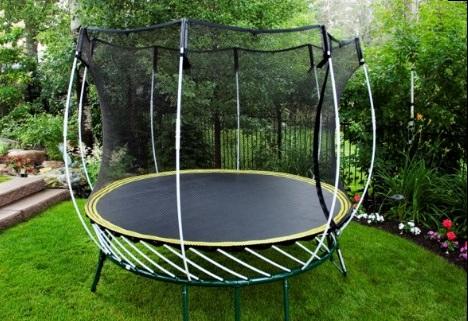
The basics of magnetic poles and how they attract and repel can be difficult to understand without hands on experience. That’s why playing with magnets is not only fun, but also educational! An extremely enjoyable and slightly addictive way to do this is by creating a magnet trampoline. Continue reading → -
3 Ways Magnets Make Life Easier For Cyclists
Cycling doesn’t just benefit your health, it’s also good for your wallet. When you bike to work all of the expenses that come with a car become irrelevant. You don’t have to pay for gas or parking when you ride a bike, and bikes need far less maintenance than cars. Riding a bike to work is an easy way to avoid the gym and still exercise everyday. Instead of wasting precious minutes stuck in traffic, you can speed along and arrive at work on time and energized. While there are numerous advantages to biking instead of driving, there are a few inconvenient aspects as well. For example, bikes don’t have headlights, which makes it difficult to see in the dark. Carrying essentials like your phone, keys, and wallet also become more challenging while on a bike. Here’s how magnets can solve these problems and make life easier for cyclists: Continue reading → -
DIY Magnetic Terrariums
Terrariums are a popular decorating choice -- but, if you don’t have the money or space to make larger pieces to add to your decor, small magnetic terrariums may be the way to go. Terrariums are glass containers that house small plants inside. They can be sealed to allow for more plant growth or open to the atmosphere. They are often kept as decorative or ornamental items. These pieces are very easy to make, but real plants and large glass containers can cost you a pretty penny. Follow our guide to make some mini magnetic terrariums to add some boho decor to your home. Continue reading →