Neodymium Magnet Information
-
2016 Magnet News Round-Up
 2016 has certainly been a newsworthy year, and magnetism didn’t miss out. It seemed like every time we turned around, magnets were popping up somewhere in the world (or galaxy). So as the year draws to an end, we thought we’d take a look back on some of the most exciting and interesting pieces of magnetic news. Continue reading →
 -
Make the Most of Your Magnets
 We’ve been there: You’re perusing Pinterest or browsing blogs when you catch a project that you absolutely must make. Maybe you even saw it on our magnet blog! You hit the purchase button to get all the supplies you need and a few days later, a box arrives at your door. It’s time to jump right in and make the gorgeous, Instagram-ready project you’ve been dreaming of, right? Hold on there, sailor, because we’ve got some news for you: While your magnets can be useful and educational, they also have a few limitations. If you find yourself making any of these magnet mistakes, you may actually damage your magnets. Continue reading →
 -
4 Informational Magnet Videos
 As you buy and use neodymium magnets for different crafts and home improvement projects, you may develop some questions. For example, what’s the difference between axial and diametric magnetization? Or, how do you separate really strong magnets? Fortunately, the Apex Magnets YouTube Channel has all the answers. Continue reading →
 -
How We Ship Monster Magnets
 Shipping magnets ordinarily isn’t a problem. With proper packaging and timely delivery, we can have your Apex Magnet’s order at your door within two days. But when it comes to shipping large, powerful magnets, problems can arise as they travel from metal truck to metal truck. Our large neodymium magnets are capable of attracting metal through several layers of ordinary packing material. Instead of forcing your mail carrier to pry the magnetic package off the metal truck with a crowbar, we carefully pack our rare earth magnets such as the 6” x 2” disc magnet so they are more convenient for travel. Here’s how we do it: Continue reading →
 -
12 Places To Find Magnets At Home
 Magnets are used in a variety of different ways. From holding notes on your refrigerator to powering industrial equipment, magnets have a diverse range of applications. You may be surprised at how often you use magnets without realizing it. Other than the cute magnets holding photos on your fridge, can you find all of the other ways magnets are used in your home? Check out our infographic to get started: Continue reading →
 -
What To Do With Monster Magnets
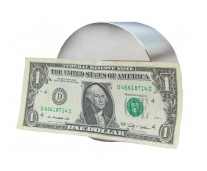 You can use small neodymium magnets for any number of simple crafts and DIY projects, but what about huge, monster magnets? Scary magnets are large and usually used for industrial purposes or for science experiments in a laboratory. This is because they are dangerous to handle. The most important thing to remember about these large magnets is that they can be much more difficult to control than smaller magnets. You should be very careful while using magnets and follow magnet safety guidelines. But there are a few things you can do with scary magnets at home as long as you are careful. Continue reading →
 -
Common Ways Magnets Have Been Used Throughout History
 Magnets are ancient. They’re so old the actual discovery of magnetism is somewhat of a legend. It is said that about 4,000 years ago, a shepherd named Magnes was out herding his sheep when his metal staff and the nails in his shoes stuck to a black rock. That black rock was magnetite and it contained lodestone. Since then, our use of magnets has evolved in hundreds of different ways. In this blog, we are going over some of the most common ways magnets have been used throughout time. Continue reading →
 -
Tips to Separate High Powered Magnets
Some of our magnets are strong, really strong. If you’ve ever ordered any neodymium magnets from us, or have simply experimented with high powered magnets, you know that once opposite poles attract, it can be tough to separate them. Also, getting in the way of two attracting poles is dangerous and could result in broken glass or bones. When using strong magnets it is important to follow safety rules and tips. Below are some tips that we have compiled for separating strong magnets. Continue reading → -
What is Gauss Rating and How to Use a Gauss Meter
First, to understand what a gaussmeter is, we need to know what gauss rating means. Gauss is the unit that measures magnetic field B, or magnetic flux density. It was named for the German mathematician and physicist that built the early instrument to measure magnetic fields, Carl Friedrich Gauss. His version was essentially a bar magnet suspended by some string. Continue reading →