
rare earth magnets
-
How Magnets Are Helping To Control Prosthetic Limbs
 Magnets can be found in various facets of the medical field today, but a group of scientists at MIT and Brown University are the latest team of innovators to push the limits of scientific discovery with these powerful rare-earth elements. Utilizing a set of small magnets, the team hopes to employ this technology as a highly sophisticated method to monitor muscle movements in real time, affording amputee patients greater control over their prosthetic limb(s). With the goal to closely mimic what would be the patient’s natural limb movement, the team’s efforts have already shown promising results for accuracy and safety. Continue reading →
-
Magnetically Sealed Centrifugal Pumps
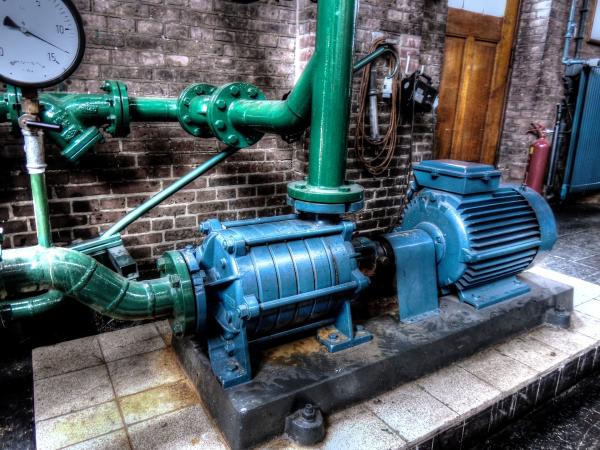 Pump technology has evolved over time to allow engineers to use smaller magnetic drive pumps while simultaneously making them more powerful and efficient. Rare earth magnets allow for this compact design due to their high strength. In addition to magnet technology, new pump designs have increased pump lifetime usage, reduced power loss due to eddy currents, and even reduced downtime due to maintenance. Perhaps most important, magnetic drive pumps offer minimal to zero leakage of pumped medium/fluid. Continue reading →
-
Magnet Factory to Help Production of EV Motors
 The rising popularity of electric vehicles is leading to an increase in demand for rare earth magnets. Those interested in purchasing an electric vehicle have likely heard of the dreaded supply chain issues impacting their availability. Thanks to a recent agreement, however, the road ahead may be smoothed out. Continue reading →
-
Mooring and Maritime Magnets
 Silversea Cruises — a luxury cruise liner with headquarters in Monaco — began implementing powerful permanent magnets as a part of their effort to moor passenger excursion boats against the larger vessel. The goal is to deploy Zodiac boats safely, quickly, and efficiently, and return them to the cruise ship in the same manner. Continue reading →
-
The Recycling and Disposal of Rare Earth Magnets
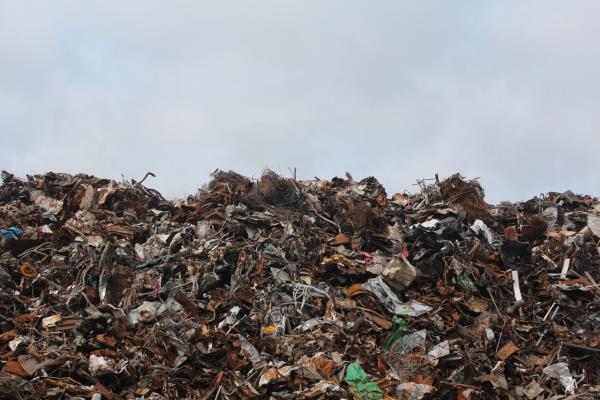 While the recycling of rare earth magnets – including neodymium and samarium cobalt – is technically possible, it is not scalable or efficient for most businesses. In fact, less than 1 percent of rare earth elements were recycled from end-of-life products as of 2011, and recent estimates still put magnet recycling in the low single digits at most, due to...
-
How Scientists Can Use “Greener” Methods to Extract Rare-Earth Metals for Your Smartphone
 Almost all technological products we use daily contain rare-earth metals, from computers and screens to networks, MRIs, batteries, magnets, automobiles, and various types of special optical glasses. They’re also used as a catalyst for oil refining. Because so many rare-earth metals are used in these products, they are often called “technology metals.” A generic smartphone uses several rare-earth metals alone...
-
Rare Earth Magnets Recycling Round-Up
You may have ordered rare earth magnets in the past for a DIY craft, classroom or lab demonstration, or maybe a home organization project, but have you ever looked into where these permanent magnets come from, or how they could potentially be reused? Continue reading → -
Recovered Rare Earth Magnets Are Repurposed for Motors
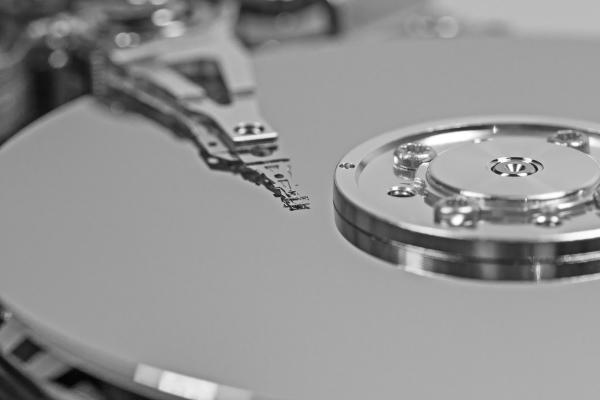
In a recent blog post, we discussed the importance of recycling rare earth magnets. These rare earth metals play a significant role in everyday technologies, including rechargeable batteries, touchscreen cell phones, and computer hard drives. Through a project funded by the Department of Energy’s (DOE) Critical Materials Institute, a research team in the Oak Ridge National Laboratory (ORNL) recovered magnets from used computer hard drives and repurposed them for use in an axial gap (or axial flux) electric motor, one of two basic direct drive motor configurations. The motor transforms electrical energy into mechanical energy through the electromagnetic interactions of magnetic fields generated by the magnets and coils within. Continue reading → -
Exploring the Shelf Life of Your Magnets: Demagnetization, Packaging, and Storage
Almost everything has a shelf life. Certainly most food products at the grocery store will “go bad” if you don’t eat them before a certain date, but other products—including electronics, furniture, and even magnets—will weaken, become unsafe, or lose their ability to function as intended if not stored in a standardized setting or used within a certain number of years. If you want to limit damage to your magnets and prolong their shelf life, consider the following factors: net magnetic field strength, proper packaging, and safe storage. Continue reading → -
A Rare-Earth Magnet Recycling Process Wins the 2018 Notable Technology Development Award
We all know how important recycling is when it comes to protecting the earth. But did you know that recycling also has an economic component? To put it into perspective, think about rare earth metals. While you may not realize it, rare earth metals are a significant part of the technology we use on a daily basis: touchscreen phones, rechargeable batteries, and even computer hard drives. Continue reading →




Page
- Page Previous
- Page 1
- Page 2
- You're currently reading page 3
- Page 4
- Page Next