Magnets are in so many items that we use today, that we often do not even realize it. Much like screws and bolts, magnets have become a typical component in various machinery, technology and other devices. A prosthetic, is just one example of a device in which you’ll likely find magnets. Believe it or not, they are used in certain types of prosthetics, most often to secure facial prosthetics in place. Continue reading →
At first, you may think magnets have very little to do with fashion. However, some clothes may use button magnets or magnetic clasps for interchangeability or to help those with limited hand mobility easily fasten and unfasten garments. Believe it or not, there are several companies that specifically design clothing with magnetic buttons to help those with Parkinson’s, arthritis and other similar ailments. Magnetic clasps are useful because they are virtually effortless to open and close but can still maintain a secure, magnetic hold. Continue reading →
With Labor Day weekend underway, fall is right around the corner. For some, this may mean filling your home with autumn smells, like apple pie and cinnamon and/or the bright leaf-like colors of red, orange, and yellow. If you like to give your home a seasonal touch by decorated it with festive decor, there are a few things that you can do to make decorating more fun and little to no work. Here are a few DIYs and tricks for using magnets to hang up your fall decor: Continue reading →
We’re excited about the recent research into the relationship between sharks and magnets, especially with Discovery Channel’s Shark Week coming up in August 2014 (when this post was first published)! If you aren’t yet familiar with Shark Week, it is a legendary week full of programming dedicated to the underwater predators and has been broadcast since 1987. Sharks are no doubt amazing creatures, which is partially why we found the concept of magnetic shark barriers an interesting one. Continue reading →
It is truly amazing when science and art overlap. This was recently the case when a Dutch designer, named Jólan van der Wiel, created futuristic ceramics using magnetic clay and magnets. The pieces are reminiscent of a science fiction film or alien life forms with their gravity defying structures and metallic coloring. However, the science behind their creation is real and applies some basic rules of magnetism. Continue reading →
Magnetic stirrers are often used in labs for buffer solutions, protein dialysis and other biology or chemistry experiments that require constant stirring for long periods of time. This type of stirrer is often used because it limits the risk of contaminating the chemicals and liquids being tested. It also prevents settling and allows for hands-free stirring for experiments that require a homogenous mixture. Continue reading →
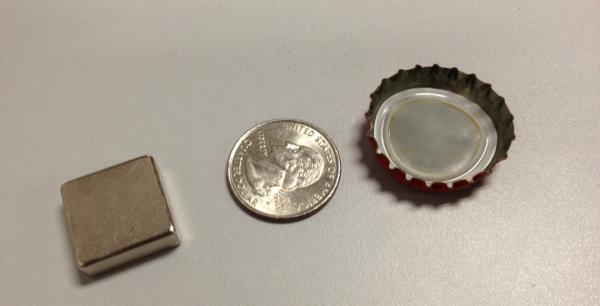
You may have seen a video that shows a bottle cap being popped off using only a fridge magnet and a quarter. The video has been circling the Internet recently and may seem real, but we were pretty skeptical. As magnet-enthusiasts, we naturally had to test out the legitimacy of this bottle opening trick. Continue reading →
Just when we thought the magic of 3D printing technology couldn’t get any cooler there is now a 3D drawing pen that its makers say will offer magnetic ink! There are numerous tricks artists may employ to make their 2D drawings look 3D, but now with innovations in printing technologies they can actually draw in 3D form. Creopop, the makers of this fascinating technology, claim that it is also able to draw magnets in 3D. The process uses a variety of ink options including: glow-in-the-dark, glitter, elastic and our personal favorite-magnetic. Continue reading →
Magnets could soon be doing more than just decorating your fridge. With new developments in magnetic cooling technology, magnets could be running it using a greener and more energy efficient method. Currently, fridges are one of the highest energy consuming household appliances and operate on a vapor-compression method that contains hazardous fluids found in refrigerants. Continue reading →
Magnets are commonly used in the recycling process. Strong industrial magnets are often used to easily identify and separate various metals. These magnetic separators, divide non-ferrous metals like the aluminum commonly found in soda cans from ferrous metals like iron. Continue reading →

 Magnets are in so many items that we use today, that we often do not even realize it. Much like screws and bolts, magnets have become a typical component in various machinery, technology and other devices. A prosthetic, is just one example of a device in which you’ll likely find magnets. Believe it or not, they are used in certain types of prosthetics, most often to secure facial prosthetics in place. Continue reading →
 At first, you may think magnets have very little to do with fashion. However, some clothes may use button magnets or magnetic clasps for interchangeability or to help those with limited hand mobility easily fasten and unfasten garments. Believe it or not, there are several companies that specifically design clothing with magnetic buttons to help those with Parkinson’s, arthritis and other similar ailments. Magnetic clasps are useful because they are virtually effortless to open and close but can still maintain a secure, magnetic hold. Continue reading →
 With Labor Day weekend underway, fall is right around the corner. For some, this may mean filling your home with autumn smells, like apple pie and cinnamon and/or the bright leaf-like colors of red, orange, and yellow. If you like to give your home a seasonal touch by decorated it with festive decor, there are a few things that you can do to make decorating more fun and little to no work. Here are a few DIYs and tricks for using magnets to hang up your fall decor: Continue reading →
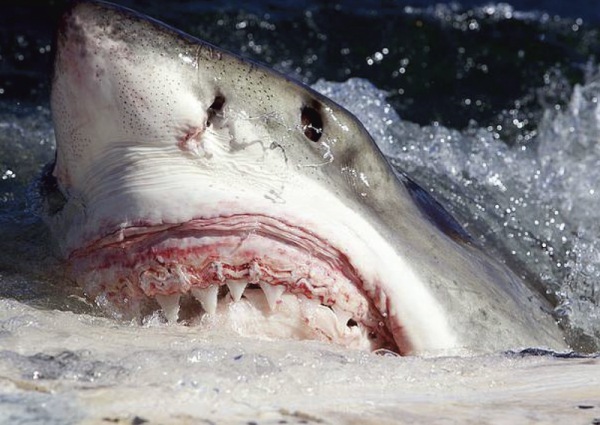 We’re excited about the recent research into the relationship between sharks and magnets, especially with Discovery Channel’s Shark Week coming up in August 2014 (when this post was first published)! If you aren’t yet familiar with Shark Week, it is a legendary week full of programming dedicated to the underwater predators and has been broadcast since 1987. Sharks are no doubt amazing creatures, which is partially why we found the concept of magnetic shark barriers an interesting one. Continue reading →
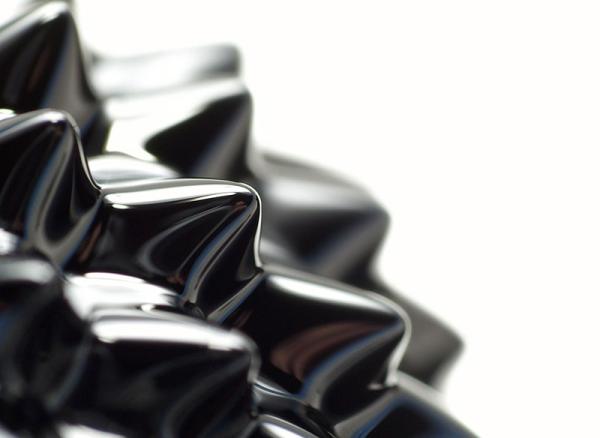 It is truly amazing when science and art overlap. This was recently the case when a Dutch designer, named Jólan van der Wiel, created futuristic ceramics using magnetic clay and magnets. The pieces are reminiscent of a science fiction film or alien life forms with their gravity defying structures and metallic coloring. However, the science behind their creation is real and applies some basic rules of magnetism. Continue reading →
 Magnetic stirrers are often used in labs for buffer solutions, protein dialysis and other biology or chemistry experiments that require constant stirring for long periods of time. This type of stirrer is often used because it limits the risk of contaminating the chemicals and liquids being tested. It also prevents settling and allows for hands-free stirring for experiments that require a homogenous mixture. Continue reading →