
admin
-
Super Strong Magnet Blows the Door Off a Laboratory
 In a secure room at the University of Tokyo's Institute for Solid State Physics in Kashiwa, Chiba, near Tokyo, an electromagnet, when powered with an electrical current, generates a magnetic field capable of blowing open the heavy doors of the facility. This magnet has already created one of the most powerful magnetic fields on Earth and it only keeps getting stronger. In 2018, the magnetic field reached a strength of 1,200 teslas, a record for an indoor pulsed field (for reference, typical clinical MRI scanners run at only 1.5 to 3 teslas). Continue reading →
-
Exploring the Shelf Life of Your Magnets: Demagnetization, Packaging, and Storage
 Almost everything has a shelf life. Certainly most food products at the grocery store will “go bad” if you don’t eat them before a certain date, but other products—including electronics, furniture, and even magnets—will weaken, become unsafe, or lose their ability to function as intended if not stored in a standardized setting or used within a certain number of years. If you want to limit damage to your magnets and prolong their shelf life, consider the following factors: net magnetic field strength, proper packaging, and safe storage. Continue reading →
-
Tectonic Plate Movement Could Cause Pole Reversals
 Around 800,000 years ago, if you had been navigating via compass your compass’ point would have aimed at Antarctica rather than the Arctic. That may sound like an insane phenomenon to experience, but pole reversals have happened many times over our planet’s history. Many a’ doomsday prepper have suggested that a pole reversal is the signaling of the end of days. However, pole reversals are the norm and paleomagnetic records show reversals have happened at least several hundred times over the past 160 million years. Continue reading →
-
The Human Brain and Its Magnetism
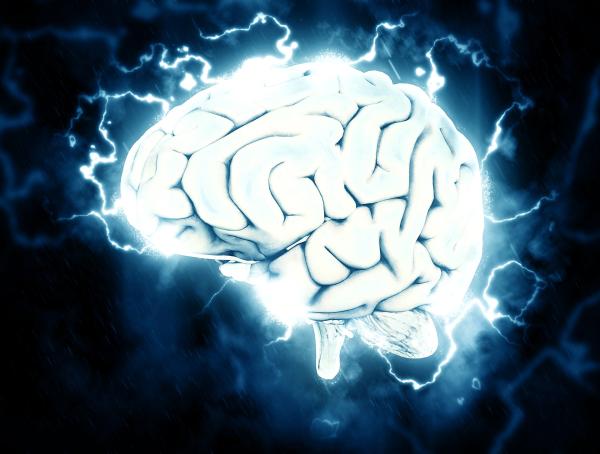 Since the early 1990s, scientists have known that the human brain contains magnetic particles deep within the organ’s tissue. The problem: we still don’t know what they’re for. In a lab located in the remote forests near Munich, Germany, scientists are deep diving into the folds of the human brain to uncover the purpose of these magnetic particles. What could be the function of these mysterious particles? Some scientists considered that the particles served some biological function in the past while others suggest that the buildup of particles may have just come from pollution from our environment. Now, German scientists are leaning towards the first explanation. Continue reading →
-
How Magnets Help Control Your Shower Curtain
 At times, our shower curtains can be quite a nuisance. We’ve all been there before. It’s early in the morning, you’ve rolled out of bed and stumbled to the bathroom, barely allowing yourself time to wake up. You turn on the water, step in, and find yourself getting quickly frustrated with the shower curtain. No matter where you move, it keeps blowing toward you and sticking to your skin while you’re trying to take a shower. Luckily, there are a few fast solutions. Continue reading →
-
How Electromagnets are the Driving Force Behind Cranes
 There’s no denying cranes are an important piece of industrial equipment in the construction, automotive, and manufacturing industries. Skyscrapers, apartment complexes, and other massive man-made structures would not be possible without one! You probably were already aware of the importance cranes are in our world, but did you know many of them rely on electromagnets to lift steel? Find out how below. Continue reading →
-
DIY: Magnetic Wristband
Would you consider yourself a craftsman, handyman, or DIY enthusiast? Or maybe you’re just trying to remodel your home or a piece of furniture? Do you find yourself just out of reach of that nail or screw that you need when you’re in the middle of a project? If you answered yes to any of those questions, you NEED a magnetic wristband. The good news? You don’t have to spend any time searching for one—they are relatively easy to make and are the perfect DIY project when you need a break from your hands-on projects. Continue reading → -
How Magnetism is Used for Industrial Ceramic Filtering
Traditional ceramics, or materials derived from naturally occurring clay minerals and quartz sand, are “almost as old as the human race.” Industrial ceramics, on the other hand, are inorganic, nonmetallic materials, “that exhibit such useful properties as high strength and hardness, high melting temperatures, chemical inertness, and low thermal and electrical conductivity but that also display brittleness and sensitivity to... -
Magnetic Sense Helps Moths in Migration
To escape the inevitable summer heat, Bogong moths migrate every spring from Queensland, New South Wales and Victoria to the Australian Alps. Once their journey is complete, they congregate in caves and go dormant for summer (a state called aestivation), similar to hibernation. Upon Autumn’s arrival, these insects return to their birthplaces, mate, lay eggs, and die. The eggs turn into caterpillars that develop underground throughout the winter, and the cycle continues indefinitely. Continue reading → -
Compasses: The World’s Earliest Magnetic Invention
We often discuss the way modern technology relies on the power of magnets, but in truth, society’s reliance on magnets started a long time ago – roughly 2,000 years in the past. One of history’s most significant magnetic inventions, and possibly its first, the compass is believed to have been used for fortune-telling and divination in ancient China. Sometime between the 11th and 12th century though, the compass became a navigational tool. It changed the way we travel and allowed us to, quite literally, orient ourselves. For the first time, we could consider our position in the world in relation to others and navigate the real possibility of getting from here to there. Continue reading →