You’ve probably seen them before: ring-shaped magnets that look like washers with a conical, angled hole through the middle. These are countersunk magnets. Also called countersink magnets, the design is intentional—the wedge and hole exist so the countersunk magnet can be anchored in place by a single screw. Their strange design makes them extremely useful in the right situations. Continue reading →
A quote often attributed to Ralph Waldo Emerson encourages us to “cultivate the habit of being grateful for every good thing that comes to you, and to give thanks continuously.” It’s a time-old tradition to reflect on what you’re thankful on Thanksgiving. Many families have their own practices in regards to giving thanks this time of year. Whether you take turns at the dinner table on Thanksgiving day, or write down what you’re thankful for for yourself, it’s great to take time to be grateful for the people, things, and experiences you have encountered this past year. If you’re looking for a nontraditional way to give thanks, we have the perfect magnetic mason jar craft for you. Continue reading →
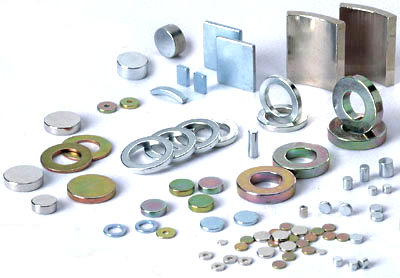
The magnets industry is constantly evolving. Researchers are always tinkering with new metal combinations to bring cheaper, more reliable magnets to the market. But the focus on magnets doesn’t stop on the surface of the earth. Recently, the Department of Energy funded research to extract rare earth elements from old coal mines in the Appalachians — a major development considering we’ve long depended on China to supply us with rare earth materials. Continue reading →
Poor magnetic fields. They tend to get overshadowed by bigger, more powerful celestial bodies and phenomena like black holes, colliding galaxies, and the Big Bang. However, this force helps hold the galaxy together. Magnetic fields are the true heroes of the galaxy and it’s about time they get the recognition that they deserve. Continue reading →
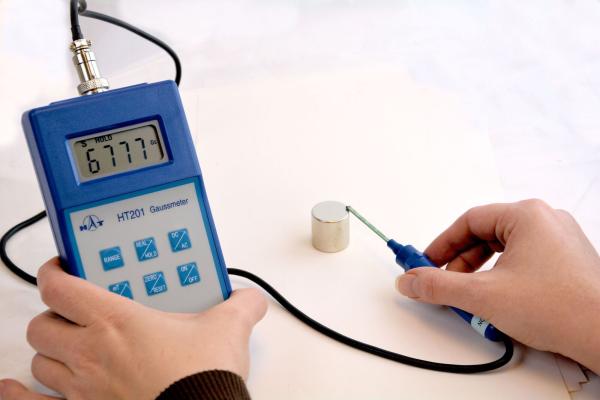
Whether you call it a gaussmeter or a teslameter, any device that can read the invisible strength of a magnet is an exciting product. But before you rip a gaussmeter out of its packaging and begin carrying it from magnet to magnet, it’s good to understand the product’s ins and outs. Continue reading →
Even inside the wondrous world of magnets, ferrofluid is especially magical the first time you see it in action. Though it’s a liquid, it behaves like a goopy solid when manipulated by a magnet. Instead of flowing freely, ferrofluid will contour in the shape of the magnetic field acting upon it, letting you manipulate it at will before returning to its original spot within the magnetic field. Continue reading →
If you’ve recently (or even if you haven’t) redesigned or painted your home, you most likely have various extra supplies like a paint stick lying around. Whether it’s semi-empty paint cans, paint brushes, or paint sticks, you probably have kept them around in the off chance you’ll need to use them again. However, more often than not, they end up sitting in the basement, collecting dust. Don’t fret! Continue reading →
People love fall for the cool temperatures, vibrant colors, and plethora of themed activities. Lucky for us, fall goes on until the winter solstice, around December 21st! Halloween and Thanksgiving are two major holidays we celebrate during the season, and this DIY would be a perfect decoration for both. Leaves are an icon of falls and there’s no better way to display these beautiful gifts from nature than our Clay Leaf DIY Magnets. Continue reading →
Every type of permanent magnet, whether neodymium, AlNiCo, or something else, has its own alphanumerical system for classifying strength. Each one is unique, and there’s no simple formula for translating a system from one magnet type into the system for another. Continue reading →
Because a magnetic field is invisible, obtaining a complete, quantitative representation of it requires measurement of both its strength and its direction. The ability to do that might sound like science fiction, but thanks to a discovery made nearly 140 years ago, we have the gaussmeter—the tool we now use to determine the strength of magnets. Continue reading →

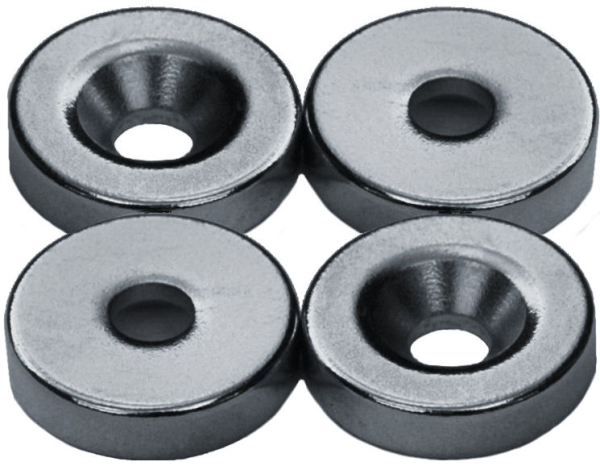 You’ve probably seen them before: ring-shaped magnets that look like washers with a conical, angled hole through the middle. These are countersunk magnets. Also called countersink magnets, the design is intentional—the wedge and hole exist so the countersunk magnet can be anchored in place by a single screw. Their strange design makes them extremely useful in the right situations. Continue reading →
 A quote often attributed to Ralph Waldo Emerson encourages us to “cultivate the habit of being grateful for every good thing that comes to you, and to give thanks continuously.” It’s a time-old tradition to reflect on what you’re thankful on Thanksgiving. Many families have their own practices in regards to giving thanks this time of year. Whether you take turns at the dinner table on Thanksgiving day, or write down what you’re thankful for for yourself, it’s great to take time to be grateful for the people, things, and experiences you have encountered this past year. If you’re looking for a nontraditional way to give thanks, we have the perfect magnetic mason jar craft for you. Continue reading →
 The magnets industry is constantly evolving. Researchers are always tinkering with new metal combinations to bring cheaper, more reliable magnets to the market. But the focus on magnets doesn’t stop on the surface of the earth. Recently, the Department of Energy funded research to extract rare earth elements from old coal mines in the Appalachians — a major development considering we’ve long depended on China to supply us with rare earth materials. Continue reading →
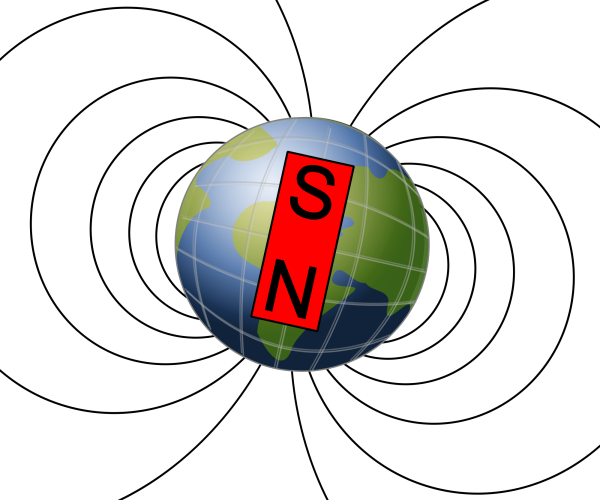 Poor magnetic fields. They tend to get overshadowed by bigger, more powerful celestial bodies and phenomena like black holes, colliding galaxies, and the Big Bang. However, this force helps hold the galaxy together. Magnetic fields are the true heroes of the galaxy and it’s about time they get the recognition that they deserve. Continue reading →
 Whether you call it a gaussmeter or a teslameter, any device that can read the invisible strength of a magnet is an exciting product. But before you rip a gaussmeter out of its packaging and begin carrying it from magnet to magnet, it’s good to understand the product’s ins and outs. Continue reading →
 Even inside the wondrous world of magnets, ferrofluid is especially magical the first time you see it in action. Though it’s a liquid, it behaves like a goopy solid when manipulated by a magnet. Instead of flowing freely, ferrofluid will contour in the shape of the magnetic field acting upon it, letting you manipulate it at will before returning to its original spot within the magnetic field. Continue reading →