
Apex Magnets Blog
-
Tips to Separate High Powered Magnets
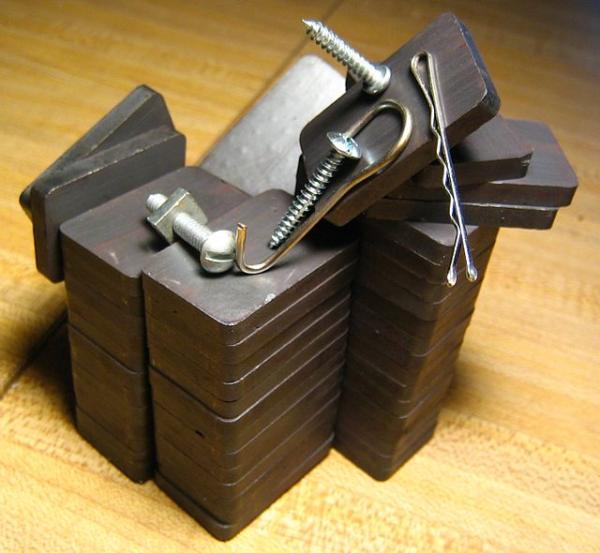 Some of our magnets are strong, really strong. If you’ve ever ordered any neodymium magnets from us, or have simply experimented with high powered magnets, you know that once opposite poles attract, it can be tough to separate them. Also, getting in the way of two attracting poles is dangerous and could result in broken glass or bones. When using strong magnets it is important to follow safety rules and tips. Below are some tips that we have compiled for separating strong magnets. Continue reading →
-
Build a Levitating Model Train Track with Magnets
 Maglev trains are powered by magnetic levitation technology. If you have ever heard about or ridden on one of these high speed trains, then you may already know that they hover above the track. This is because most designs use electromagnets, and some, such as Japan's SCMaglev, use superconducting magnets that operate on the Meissner effect. When cooled to a super low temperature, superconducting materials like Yttrium-barium-copper-oxide enter a state of zero electrical resistance, expel magnetic fields and can levitate. You can build your own mini Maglev train and track, with a few simple materials and construction. We have outlined some steps and supplies below, however, this method differs from the Maglev train technology. Read on, and see if you can guess how this design is different. Continue reading →
-
Last-Minute Magnet Halloween Costume Ideas
 It’s almost Halloween, and if you haven’t found a costume yet, then have no fear! We have compiled a list of some low-budget, last-minute costume ideas. Since we love magnets and science, we’ve themed this list around magnets and magnetism. Therefore, it may be a little cheesy, but we did warn you. Continue reading →
-
What is Gauss Rating and How to Use a Gauss Meter
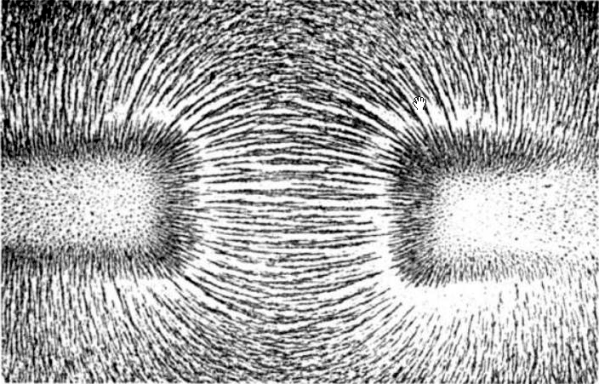 First, to understand what a gaussmeter is, we need to know what gauss rating means. Gauss is the unit that measures magnetic field B, or magnetic flux density. It was named for the German mathematician and physicist known for his work on magnetism, Carl Friedrich Gauss. His version was essentially a bar magnet suspended by some string. Continue reading →
-
Frankenstein Magnets
 Did you know that there is an actual Frankenstein Day? In August, there is one to celebrate the writer Mary Shelley’s birthday, but there is also one this month. The last Friday of October is Frankenstein Friday and it just so happens that this year it falls on Halloween. It has been nearly two centuries since Shelley wrote Frankenstein, but everyone is still familiar with the monster tale that has become one of the main symbols of Halloween. This month you can celebrate Frankenstein and general October spookiness with these Frankenstein fridge magnets! Continue reading →
-
Is It Magnetic? An Experiment
 Magnetism is an essential science lesson, and you can make teaching about it loads of fun with some creative tools. For a beginner, learning about the complex world of magnetism can seem a bit daunting. However, if you start with the basics and this creative experiment, it should be easier to move onto some more advanced concepts. One of the most basic magnet lessons is figuring out what is and what is not magnetic. In other words, what do magnets attract (besides other magnets)? A fun way to do this is with a magnetic test experiment. Continue reading →
-
Music and Magnets
Did you know that magnets are in some musical instruments? In fact, musical instruments like the electric guitar may not have been invented without the help of magnets. In order to amplify the sound emitted from an instrument, the first commercially successful electric guitar was developed by George Beauchamp, working with Adolph Rickenbacker, in the early 1930s. Beauchamp and Rickenbacker built an electromagnetic pickup, a device that captures mechanical vibrations and transmits them as an electrical signal. This device was created by wrapping coils of wire around a magnet to create a magnetic field that allowed the sounds to be amplified and recorded and alas, created the electric guitar. In honor of the long, melodious relationship between magnets and music, we have compiled a list of some of our other favorite musical magnetic innovations. Continue reading → -
Weird Magnet Facts: Cow Magnets
Here’s a weird magnet fact for your week━somewhere, there’s a magnet in the stomach of a cow. Magnets are commonly used by farmers and ranchers to prevent Hardware disease, also called bovine traumatic reticuloperitonitis. Because cows do not discern objects with their mouth when eating and often swallow food whole, they are prone to eat dangerous metal objects like nails or wire. If one of these sharp objects were to pass through the reticulum it can puncture vital organs, causing pain and even death depending on where and how far the object travels. Because the reticulum (the compartment of the cow's stomach where metal objects collect) is so close to the heart in cattle, the most serious cases of Hardware disease are the result of an object piercing the heart and causing failure. Continue reading → -
How to Build a Magnetic Murphy Desk
In a small house or apartment, space can be tight. If you’ve lived in a small home, you’ve probably come up with a few tricks of your own to amplify the space that you have. One idea to help save space is to build a Murphy desk. You may have heard the term “murphy” used when referring to the bed━the Murphy bed, named for its patented inventor, William Lawrence Murphy. The bed folds up to fit into a vertical wall, and this DIY follows the same concept. You can fold the desk up when you’re not using it and pull it out when you need it. Continue reading → -
Magnet Experiments: Build a Speaker with Magnets
Can you imagine life without music? Well, without magnets it would be pretty difficult to listen to it. Did you know that magnets are inside speakers and headphones? Magnets allow us to hear the music that we love so much. You can even create your own DIY set of speakers with some magnets and learn a little bit about audio, electricity and science in the process. There are tons of variations on homemade speakers, even a Mason jar version. But, we have created a simple version for those of you that would like to try it out! Continue reading →


