
Apex Magnets Blog
-
Magnets and Chicken Nuggets — The Crossover You Never Knew You Needed
 Magnets and chicken nuggets — What could be more well-loved? But do you know the connection? Magnets have long been critical in the food industry, helping with sorting and separating any metal scrap away from product, but they’re also involved in research and testing related to food quality and consistency. We’re not just talking about any food, but chicken nuggets specifically. Continue reading →
-
Make Your Own DIY Magnetic Ball
 In America today, nearly 44% (AVMA, 2026) of households own at least one dog. If your home isn’t complete without man’s best friend, you understand that not only will dog parents do anything for their dog, but they’ll spend almost any amount of money to do so. Whether you’re training an 8-week-old bundle of fluff with endless energy or teaching your old dog a new trick, magnetic dog balls are the perfect, cost-effective toy to train without the hassle. Continue reading →
-
Solving Earth’s Space Debris Crisis With Magnets
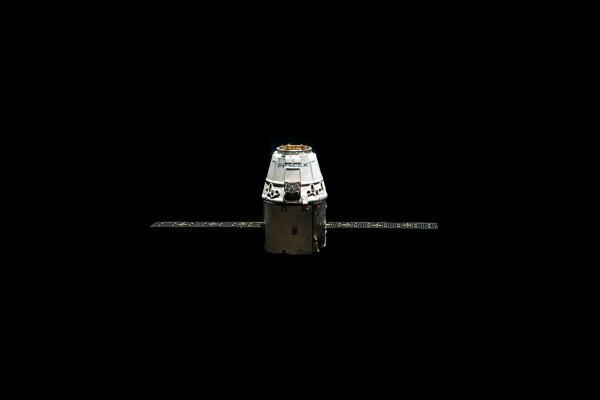 Similar to waste management concerns here on earth is the space debris crisis currently happening above our atmosphere. Traveling at speeds in excess of 17,500 mph, NASA reports more than 25,000 pieces of space debris larger than 10 cm (about 4 inches) currently orbiting earth. These and other smaller pieces of space debris are direct threats to satellite and spacecraft operations, given the intense speed they are traveling. Continue reading →
-
Make Your Own Magnetic Fishing Game
 With summer only halfway over and the boredom starting to set in, you’re likely desperate to find activities that don’t involve the latest video game or tv series. If that’s you right now, we have a fun and easy DIY magnetic fishing game your kids are going to love made with supplies you can find around your house. And depending on the size of your family, this activity is easily customizable for large or small crowds! Continue reading →
-
The Impacts of Solar Explosions On Earth’s Magnetic Field
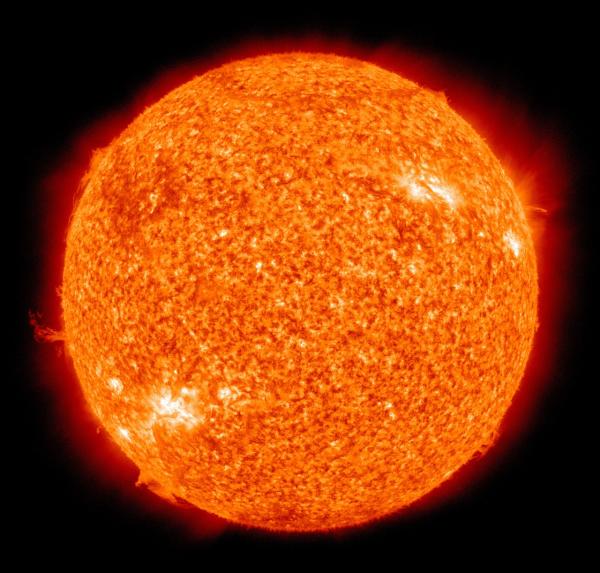 Otherwise known as CMEs, coronal mass ejections are a solar phenomenon where the sun’s outer layer (the corona), expels a large amount of plasma and magnetic field into outer space. CMEs occur when the sun’s constant stream of plasma churns and twists around itself, leading to the formation of magnetic knots. As these magnetic knots develop, they build up massive amounts of energy, forcing them to break off and hurl into space, potentially toward earth. So, why don’t we typically notice such an event? If you remember back to our blog discussing the magnetic fields of our solar system, earth’s magnetic field protects our planet from harmful particles, similar to the concept of how an umbrella protects its user from rain. Earth’s magnetic field deflects the blast of CMEs and other solar events, funneling the charged particles toward the North and South poles, which leads to brilliant aurora light displays. Continue reading →
-
Recycling & the Importance of Separating Ferrous from Nonferrous Metals
 If you have kids, then you’ve probably seen Toy Story 3. In a fun twist, it actually includes a little bit of magnet education. Near the end, the toys are trapped on a conveyor belt in a scrapyard. They escape the shredder by hanging onto bits of ferrous metal and getting pulled up and out by the magnetic separator. While there are certainly some finer points they glossed over, it’s a fun way to introduce kids to how magnets are used in the recycling industry. Continue reading →
-
Magnetic Chutes Used in the Many Industries, Including the Spice Trade
Previously on our blog, we’ve discussed how magnetic chutes are used in animal feeding; however, they’re utilized in many other scenarios as well. For instance, magnetic chutes are also used to trap and separate iron particles mixed with powders, granular materials, or otherwise dry materials. Typically, the material is flowing freely through the chute; that means no sticky substances! Connected to a larger series of ducts, the chutes use magnets to attract iron contamination as it flows. The largest magnet is often placed in a hinged door that can be accessed from the outside, allowing for manual cleaning and particle removal. Continue reading → -
Tackle Your Next Interior Design Project with a DIY Magnet Stud Finder
Whether you are ready to craft that custom photo wall you have been dreaming about or turn your kitchen into a culinary paradise straight out of a magazine, opt for a magnet over purchasing expensive equipment. Once you have a design in mind for your space, it’s time to bring your inspiration to life. Continue reading → -
Increasing Prosthetic Limb Control Through Magnets
Created to bridge the gap in the advancement of prosthetic technology for amputee patients, MIT’s Media Lab has been working tirelessly to perfect a new alternative approach to increased precision called magnetomicrometry (MM). This revolutionary method theorizes the insertion of magnetic beads into muscle tissue found within the amputated residuum will provide precise muscle length measurements, which can later be relayed to a bionic prosthesis almost instantly. Continue reading → -
Magnetic Yokes Used for Particle Inspection
Permanent magnets are commonly used in magnetic yokes. This refers to a handheld magnetic device used to induce a field in an area between two poles. They can also be electromagnetic yokes. Either kind of magnetic yoke can be used for particle inspection outdoors, in hard-to-reach places, or in remote locations. They can also evaluate whether a weld job is of quality, detecting surface and near-surface cracks and defects in ferromagnetic material. Continue reading →