magnets in science
-
Black Holes and Their Coronal Magnetic Field
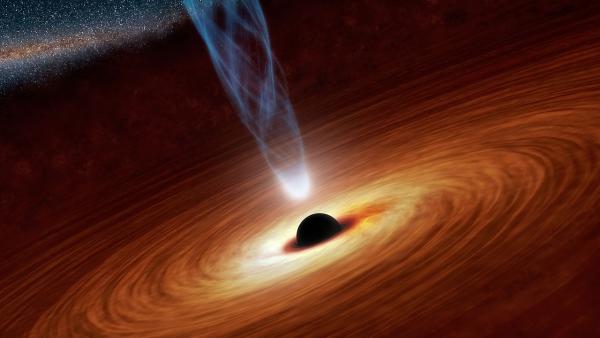 Did you know that supermassive black holes are the largest type of black hole known to mankind? In fact, they contain a mass that is roughly a million to billions of times more massive than typical stellar black holes. It is believed that the supermassive black holes that lurk at the center of most galaxies are surrounded by coronas, but not much is known about why this occurs or even what coronas look like. Continue reading →
-
The Zircon Crystal Magnetic Theory is Literally Filled with Holes
 A team of researchers led by the University of Cambridge, with collaborators at other institutions including MIT and the University of California, made a discovery that disputes the previous use of zircon crystals as evidence of Earth’s magnetic field’s early development. Their paper, published in Proceedings of the National Academy of Sciences, describes the testing they conducted and the new discoveries they made about the magnetism of zircon crystal. Continue reading →
-
How Are Permanent Magnets Being Used To Make A Revolutionary Energy Accelerator?
 Brookhaven National Laboratory (BNL) is dedicated to answering basic and applied science questions that range “from the birth of our universe to the sustainable energy technology of tomorrow.” In 2018, they announced the construction of a test accelerator they call CBETA, the Cornell-Brookhaven ERL Test Accelerator, at Cornell University. The CBETA will reportedly recycle energy by intertwining particle beams through chains of multi-pass permanent magnets in a Halbach array, which augments the magnetic field on one side and cancels the opposite field to near zero. This would revolutionize accelerator science, helping to reduce both cost and size, and fusing the best traits of linear and circular accelerators. Continue reading →
-
Magnets: A Faster, Cheaper Path to Fusion Energy
 A few years in the making, a breakthrough effort towards fusion energy has scientists using powerful magnets to build what is designed to become the world’s first energy-producing fusion experiment. In 2018, a report released by the American Physical Society, revealed that collaborating scientists from the Massachusetts Institute of Technology's Plasma Science & Fusion Center and Commonwealth Fusion Systems were working to speed up the development of fusion energy that can help fight the harmful effects of climate change by using high-powered temperature superconducting magnets. Continue reading →
-
Single-Atom Magnet Produced at a Record-High Temperature
 In the past, we’ve discussed the miraculous new discovery of the single-atom magnet. This single-atom magnet is capable of containing one bit of memory. (Prior to this, the smallest individually addressable magnetic bits on surfaces were made of about 5 to 12 atoms.) This was a huge step forward for data storage! Now, scientists have designed and synthesized a high-temperature single-molecule magnet - the first of its kind! A breakthrough like this could even revolutionize the digital storage capabilities of quantum computers. Is this the ultimate limit in high-density data storage? Continue reading →
-
Tectonic Plate Movement Could Cause Pole Reversals
 Around 800,000 years ago, if you had been navigating via compass your compass’ point would have aimed at Antarctica rather than the Arctic. That may sound like an insane phenomenon to experience, but pole reversals have happened many times over our planet’s history. Many a’ doomsday prepper have suggested that a pole reversal is the signaling of the end of days. However, pole reversals are the norm and paleomagnetic records show reversals have happened at least several hundred times over the past 160 million years. Continue reading →
-
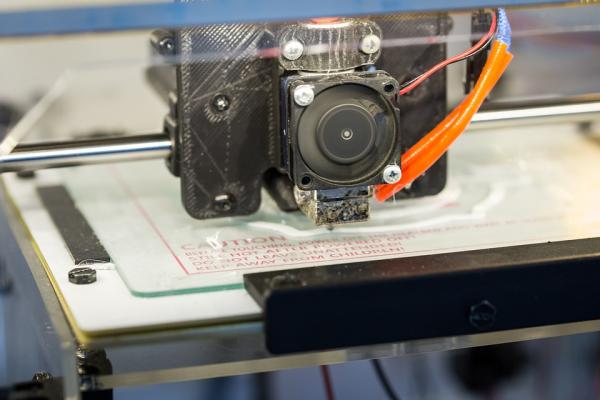
Is 3D Printing the Future of Magnet Production?
Engineers at the Ames Laboratory’s Critical Materials Institute have used laser 3D metal printing to speed up the search for a cerium-based magnet alloy that may become a more affordable alternative to expensive rare-earth neodymium iron boron magnets in some applications. Continue reading → -
Monopoles: What Water Tells Us About this Rare Phenomenon
Researchers have long wondered about the existence of magnetic monopoles, but have never observed an isolated, free magnetic monopole. However, help has come from an unexpected, yet very familiar source: water. Continue reading → -
Magnets and Matter; Arts and Science
We tend to think of magnetism in relation to solid matter. From the neodymium varieties we deal with, to the largest galaxies, magnetic fields are usually tethered to the tangible realm. However, as our following examples demonstrate, there is plenty to discover in liquids and gases. Furthermore, it is not only the scientific community that benefits from magnetism's relationship with various matter. There are plenty of magnetic forays in the art world as well! Continue reading → -
The Future of Wind: How Magnets Help Us Transform Air into Electricity
All over the world, wind mills are appearing in skylines. Whether dotting the the tops of mountain ranges or standing tall over the ocean, windmills bring clean energy without the air pollution involved in other forms of power. Continue reading →