magnets in science
-
Magnets Shown to Create More Power than Electrical Generators
 By combining permanent magnets and field winding into a wound rotor system, researchers at Purdue University have come up with a way to reduce the size of some moderate-to-low electric generators while also increasing the efficiency. Continue reading →
-
Scientists Just Accidentally Created a Permanent Magnetic Liquid
 Scientists at Berkeley Lab have created liquid droplets that stay magnetized after the magnetizing field is removed, which researcher Thomas Russell describes as the first observation of ferromagnetism in a liquid. While ferrofluids —liquids containing magnetic nanoparticles—exist already, this discovery is different. A ferrofluid becomes magnetized when it’s close to magnetic objects, but it only remains magnetized when in the...
-
Building a New Superconducting Magnet
 After the discovery of electromagnets in the 1800s, the world’s understanding and use of magnets started to evolve. However, the next big game changer didn’t occur until 1911 when Kamerlingh Onnes discovered superconductivity. This refers to the zero electrical resistance and expulsion of magnetic fields in some materials (superconductors) at very low absolute temperatures. Superconductors conduct electricity with “perfect” efficiency...
-
What is the Hall Effect and How Does it Relate to Magnets?
 American physicist Edwin H. Hall discovered the Hall Effect in 1879 – almost 20 years before we discovered the electron. He was clearly a man before his time because it took several decades for people to catch up to his discovery and fully grasp or understand its importance. Now the concept is used to operate computers, cell phones, cars, and...
-
The University of Iowa Wins a Record Grant to Study Magnetic Fields
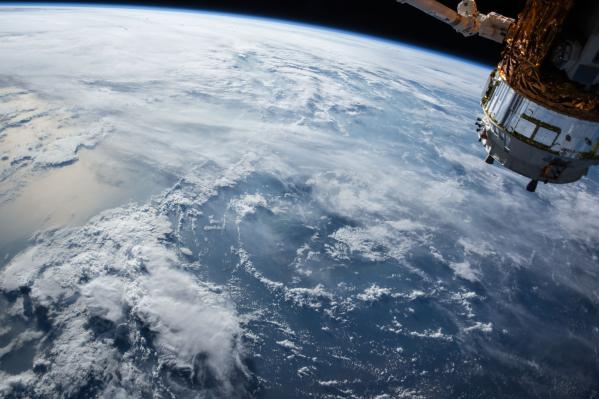 There have been exciting things happening in magnetism. NASA recently awarded the University of Iowa (UI) a significant grant—$115 million—to study the interactions between the Earth and Sun’s magnetic fields. The TRACERS (Tandem Reconnection and Cusp Electrodynamics Reconnaissance Satellites) project, the largest research project in the university’s history, will be part of NASA’s Explorers Program. Why Study the Magnetic Fields...
-
Magnets May Be The Key To Increased Hydrogen Production in Water Splitting
 With rising pollution from burning fossil fuels and the need for energy steadily increasing, scientists and researchers are always looking for greener energy alternatives. A known “cleaner” alternative is hydrogen, though it still has its problems, from low-cost efficiency to releasing carbon dioxide. A study led by José Ramón Galán-Mascarós at the Institute of Chemical Research of Catalonia (ICIQ) may...
-
This Superconducting Magnet Just Broke The Strongest Magnetic Field Record
A new superconducting magnet, created by National High Magnetic Field Laboratory (MagLab) at Florida State University, has briefly sustained a record-breaking 45.5-tesla magnetic field intensity. MagLab also produced the world’s previous strongest continuous field intensity, which held the top spot at 45-tesla since 1999. To put this into perspective, the magnetic field intensity of a standard fridge magnet is about... -
Researchers Find Potential Source of Rare Earth Elements
Since China mines roughly 70 percent of the world's rare earth elements and refines roughly 90 percent of them—but sets limitations and regulations on exporting—researchers are trying to get creative with how to recycle and repurpose rare earth magnets. According to a 2019 study published in the Journal of Chemical Thermodynamics, researchers at Rutgers University-New Brunswick and members of the Critical Materials Institute have found a potential new source of rare earth elements (REE)—phosphorite waste. This discovery could help decrease the cost of REEs and make them more accessible to those outside of China. Continue reading → -
Is Earth’s Magnetic Field Flipping?
According to Nature, Earth’s north magnetic pole is moving so quickly that the World Magnetic Model (WMM) needed to be updated only four years after its latest update. Even though the 2015 update to the model was expected to remain valid until 2020, it’s close to exceeding the acceptable limit for navigational errors. so, updates were made and released in February 2019. Periodically, the north and south poles move so much that they trade locations, which is known as a magnetic field flip.Reversals are irregular, and the last full one was about 780,000 years ago. This phenomenon most likely should not occur for thousands of years, however. But, the fact that WMM needed to be updated so quickly has us questioning what is it that causes the poles to shift, and what this means for Earth’s magnetic field. Below, we outline what all plays into the changes. Continue reading → -
New Discoveries on The Cause of Auroras
The Aurora Borealis and Aurora Australis, better known as the Northern and Southern Lights have always been a topic of discussion. After all, how does this magical explosion of colors light up the sky? We’ve looked into the answer before and found magnetic reconnection was a possible explanation. Continue reading →