magnets in science
-
Transcranial Magnetic Stimulation: Straight out of Science Fiction
 Many of us have that one musical artist or band we just can’t stand. Some of us despise entire genres of music. But what if there was a way to make you actually like those once-reviled songs? New research with (you guessed it) magnetism suggests this might be an actual possibility some day. How? Through a technique called transcranial magnetic stimulation (TMS), which has been studied since the 1980s. Continue reading →
-
Magnetic Discovery Roundup 2017
 Whew! What a year we’ve had! It’s hard to believe that 2017 is already coming to a close. There have been a ton of exciting developments in the world of magnets this year, pushing the scientific community ahead. No matter how small the magnetic discovery, it could make a huge impact! Here are just a few of our favorite magnetic discoveries from the past 12 months. Continue reading →
-
Hyperloop One Announces Global Challenge Winners
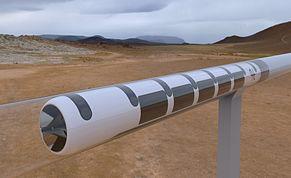 If you follow us on Twitter and read our blog regularly (who doesn’t?), you’ve probably seen us post a few articles about the hyperloop. If you’re new to this story or need a refresher, the Hyperloop is essentially a super-fast transport system that relies on the power of magnetic levitation. One company, Hyperloop One, recently announced its proposed routes for cities across the globe. Continue reading →
-
Super Powered Magnet Goes to 11, Breaks World Record
 While the rest of us were busy reeling over the solar eclipse, scientists were hard at work breaking the record for the world’s strongest resistive magnet (a record later passed in 2024 by a 42.02-tesla resistive magnet in China, according to the Chinese Academy of Sciences). It’s taken nearly three years and $3.5 million to fund but the National MagLab has achieved it! Continue reading →
-
3 Magnetic Research Institutions Changing the World
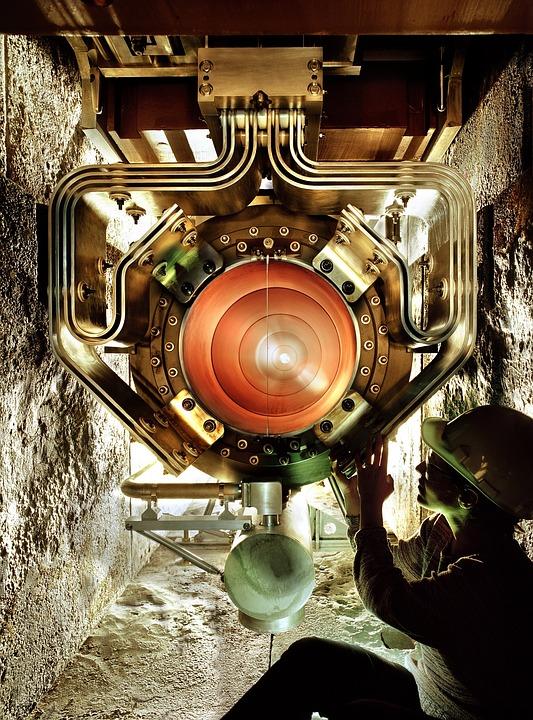 We love learning about new and exciting magnet-related findings and we hope you do, too! Always on the search for new information and discoveries, we keep a close eye on the leading magnetic research facilities to see what they’re up to. Today on our blog, we’ve rounded up a few of the most significant magnetic research institutions in America and highlighted some of their findings to give you a little sample of what these labs do and what their contributions to science have been. Continue reading →
-
What’s the Scoop on the Hyperloop?
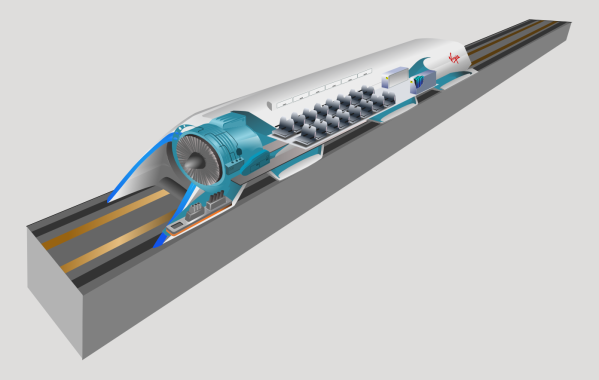
 In its 2017 proposal for a Miami-to-Orlando route, Hyperloop One estimated the trip could take about 26 minutes. The Hyperloop, the brain-child of Elon Musk and SpaceX, would connect cities using a series of reduced-pressure tubes that use air bearings or magnetic levitation to suspend pod-like vehicles, meaning greatly reduced resistance and minimal noise pollution. A linear electric motor gradually propels the pods forward to a cruising speed of around 700 miles per hour. These tubes would be able to travel under or above-ground, avoiding grade crossings. Musk and SpaceX’s idea has been open-sourced and others are encouraged to take the concept and expand upon it. Continue reading →
-
Metallic Hydrogen: The Force of the Future
When you think of hydrogen, the humble little element with a singular electron, it’s probably in its gaseous state. In fact, hydrogen is most the abundant element in the entire universe and makes up around 75% of its entire mass! It’s most recognizable when paired with oxygen to create H20, or water. Hydrogen is also a source of nuclear energy and its capabilities have been explored for centuries. Continue reading → -
Electromagnetic Levitation
Drones are taking over the skies—even during Lady Gaga’s dazzling halftime show. When you think of a drone, you probably imagine a quadcopter with four rotors or even balloons keeping the drone aloft. There’s another, less obvious method of getting off the ground, however: spinning magnets. Continue reading → -
Magnetic Flotation Devices Are Making a Splash
If we’ve learned anything writing this blog, it’s that magnets have almost unlimited applications. From simple DIYs and craft projects, to industrial machinery, to helping pioneer the future of space travel, magnetism is a forced to be reckoned with. Another application for magnets comes in the form of new flotation devices, aimed at helping people in the water. Continue reading → -
Magnetically Controlled Microbots
Remember those old movies where they use a shrink ray on a team of scientists to go inside a person’s body? Safely inside their microscopic submarine, they enter the patient in order to unclog an artery or destroy some deadly germ. There’s usually one guy trying to sabotage the whole operation. While science has yet to perfect shrink ray technology, new advances in microbiology may soon have a way of controlling microscopic robots capable of following magnetic directions to ailing parts of the body. This advent could be used for minimally invasive exploratory surgery or even to deliver medicine to the exact spot the body needs it. Continue reading →