uses of magnets
-
Magnets May Be The Answer To Football’s Concussion Problem
 The National Football League is a business empire. In 2017 alone, they pulled in roughly $14 billion and have no plans of slowing down with commissioner Roger Goodell sharing his desire to increase annual revenue to $25 billion within ten years. Simply put, America’s love of football is no secret. However, as disturbing facts surrounding blunt force trauma and the...
-
Magnetic Levitation is the Force Behind the Lexus SLIDE Hoverboard
 Thanks to science fiction novels and movies like Back to the Future Part II, hoverboards have long been a symbol for some distant and unknowable future. However, according to Wired, working hoverboard prototypes already exist, and the Lexus SLIDE is one of them. Continue reading →
-
Recovered Rare Earth Magnets Are Repurposed for Motors
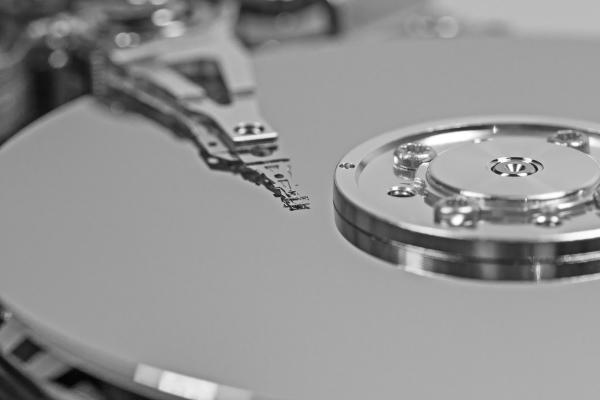 In a recent blog post, we discussed the importance of recycling rare earth magnets. These rare earth metals play a significant role in everyday technologies, including rechargeable batteries, touchscreen cell phones, and computer hard drives. Through a project funded by the Department of Energy’s (DOE) Critical Materials Institute, a research team in the Oak Ridge National Laboratory (ORNL) recovered magnets from used computer hard drives and repurposed them for use in an axial gap (or axial flux) electric motor, one of two basic direct drive motor configurations. The motor transforms electrical energy into mechanical energy through the electromagnetic interactions of magnetic fields generated by the magnets and coils within. Continue reading →
-
Getting Sky High with Super-Conducting Magnets
 Chances are you’ve been on a plane to travel to a work conference, vacation, or holiday event. It’s quick, relatively easy, and has the potential for less stress during travel (think about it--there’s no road rage in the sky)! But do you know the environmental impact of flying? When jet fuel is burned, carbon bonds with oxygen and forms carbon dioxide. Carbon dioxide from all sources, not just flying, makes up roughly 80 percent of the greenhouse gases emitted in the United States Continue reading →
-
Magnets in Electronics
 We use our state-of-the-art cell phones, tablets and televisions on a regular basis, but it’s easy to forget about the parts inside that make them work so well and allows them to be a fixture in our lives. As it turns out, a lot of the electronics we use every day rely on magnets to function at their fullest capability. We’ll show you how. Continue reading →
-
How Magnets Help Control Your Shower Curtain
 At times, our shower curtains can be quite a nuisance. We’ve all been there before. It’s early in the morning, you’ve rolled out of bed and stumbled to the bathroom, barely allowing yourself time to wake up. You turn on the water, step in, and find yourself getting quickly frustrated with the shower curtain. No matter where you move, it keeps blowing toward you and sticking to your skin while you’re trying to take a shower. Luckily, there are a few fast solutions. Continue reading →
-
DIY: Magnetic Wristband
Would you consider yourself a craftsman, handyman, or DIY enthusiast? Or maybe you’re just trying to remodel your home or a piece of furniture? Do you find yourself just out of reach of that nail or screw that you need when you’re in the middle of a project? If you answered yes to any of those questions, you NEED a magnetic wristband. The good news? You don’t have to spend any time searching for one—they are relatively easy to make and are the perfect DIY project when you need a break from your hands-on projects. Continue reading → -
How Magnetism is Used for Industrial Ceramic Filtering
Traditional ceramics, or materials derived from naturally occurring clay minerals and quartz sand, are “almost as old as the human race.” Industrial ceramics, on the other hand, are inorganic, nonmetallic materials, “that exhibit such useful properties as high strength and hardness, high melting temperatures, chemical inertness, and low thermal and electrical conductivity but that also display brittleness and sensitivity to... -
Compasses: The World’s Earliest Magnetic Invention
We often discuss the way modern technology relies on the power of magnets, but in truth, society’s reliance on magnets started a long time ago – roughly 2,000 years in the past. One of history’s most significant magnetic inventions, and possibly its first, the compass is believed to have been used for fortune-telling and divination in ancient China. Sometime between the 11th and 12th century though, the compass became a navigational tool. It changed the way we travel and allowed us to, quite literally, orient ourselves. For the first time, we could consider our position in the world in relation to others and navigate the real possibility of getting from here to there. Continue reading → -
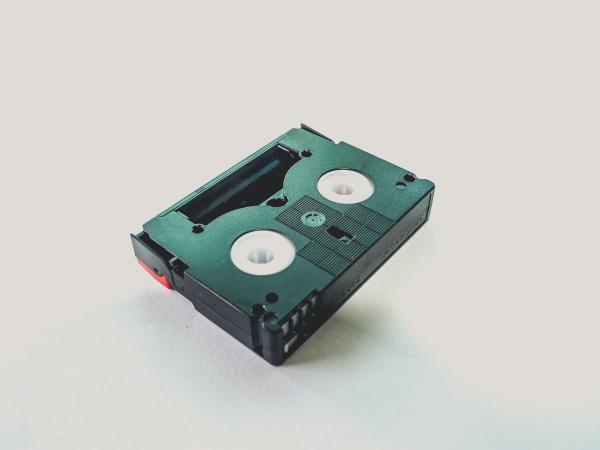
Magnetic Tape Still Reigns in Data Storage
It shouldn’t come as a surprise that data plays a crucial role in everything that we do. But have you ever stopped to think about where and how we store data? Beyond your notebooks, computers, and cloud-based storage systems, you probably don’t consider the impact and importance of different data storage options. Continue reading →